Case Study Example: Church Solar Installation and Shared Community Savings
Note: This is an illustrative case study created for educational purposes. It is not a real Rumos Chem customer project, and it does not describe actual installation costs, savings, contracts, or financial results. The example shows how a church or faith community might approach a solar project, evaluate ownership choices, and design a shared community benefit model.
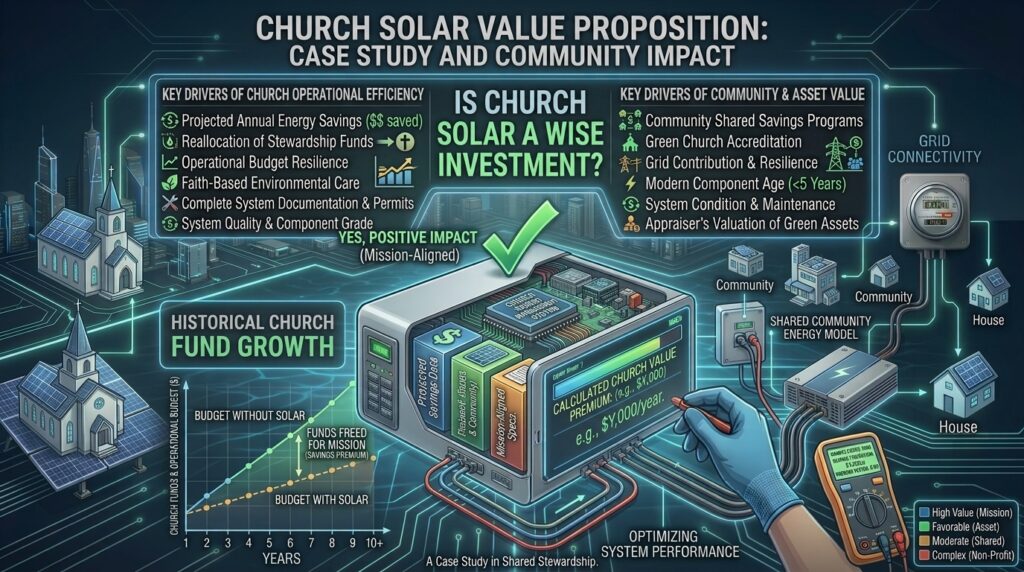
Churches and other community organizations often look at solar energy for more than just electricity savings. A solar installation can support long-term building stewardship, provide a visible example of renewable energy adoption, and create opportunities for community engagement. For some congregations, the conversation expands beyond installing panels on a roof to exploring how solar benefits can be shared with members, neighbors, and local organizations.
This example explores a hypothetical church solar project in the St. Louis, Missouri area and focuses on the planning decisions that can make a community-centered solar installation successful. Houses of worship across the country have explored solar projects as a way to reduce energy expenses, demonstrate environmental responsibility, and engage their communities. :contentReference[oaicite:0]{index=0}
Project Overview: A Church Exploring Solar as a Community Resource
Imagine a local church with a large building, regular community events, and a commitment to responsible resource management. The church leadership notices that electricity is one of its ongoing operating expenses and begins exploring whether solar panels could help control future energy costs.
The church forms a solar planning committee made up of members with different areas of knowledge, including building operations, finance, administration, and community outreach. Instead of viewing solar as only a construction project, the committee treats it as a long-term community investment decision.
The initial goals of the project include:
- Understanding whether the building site is suitable for solar panels.
- Reviewing ownership and financing options.
- Creating transparent communication with congregation members.
- Exploring ways solar benefits could support broader community goals.
- Developing a realistic maintenance and governance plan.
Evaluating the Church Property for Solar
Before discussing financing, the church must determine whether the property can support a solar installation. A professional solar evaluation typically considers several factors, including roof condition, available sunlight, electrical infrastructure, building energy use, and future renovation plans.
A church may have several possible installation locations, such as:
- Main building rooftops.
- Educational or community center rooftops.
- Parking structures or solar canopies.
- Ground-mounted areas when appropriate.
A roof that requires replacement soon may affect project timing. In some cases, completing roof work before installing solar can reduce future disruption and protect the long-term value of the system.
Ownership and Financing Options
One of the most important decisions in a church solar project is determining who owns the system and how the installation will be paid for. Different approaches can work depending on the organization’s financial goals, available funds, and administrative preferences.
| Approach | How It Works | Important Considerations |
|---|---|---|
| Direct Ownership | The church purchases the solar system and owns the equipment after installation. | Requires available capital or financing. The church is responsible for long-term ownership decisions. |
| Solar Loan | The church finances the system through a loan and makes payments over an agreed period. | Requires reviewing loan terms, repayment schedules, and projected energy costs. |
| Power Purchase Agreement (PPA) | A third party owns the system, while the church purchases electricity generated by the panels. | The contract terms, pricing structure, maintenance responsibilities, and ownership transfer options should be reviewed carefully. |
| Community-Supported Model | Members or community partners may help support the project through approved funding structures. | Requires clear governance, documentation, and communication about participant roles. |
Community solar and shared solar models can allow multiple participants to benefit from a solar project, although specific structures vary depending on local rules, utility programs, and ownership arrangements. The U.S. Department of Energy describes community solar as projects where multiple customers can receive benefits from electricity generated by a shared solar system. :contentReference[oaicite:1]{index=1}
Creating Shared Community Savings Without Promising Specific Results
The phrase “shared community savings” can mean different things depending on how a project is designed. A church should avoid making guaranteed financial promises and instead clearly explain how benefits may be created.
Possible community-focused approaches include:
- Using reduced operating expenses to support church programs.
- Funding community services, outreach programs, or facility improvements.
- Educating community members about solar energy.
- Creating opportunities for local organizations to participate in renewable energy discussions.
For example, a church may decide that any long-term financial benefit from solar should support specific community goals. The leadership team could establish a process for deciding how those funds are allocated rather than making informal promises.
Governance: Making Decisions Transparently
A successful church solar project requires more than technical planning. Clear governance helps ensure that members understand the project and that decisions are made responsibly.
Building a Solar Decision Team
A project committee may include:
- Church leadership representatives.
- Facility or property managers.
- Financial advisors or accounting volunteers.
- Members interested in sustainability.
- Community representatives when appropriate.
Documenting Responsibilities
The church should define who is responsible for:
| Area | Responsible Party Example |
|---|---|
| Contract review | Church leadership and qualified advisors |
| System monitoring | Installer, owner, or designated facility manager |
| Maintenance scheduling | System owner according to agreement terms |
| Community communication | Church communications team or project committee |
Maintenance and Long-Term Solar Care
Solar panels generally require less ongoing maintenance than many building systems, but responsible ownership includes planning for system monitoring, inspections, repairs, and future decisions.
A church should understand:
- Who owns the equipment.
- Who handles warranty questions.
- Who monitors system performance.
- What happens if repairs are needed.
- How maintenance responsibilities change if ownership changes.
A written maintenance plan helps prevent confusion years after installation. The church should keep records of equipment information, contracts, warranties, and service contacts.
Equitable Communication With the Congregation and Community
Solar projects can involve significant financial and operational decisions, so communication is essential. A church should provide understandable information instead of relying on technical terms or assumptions.
Helpful communication practices include:
- Explaining why the church is considering solar.
- Sharing expected benefits without guaranteeing outcomes.
- Describing costs, responsibilities, and risks clearly.
- Allowing time for questions and discussion.
- Making project information accessible to all members.
Equitable communication also means recognizing that not every community member will interact with energy decisions in the same way. Some members may focus on finances, while others may focus on environmental stewardship, education, or community service.
Lessons From This Example Church Solar Project
This hypothetical project demonstrates that church solar installations involve more than selecting panels and installing equipment. The strongest projects combine technical evaluation, responsible financing, clear governance, and thoughtful communication.
For churches considering solar in Missouri or elsewhere, the planning process may include reviewing the building, comparing ownership models, understanding available programs, and choosing a structure that fits the organization’s mission and resources.
Frequently Asked Questions About Church Solar Projects
Can a church install solar panels even if it does not have enough money to buy a system upfront?
Yes. Churches may explore several financing approaches, including loans, third-party ownership arrangements, fundraising strategies, or other approved structures. The best option depends on the organization’s circumstances and contract terms.
Does a church have to own the solar panels?
No. Some projects involve third-party ownership where another organization owns and maintains the system while the church receives energy benefits under an agreement. Ownership responsibilities should always be clearly defined.
What does shared community savings mean in a solar project?
Shared community savings refers to creating broader benefits from a solar project, such as supporting community programs, reducing operating expenses, or allowing multiple groups to participate in renewable energy efforts. The exact structure depends on the project design.
How long does a church solar project take to plan?
The timeline varies based on factors such as building evaluation, financing decisions, approvals, permitting, equipment availability, and installation requirements.
Is this case study based on a real Rumos Chem installation?
No. This is an educational example created to explain how a church solar project could be structured. It does not represent a real customer, actual savings, or a completed Rumos Chem project.
Conclusion
A church solar installation can become a meaningful community project when it is planned with transparency, careful financial review, and long-term responsibility. By considering ownership options, maintenance needs, governance structures, and fair communication, faith communities can make informed decisions about whether solar fits their goals.
For organizations exploring residential and community solar concepts in the St. Louis area, Rumos Chem provides educational resources and information to help property owners better understand solar technology and installation considerations.