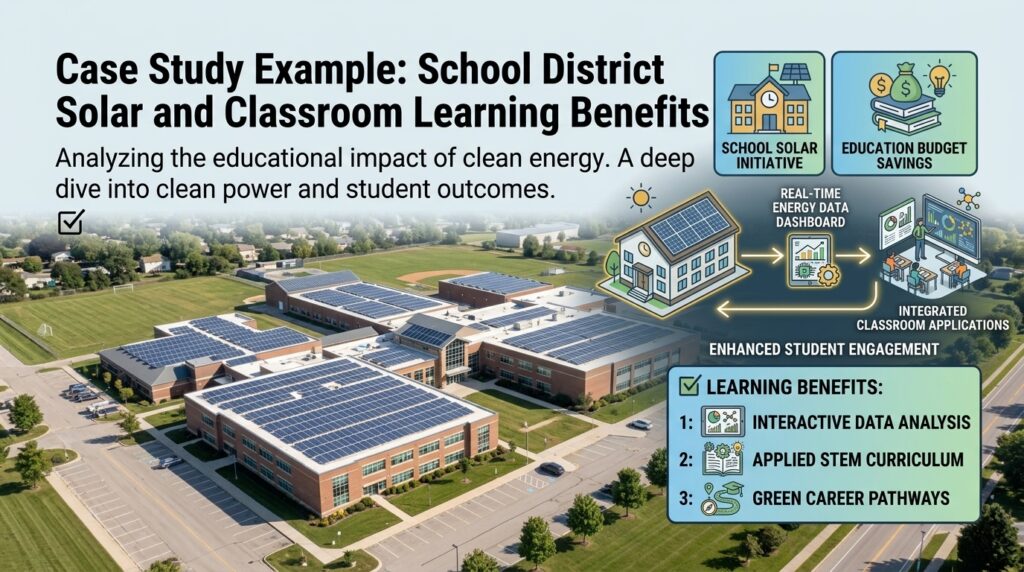
Case Study Example: School District Solar and Classroom Learning Benefits
Important note: This is an illustrative case study example created to explain how a school district solar project could work and what benefits it may provide. It is not a real Rumos Chem customer, not a verified school installation, and does not represent an actual completed project. The goal is to help homeowners, educators, and community members understand the potential connections between solar energy, educational opportunities, and community benefits.
Solar energy is often discussed in terms of electricity savings and environmental benefits, but solar projects can also become valuable learning tools. Schools that install solar panels can use the system as a real-world example for science, technology, engineering, mathematics, and sustainability education.
For communities exploring renewable energy, a school solar project can demonstrate how clean energy works while encouraging students and families to learn more about energy efficiency. Residential solar customers in St. Louis, Missouri, may also find these examples useful when considering how solar can create broader community benefits beyond a single property.
Illustrative School District Solar Project Overview
Imagine a school district evaluating solar energy for one of its buildings. The district begins with an assessment of the school’s electricity usage, available roof space, building conditions, and long-term energy goals.
The district chooses to install a rooftop solar system designed to offset a portion of the building’s electricity consumption. The project includes monitoring equipment that allows teachers and students to view solar production data and connect classroom lessons to an operating renewable energy system.
| Project Area | Illustrative Example |
|---|---|
| Project Type | School rooftop solar installation |
| Main Purpose | Reduce energy expenses, support sustainability goals, and provide educational opportunities |
| Educational Connection | Students study solar technology, electricity generation, and energy conservation |
| Monitoring | Solar production data can be reviewed through system monitoring tools |
| Community Value | Demonstrates renewable energy adoption in a visible public setting |
How Solar Panels Can Support Classroom Learning
A school solar installation can transform an ordinary building feature into an educational resource. Instead of learning only from textbooks, students can observe renewable energy technology operating on their own campus.
Science Lessons With Real-World Applications
Solar panels provide opportunities to explore concepts such as sunlight, electricity, energy conversion, and environmental science. Teachers can use the solar system as a practical example when discussing how photovoltaic technology converts sunlight into usable electricity.
Students may examine questions such as:
- How does sunlight become electrical energy?
- Why does solar production change throughout the day?
- How do weather conditions affect solar generation?
- Why is energy efficiency important?
Technology and Data Skills
Modern solar systems often include monitoring platforms that display energy production information. Students can use this information to practice reading charts, analyzing trends, and understanding how technology collects and presents data.
For example, a classroom activity could involve comparing solar output during different seasons or studying how building energy use changes throughout the school year.
Career Awareness and Renewable Energy Education
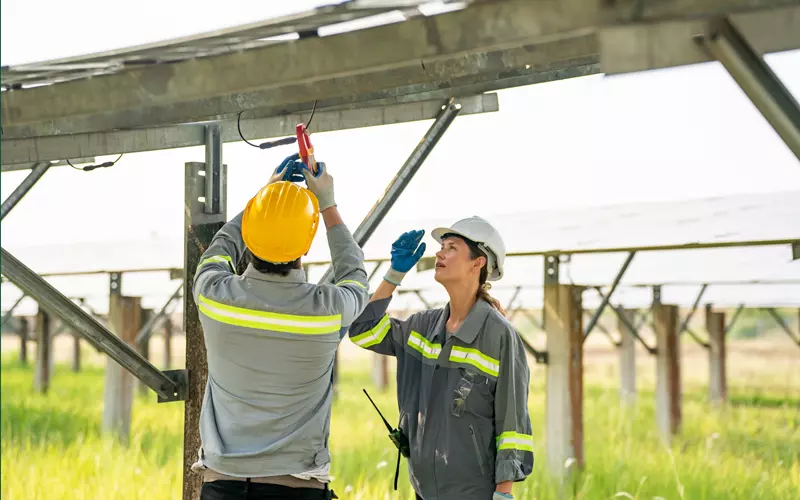
Solar projects can also introduce students to careers in electrical work, engineering, construction, energy management, and environmental technology. As renewable energy continues to expand, exposure to these fields can help students understand possible career pathways.
Potential Benefits of School Solar Projects
A solar installation at a school can provide multiple benefits. The exact results depend on factors such as system size, electricity usage, available sunlight, financing structure, and local regulations.
| Potential Benefit | How It May Help |
|---|---|
| Energy Awareness | Students and staff gain a better understanding of where electricity comes from. |
| Hands-On Education | Teachers can connect lessons to a working renewable energy system. |
| Sustainability Visibility | The community can see renewable energy technology in action. |
| Energy Planning | Schools can evaluate how solar fits into broader facility management goals. |
| Community Engagement | Families may become more interested in energy efficiency and solar options. |
What Homeowners Can Learn From School Solar Examples
Although schools and homes have different energy needs, many solar concepts are similar. A homeowner considering solar can learn from the same evaluation process used in larger projects.
Important considerations include:
- Roof suitability: The condition, orientation, and available space of a roof can affect solar design.
- Energy usage: Solar systems should be designed around electricity consumption patterns.
- Monitoring: Tracking energy production helps owners understand system performance.
- Long-term planning: Solar decisions should consider future energy needs and goals.
Residential solar companies such as Rumos Chem help homeowners evaluate solar options by considering site conditions, energy needs, and installation requirements. A professional assessment can help determine whether a property is suitable for solar and what type of system design may make sense. :contentReference[oaicite:0]{index=0}
Questions a School or Community Should Ask Before Installing Solar
Whether a project involves a school, business, or home, careful planning is important. Some useful questions include:
- Is the roof structurally ready for solar panels?
- How much electricity does the building use?
- What are the project’s educational or sustainability goals?
- How will solar production data be monitored?
- What maintenance and warranty considerations should be reviewed?
- How will the project be explained to students, families, and the community?
FAQ: School Solar Projects and Learning Benefits
Can solar panels be used as a teaching tool?
Yes. A solar installation can support lessons about renewable energy, electricity, environmental science, mathematics, and technology. Teachers can use system data and equipment as examples for classroom activities.
Does a school solar project eliminate electricity costs?
Not necessarily. Solar systems are typically designed to offset some electricity usage rather than automatically eliminate all energy expenses. The impact depends on system design, energy consumption, and local conditions.
Can homeowners benefit from learning about school solar projects?
Yes. School projects can help homeowners understand basic solar concepts, including energy production, system monitoring, roof considerations, and the importance of professional design.
Is every school building suitable for solar panels?
No. Solar feasibility depends on factors such as roof condition, available sunlight, structural considerations, electricity needs, and local requirements. A professional evaluation is needed before installation decisions are made.
Why are community solar examples valuable?
Visible renewable energy projects can help people better understand how solar technology works. They can encourage conversations about energy use, sustainability, and future planning.
Final Thoughts
This illustrative school district solar case study shows how renewable energy projects can provide value beyond electricity generation. A solar installation can become a practical classroom resource, a sustainability example, and a way to connect communities with clean energy concepts.
For homeowners in St. Louis, Missouri, the same principles apply: understanding energy use, evaluating property conditions, and learning how solar technology works are important steps before making an investment. Solar is not only about panels on a roof—it is also about education, planning, and creating smarter energy choices for the future.