Choosing the right solar panels is one of the most important decisions when planning a residential or commercial solar installation. Among the most common options available today are monocrystalline and polycrystalline solar panels. Both technologies convert sunlight into clean electricity, but they differ in design, appearance, performance characteristics, and ideal applications.
For homeowners and businesses considering solar energy, understanding the differences between monocrystalline vs polycrystalline solar panels can help you select a system that matches your energy goals, available space, budget considerations, and long-term expectations. Rumos Chem helps residential and commercial customers evaluate solar options and design systems tailored to their properties.
What Are Monocrystalline and Polycrystalline Solar Panels?
Both monocrystalline and polycrystalline solar panels are made using silicon, a semiconductor material that generates electricity when exposed to sunlight. The primary difference is how the silicon cells are manufactured.
Monocrystalline Solar Panels
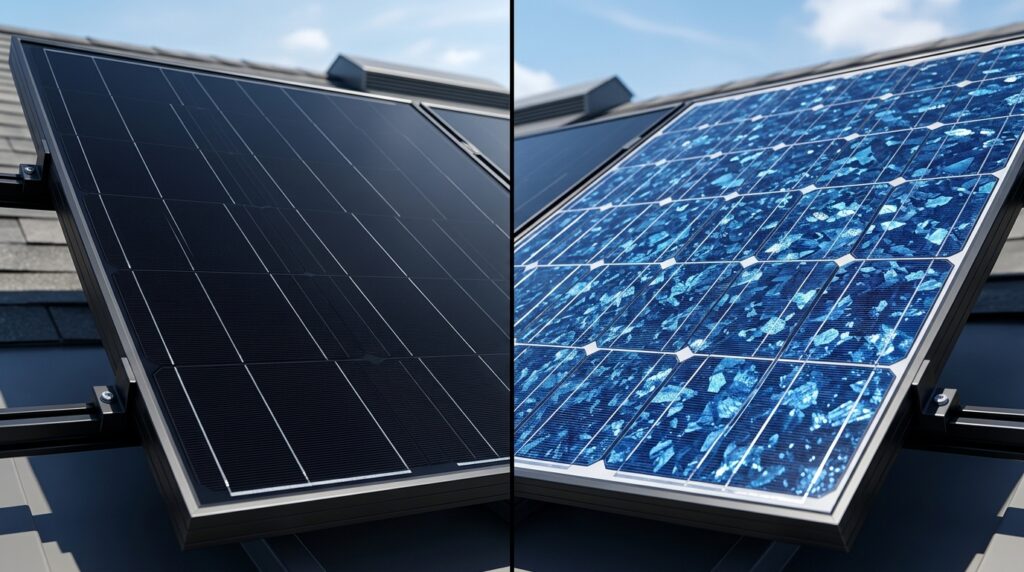
Monocrystalline solar panels are made from a single, continuous crystal structure of silicon. The manufacturing process creates highly uniform solar cells that typically provide strong performance and a sleek appearance.
Common characteristics of monocrystalline panels include:
- High-performing silicon cell design
- Dark black or deep blue appearance
- Strong energy output in limited roof space
- Long-term durability and reliability
- Common use in modern residential and commercial installations
Polycrystalline Solar Panels
Polycrystalline solar panels are produced by melting multiple silicon fragments together to form solar cells. This approach is generally simpler than producing single-crystal silicon cells, which has historically made polycrystalline panels a cost-conscious option.
Common characteristics of polycrystalline panels include:
- Blue-colored panel appearance
- Manufacturing process using multiple silicon crystals
- Reliable solar energy production
- Good option when roof space is less limited
- Often considered for projects where upfront equipment costs are a major consideration
Monocrystalline vs Polycrystalline Solar Panels: Key Differences
The best solar panel choice depends on your property and priorities. While both technologies can produce renewable energy effectively, their differences may influence which option fits your project.
| Feature | Monocrystalline Solar Panels | Polycrystalline Solar Panels |
|---|---|---|
| Silicon Structure | Made from a single silicon crystal | Made from multiple silicon crystal fragments |
| Appearance | Usually darker with a more uniform look | Typically blue with a visible crystal pattern |
| Space Requirements | Often produces more power per panel, useful for smaller roofs | May require more space for similar system output |
| Performance | Generally offers higher efficiency ranges | Generally offers slightly lower efficiency ranges |
| Common Applications | Residential rooftops, businesses, space-limited installations | Large rooftops, ground-mounted systems, cost-focused projects |
Efficiency and Energy Production Differences
Solar panel efficiency refers to how effectively a panel converts available sunlight into electricity. Monocrystalline panels typically achieve higher efficiency ranges compared with polycrystalline panels because of their single-crystal silicon structure.
However, efficiency is only one factor when designing a solar system. A lower-efficiency panel can still be a practical choice if there is plenty of available installation space and the system is properly designed.
Factors That Affect Solar Energy Production
- The amount of sunlight your property receives
- Roof direction and angle
- Shading from trees, buildings, or other structures
- Local weather patterns
- System design and installation quality
- Solar inverter and electrical equipment selection
Cost Considerations: Monocrystalline vs Polycrystalline
The total cost of a solar installation depends on many factors, including system size, installation complexity, equipment selection, labor requirements, and available incentives. Panel type is only one part of the overall project.
Historically, polycrystalline panels were often viewed as a lower-cost option because of their simpler manufacturing process. Monocrystalline panels have commonly carried a higher equipment cost due to their manufacturing method and performance characteristics.
Today, the solar industry has shifted significantly, and many installers primarily offer advanced monocrystalline technology because of improvements in manufacturing and demand for higher-performing systems.
| Consideration | Monocrystalline Panels | Polycrystalline Panels |
|---|---|---|
| Initial Equipment Cost | May be higher depending on model and manufacturer | Historically associated with lower equipment costs |
| Power Output per Panel | Typically higher | Typically lower compared with monocrystalline designs |
| Best Use Case | Properties needing maximum output from limited space | Projects with more available installation area |
| Long-Term Value | Can provide strong value through higher output potential | Can be suitable when system design and space allow |
Advantages and Disadvantages of Each Solar Panel Type
Benefits of Monocrystalline Solar Panels
- Higher efficiency ranges compared with many traditional polycrystalline models
- More electricity production potential in smaller spaces
- Modern appearance that many homeowners prefer
- Widely available from many solar manufacturers
- Well suited for residential rooftops and commercial buildings with limited roof area
Potential Drawbacks of Monocrystalline Solar Panels
- Equipment costs may be higher depending on the product selected
- Premium performance may not be necessary for every property
- Actual system output depends on installation conditions, not just panel type
Benefits of Polycrystalline Solar Panels
- Reliable solar electricity production
- Historically offered a budget-friendly equipment option
- Suitable for installations with plenty of available space
- Proven technology with years of use in solar projects
Potential Drawbacks of Polycrystalline Solar Panels
- Usually lower efficiency ranges compared with modern monocrystalline panels
- May require more panels or additional space for similar energy goals
- Less commonly selected in newer premium solar installations
How to Choose Between Monocrystalline and Polycrystalline Solar Panels
Selecting the right solar panel type starts with understanding your property’s energy needs and physical limitations. A professional solar assessment can help determine the best equipment based on your goals.
Consider These Factors Before Choosing Solar Panels
- Available roof space: If your roof area is limited, higher-efficiency monocrystalline panels may help maximize electricity production.
- Energy goals: Larger homes or commercial facilities with high electricity usage may benefit from panels designed for greater output.
- Property appearance: Homeowners who prioritize a uniform, modern look may prefer monocrystalline panels.
- Future energy needs: Consider whether you may add electric vehicles, battery storage, or additional electrical loads later.
- Project budget: Compare complete system value rather than focusing only on panel cost.
- Installer experience: Proper design and installation are critical for achieving expected solar performance.
Are Monocrystalline Panels Better for Homes and Businesses?
For many modern residential and commercial projects, monocrystalline panels are a popular choice because they combine strong efficiency, durability, and attractive design. They are especially useful when roof space is limited or when maximizing energy production is a priority.
Polycrystalline panels can still be appropriate for certain applications, particularly where space availability and project requirements make their characteristics a good match.
The right choice depends on your specific property, electricity usage, installation conditions, and long-term goals. A solar professional can evaluate these factors and recommend equipment that fits your needs.
Frequently Asked Questions About Solar Panel Types
1. Are monocrystalline solar panels more efficient than polycrystalline panels?
Monocrystalline solar panels generally have higher efficiency ranges than polycrystalline panels because they use a single-crystal silicon structure. However, overall system performance depends on many factors, including installation design, sunlight exposure, and maintenance.
2. Do polycrystalline solar panels still make sense?
Yes. Polycrystalline panels can still be a practical option for certain projects, especially when there is sufficient installation space and the system design meets the property’s energy requirements.
3. Which type of solar panel lasts longer?
Both monocrystalline and polycrystalline panels are designed for long-term outdoor use. Product warranties, manufacturing quality, installation practices, and environmental conditions can influence how a solar system performs over time.
4. Should I choose solar panels based only on efficiency?
No. Efficiency is an important factor, but it should be considered alongside cost, available space, energy goals, equipment quality, and professional installation. A well-designed system uses the right combination of components for your property.
Conclusion: Find the Right Solar Panel Solution for Your Property
Monocrystalline and polycrystalline solar panels can both provide clean, reliable solar energy, but their differences make them better suited for different situations. Monocrystalline panels are often preferred for higher efficiency and space-saving designs, while polycrystalline panels may fit projects where available space and system requirements allow for a different approach.
At Rumos Chem, we help homeowners and businesses evaluate solar options and create customized solar solutions based on their energy needs. Contact our team today to request a free solar quote and explore the best panel options for your property.