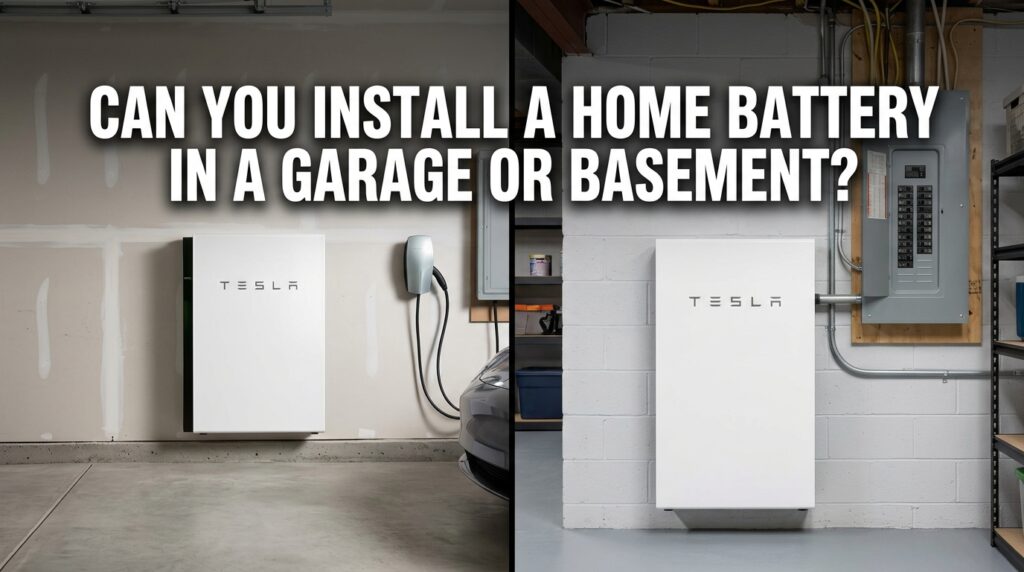
Can You Install a Home Battery in a Garage or Basement?
Adding a home battery backup system to your solar installation is one of the most effective ways to secure reliable power, store excess solar energy, and maintain electricity during utility outages. However, once home owners in St. Louis decide to invest in energy storage, the primary practical question is where to place the physical unit. Two of the most common candidate locations are attached garages and basements.
While both locations offer protection from external elements, mounting a high-capacity lithium battery system involves strict electrical codes, safety regulations, and environmental controls. At Rumos Chem, we provide comprehensive residential solar information and professional installation services across the St. Louis area, helping homeowners evaluate safety, local code requirements, and optimal performance when choosing a placement location.
Garage vs. Basement Placement: A Detailed Comparison
Choosing between a garage and a basement comes down to evaluating space availability, environmental exposure, and structural considerations. Both options offer distinct benefits depending on how your home is built and how you use the space.
An attached garage is often the preferred site because it provides solid wall framing, easy conduit access to the main electrical panel, and minimal impact on interior living quarters. However, garages experience wider temperature fluctuations throughout the year. Basements, on the other hand, offer highly stable temperatures year-round, which benefits battery efficiency. However, basements require careful consideration regarding moisture, potential water intrusion, and emergency egress.
Building Codes, Clearances, and Safety Standards
Modern battery storage systems are governed by strict safety regulations, including National Electrical Code (NEC) Article 706 and standards set by the National Fire Protection Association (NFPA 855). St. Louis municipalities enforce these standards through local residential building codes to ensure residential safety.
Key structural and clearance requirements include:
-
Clearance Space: Systems require a minimum clearance around the enclosure (typically 3 feet in front and 3 feet of headroom) to allow safe servicing and proper heat dissipation.
-
Impact Protection: If installed in a location exposed to vehicle movement, such as a garage, code requires physical protection such as heavy-duty steel bollards or elevated mounting above vehicle bumper level.
-
Wall Capacity: Wall-mounted batteries weigh several hundred pounds. They must be anchored directly into structural studs or solid concrete foundation walls using engineered mounting hardware.
-
Proximity Limits: Batteries cannot be installed in sleeping rooms, closets, or along primary escape pathways unless specifically rated and allowed by local code amendments.
Temperature Management and System Efficiency
Lithium-ion solar batteries perform best within a specified thermal window—typically between 32°F and 110°F for charging, though optimal operation occurs around 60°F to 80°F. Operating outside these parameters triggers internal thermal management systems, which can reduce efficiency or limit charging rates to protect the battery cells.
In St. Louis, seasonal climate extremes play a major role in location selection:
-
Summer Heat: Unconditioned garages in St. Louis can reach temperatures exceeding 100°F during July and August. Excessive heat speeds up cell degradation and forces internal cooling fans to run longer.
-
Winter Cold: Below-freezing winter temperatures in an unheated garage can limit the battery’s ability to charge quickly from your solar panels until internal heaters warm the system up.
-
Basement Advantage: A subterranean basement naturally insulates the unit against freezing winter nights and scorching summer afternoons, maintaining peak chemical efficiency year-round.
Ventilation and Gas Safety Considerations
Most modern residential solar batteries use Lithium Iron Phosphate (LFP) chemistry, which is far safer and more chemically stable than older battery types. Unlike traditional lead-acid batteries, sealed LFP batteries do not produce off-gassing during normal charging and discharge operations, meaning they do not require dedicated external exhaust ductwork under standard conditions.
However, adequate ambient ventilation remains essential to prevent heat accumulation around the inverter and battery management systems. The installation area must maintain sufficient room volume to ensure passive airflow. Additionally, interconnected smoke alarms or heat detectors are required in the space housing the storage unit to provide immediate notification in the rare event of a system fault.
Flood, Water, and Fire Safety Regulations
Water damage and fire safety are two critical hazards to plan for when choosing a location.
In basements, flood risks must be mitigated carefully. St. Louis basements can experience water seepage or floor backup during torrential rains. Battery systems installed in a basement must be mounted at least 12 inches above the finished floor level, or higher if the area has a history of moisture issues. Units should never be placed directly beneath water pipes, sewer lines, or HVAC condensation lines that could drip onto the enclosure.
For fire safety, building codes mandate specific protective barriers:
Utility Connections, Electrical Rules, and Permits
Connecting a energy storage battery to your home requires adherence to utility rules and local permitting processes. In the St. Louis area, electrical interconnects must meet the standards set by local utilities like Ameren Missouri, ensuring that power cannot backfeed into the grid during a power outage, which could endanger line workers.
The permitting process involves multiple steps:
-
Site Assessment: Rumos Chem evaluates your main electrical panel capacity (typically 150A or 200A), wall construction, and proximity to your solar inverter.
-
Plan Submission: Engineering schematics showing electrical one-line diagrams, site plans, fire separation details, and equipment spec sheets are submitted to your local city or county municipality.
-
Utility Interconnection Application: Formal request submitted to the utility provider detailing system size, inverter capacity, and safety shutoff locations.
-
Physical Inspection: Once installed, a local municipal inspector verifies physical clearances, bollard placement, conduit sealing, and smoke/heat detector integration before sign-off.
Ongoing System Maintenance and Care
Home energy storage systems are designed for long-term, low-maintenance operation, but periodic checks help ensure uninterrupted service and safety:
-
Visual Inspection: Check the enclosure every few months to ensure status light indicators remain green and no warning indicators are displayed.
-
Clearance Verification: Ensure garage items, lawn equipment, or storage boxes have not accumulated around the battery, blocking airflow or access panels.
-
Filter & Vent Cleaning: Dust and cobwebs can collect on cooling vents. Gently brush or wipe exterior air intakes annually to ensure smooth internal fan operation.
-
Moisture Monitoring: In basements, monitor room humidity levels and ensure sumps or dehumidifiers keep ambient moisture within reasonable limits.
Practical Placement Summary Tips
-
Select the Garage if: You want easy access, have an exterior wall near your electrical meter, and have space to install protective bollards.
-
Select the Basement if: You prefer optimal thermal stability, live in an area with extreme seasonal temperature shifts, and have a dry foundation wall with sufficient height.
-
Consult Professionals: The team at Rumos Chem handles full site evaluation, engineering design, permitting, and certified installation to keep your system safe and fully compliant.
Frequently Asked Questions
Can I install a solar battery outdoors instead of in a garage or basement?
Yes, many modern solar batteries carry outdoor-rated (NEMA 3R or NEMA 4X) enclosures that allow outdoor installation. However, outdoor installations exposed to direct St. Louis sunlight or freezing winter storms may require additional shade structures or temperature-mitigation equipment to preserve full battery health.
Do I need a protective post (bollard) in front of my battery?
If the battery is installed in a garage in a path where a vehicle could reasonably strike it, local building codes generally mandate a physical barrier, such as a concrete-filled steel bollard or mounting the system high enough to avoid impact zone risks.
Will a basement battery installation operate silently?
Residential battery systems are quiet. They produce a low humming noise during heavy charging or discharging when internal cooling fans operate, similar to the sound of a modern refrigerator.
How long does it take to complete a home battery installation?
The physical mounting and electrical wiring typically take 1 to 2 days. However, the total project timeline—including site design, municipal permits, and utility interconnection approval—usually takes several weeks from start to finish.
How does St. Louis weather impact battery performance long term?
St. Louis experiences cold winters and hot, humid summers. Installing your system in a temperature-controlled indoor location like a basement or an insulated garage protects battery capacity, maintains high round-trip efficiency, and helps ensure maximum operational lifespan.