What Happens to Solar Panels at End of Life? Recycling Options Explained
Solar panels are designed to provide reliable electricity for decades, but many homeowners eventually ask an important question: what happens when solar panels are no longer useful? Like other energy equipment, solar panels have a lifecycle that includes installation, operation, maintenance, and eventually retirement.
For homeowners considering solar in St. Louis, Missouri, understanding end-of-life options can provide confidence that a solar investment is part of a longer-term sustainability plan. Rumos Chem helps homeowners learn how residential solar works, from system design and installation considerations to long-term ownership questions like maintenance and recycling.
When solar panels reach the end of their useful service life, they do not simply have to become waste. Recycling, reuse, refurbishment, and responsible disposal options are all part of the growing solar industry approach to managing retired photovoltaic (PV) equipment. The U.S. Environmental Protection Agency and Department of Energy recognize solar panel recycling as an important part of responsible PV lifecycle management. :contentReference[oaicite:0]{index=0}
How Long Do Solar Panels Typically Last?
Most residential solar panels are built for long-term outdoor operation and are commonly expected to continue producing electricity for 25 years or more. Over time, solar panels may experience gradual performance decline due to weather exposure, temperature changes, and normal material aging.
End of life does not always mean a panel stops working completely. Some panels may still produce electricity but no longer meet the performance needs of their original installation. Others may be removed earlier because of roof replacement, storm damage, system upgrades, or changes in energy needs.
| Stage of Solar Panel Lifecycle | What Happens |
|---|---|
| Installation | Panels are mounted and connected to create a residential solar energy system. |
| Operation | Panels generate electricity while being monitored and maintained. |
| Performance decline | Energy production may gradually decrease as materials age. |
| End-of-life management | Panels may be reused, refurbished, recycled, or properly disposed of. |
What Materials Are Inside a Solar Panel?
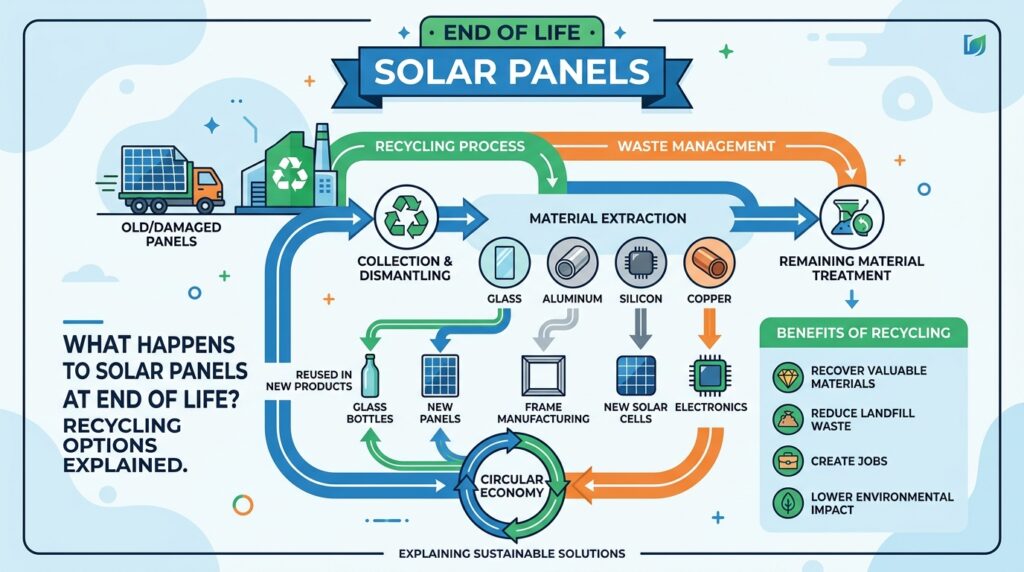
Understanding solar panel recycling starts with understanding what panels contain. Most residential solar panels use crystalline silicon technology. These panels are made from several materials that can potentially be recovered and reused.
- Glass: The front surface of a solar panel and one of its largest components by weight.
- Aluminum: The frame around the panel that provides structural support.
- Silicon: The semiconductor material responsible for converting sunlight into electricity.
- Copper: Used in wiring and electrical connections.
- Plastic and polymer materials: Used for protective layers and sealing.
- Small amounts of specialty metals: Certain panels may contain materials such as silver or other metals.
Because solar panels contain multiple bonded layers, recycling can require specialized processes to separate and recover useful materials. The EPA notes that glass, aluminum, copper, and other components can be recovered through recycling processes, although some materials are more difficult to separate. :contentReference[oaicite:1]{index=1}
Solar Panel Recycling Options
1. Material Recovery Through Recycling
The most common end-of-life option is recycling. During recycling, solar panels are processed to separate valuable materials so they can be used again in manufacturing or other applications.
A typical recycling process may include removing the aluminum frame and electrical components, separating glass from internal layers, and recovering materials such as metals and silicon. Recycling methods vary depending on panel type and available technology.
2. Solar Panel Reuse or Repurposing
Some solar panels that are removed from a home may still be functional. Instead of being recycled immediately, usable panels may be inspected, tested, refurbished, and installed in another application.
Reuse can be an option for certain off-grid projects, educational systems, or smaller energy applications. However, reused panels must be evaluated carefully because electrical standards, warranties, and installation requirements may differ from new equipment.
3. Responsible Disposal When Recycling Is Not Available
In some locations, recycling options may be limited or may depend on the panel type and available facilities. Proper disposal practices are important because solar panels contain a mixture of materials that should be handled responsibly.
Homeowners should avoid placing old panels in regular trash without checking local requirements. Recycling organizations, solar installers, manufacturers, and waste management providers may be able to provide guidance on available options.
What Happens During the Solar Recycling Process?
The exact recycling process depends on the technology used in the solar module, but many recycling systems follow similar steps.
| Recycling Step | Purpose |
|---|---|
| Collection and transportation | Panels are safely removed and delivered to an appropriate recycling facility. |
| Component removal | Frames, wiring, and junction boxes may be separated. |
| Material separation | Glass, metals, and other materials are separated using mechanical, thermal, or chemical methods. |
| Material recovery | Recovered materials can potentially be used in new products or manufacturing processes. |
The Department of Energy explains that recycling technologies exist for different PV technologies, but improving cost effectiveness and expanding recycling infrastructure remain ongoing industry goals. :contentReference[oaicite:2]{index=2}
Can Solar Panels Be Recycled in Missouri?
For Missouri homeowners, recycling options may depend on the panel manufacturer, recycling providers serving the region, and the condition of the equipment. Solar recycling networks continue to develop as more panels eventually reach retirement age.
If a residential solar system needs to be removed because of roof work, upgrades, damage, or replacement, homeowners should discuss end-of-life handling with their solar installer or seek information from recognized recycling organizations.
Working with an experienced solar company can also help homeowners understand the full lifecycle of their system, including equipment upgrades, maintenance needs, and future replacement considerations.
Why Solar Recycling Matters
Solar energy reduces reliance on traditional electricity sources by generating power from sunlight, but sustainability does not end when panels stop operating. Recycling helps recover useful materials, reduces unnecessary waste, and supports a more circular approach to solar technology.
As solar adoption continues to grow, improvements in recycling technology and infrastructure can help make future solar systems easier to manage throughout their entire lifecycle.
Frequently Asked Questions About Solar Panel End-of-Life Recycling
Are old solar panels recyclable?
Yes. Many solar panels contain recyclable materials such as glass, aluminum, and copper. Specialized recycling facilities can process panels to recover these materials, although available options vary by location and panel type.
Do solar panels go to landfills when they stop working?
Not necessarily. Recycling and reuse are available options, and homeowners should check with solar providers, recycling organizations, or local waste authorities before disposing of old panels.
Can I reuse old solar panels instead of recycling them?
In some cases, yes. Panels that still operate properly may be reused in other applications after inspection and testing.
What happens to solar panels after 25 years?
After many years of service, solar panels may continue operating, be repaired, replaced with newer technology, reused elsewhere, or sent through recycling processes to recover materials.
Does Rumos Chem recycle solar panels?
Rumos Chem focuses on residential solar information and installation services for homeowners in the St. Louis, Missouri area. For questions about retired equipment, homeowners should discuss available recycling or removal options based on their specific solar system and local resources.
Plan for the Full Solar Lifecycle
Choosing solar is a long-term investment, and understanding what happens at the end of a system’s life is part of making an informed decision. From installation to future upgrades and responsible recycling, every stage of a solar system’s lifecycle matters.
Rumos Chem helps St. Louis homeowners understand residential solar options and the practical considerations that come with owning a solar energy system. Learning about maintenance, performance, and end-of-life options can help homeowners feel prepared for the entire journey of solar ownership.