Do Home Batteries Work in Freezing Weather? A Guide for St. Louis Homeowners
For homeowners in St. Louis, Missouri, winter weather is an important consideration when adding solar battery storage. Freezing temperatures, overnight cold snaps, and occasional winter storms can all affect how a home battery system performs. The good news is that modern home batteries are designed to operate in a wide range of conditions, but cold weather does change how they charge, discharge, and protect themselves.
Understanding temperature requirements before installation can help you choose the right battery, plan the best installation location, and know what to expect during a Missouri winter. Rumos Chem helps St. Louis-area homeowners understand residential solar and energy storage options with a focus on properly designed systems rather than simply selling equipment.
How Cold Weather Affects Home Solar Batteries
Most modern residential batteries use lithium-ion technology. Like all batteries, lithium systems rely on chemical reactions that slow down in colder conditions. When temperatures drop, a battery may have less available energy, reduced charging ability, and slower response times.
The biggest difference homeowners should understand is that charging in cold weather is usually more sensitive than discharging. Many battery systems can provide power to a home in freezing temperatures, but the battery management system may limit or pause charging until the cells reach an acceptable temperature.
This protection helps prevent damage to the battery cells and is one reason manufacturer temperature specifications are important when selecting a system. :contentReference[oaicite:0]{index=0}
| Cold Weather Factor | Possible Effect on Battery | What Homeowners Should Know |
|---|---|---|
| Freezing temperatures | Reduced charging performance | The battery may limit charging until it warms up. |
| Very cold overnight conditions | Lower available energy | The system may not deliver the same performance as it would in moderate temperatures. |
| Repeated temperature swings | More thermal cycling | Proper placement can help maintain more stable operating conditions. |
Do Home Batteries Stop Working Below Freezing?
No. A properly installed home battery does not automatically stop working when temperatures fall below 32°F. However, every battery model has manufacturer-defined operating limits, and those limits can vary significantly between products.
Some systems include built-in heating features or thermal management designed to help maintain battery temperature. Other systems rely more heavily on installation location and environmental protection. The exact behavior depends on the battery manufacturer, model, software settings, and installation design. :contentReference[oaicite:1]{index=1}
For St. Louis homeowners, the important question is not simply, “Will the battery work in winter?” The better questions are:
- What temperature range does this specific battery require?
- How does it handle charging during freezing conditions?
- Will it be installed somewhere protected from extreme temperature swings?
- Does the manufacturer require additional cold-weather considerations?
Why Battery Placement Matters in the St. Louis Climate
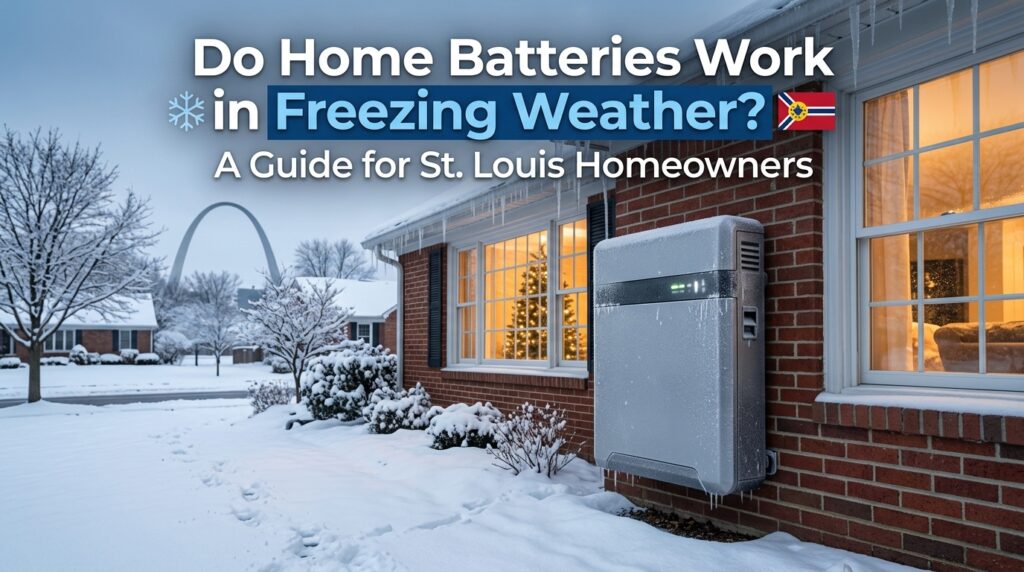
Where a battery is installed can have a major impact on winter performance. A battery mounted outdoors on an exposed wall experiences much different conditions than one installed in a temperature-controlled or insulated area.
Common residential installation locations include:
Garage Installation
Many St. Louis homes have garages that provide some protection from wind, rain, and direct exposure. However, an unheated garage can still reach freezing temperatures during winter cold waves.
An installer should evaluate:
- Garage insulation levels
- Distance from exterior doors
- Air movement around the battery
- Manufacturer requirements for indoor or outdoor installation
Basement or Interior Utility Space
A basement or interior location may provide a more stable environment, but it must still meet electrical, ventilation, clearance, and safety requirements. Not every home layout allows this type of installation, so the battery manufacturer’s instructions and local requirements should guide the decision.
Outdoor Installation
Some batteries are designed for outdoor use, but outdoor-rated does not mean unaffected by weather. The system still needs to operate within the temperature range specified by the manufacturer.
Manufacturer Operating Requirements Matter
Every battery has its own technical specifications. Homeowners should review the temperature information for the exact model being considered rather than relying only on general statements about lithium batteries.
| Question to Review | Why It Matters |
|---|---|
| What is the operating temperature range? | Shows the conditions where the battery can safely function. |
| What happens when charging below the minimum temperature? | Explains whether charging is reduced, delayed, or stopped. |
| Does the battery include thermal management? | Helps explain how the system handles cold conditions. |
| Are warranty terms affected by temperature conditions? | Clarifies long-term ownership expectations. |
Winter Monitoring for Your Solar Battery System
Cold weather does not mean homeowners need to constantly adjust their battery system, but winter monitoring is still a good practice.
During colder months, homeowners should:
- Check battery monitoring apps for warnings or temperature alerts.
- Review system performance after major cold snaps.
- Confirm the battery is operating normally before severe winter weather arrives.
- Keep the area around the battery clear of stored items, snow, or moisture.
Many modern battery systems automatically manage charging and discharging decisions through built-in battery management systems. If a system limits charging during extreme cold, that may be a protective feature rather than a malfunction.
Are Home Batteries Safe in Freezing Weather?
When installed according to manufacturer instructions, residential battery systems are designed with safety controls that monitor temperature, voltage, and other operating conditions.
Cold weather safety depends on:
- Correct installation practices
- Following manufacturer clearance requirements
- Using approved equipment and components
- Maintaining proper electrical connections
Homeowners should never modify battery enclosures, add unapproved heating equipment, or install batteries in locations that do not meet manufacturer requirements.
Questions to Ask a Solar Battery Installer in St. Louis
Before choosing a battery system, St. Louis homeowners should ask an installer specific questions about winter performance:
- What is this battery’s minimum charging temperature?
- How does this model handle freezing temperatures?
- Will my proposed installation location stay within manufacturer requirements?
- Does this system have built-in temperature management?
- How will winter weather affect backup power availability?
- How should I monitor the system during cold weather?
A quality solar installation discussion should consider your home’s location, electrical needs, backup goals, and local weather conditions—not just the battery’s capacity rating.
Frequently Asked Questions About Home Batteries in Freezing Weather
Can a solar battery charge when temperatures are below freezing?
It depends on the battery model. Many lithium-based systems reduce or stop charging when temperatures fall outside approved charging ranges. This protects the battery cells from potential damage. Always check the manufacturer’s specifications for the exact system installed.
Will my solar battery provide backup power during a St. Louis winter outage?
In most cases, a properly installed battery can provide backup power during cold weather. However, available energy and recharge performance may be affected by low temperatures, household electricity usage, and how the system is designed.
Should I install my battery indoors because of winter weather?
Not necessarily. Some outdoor-rated batteries are designed to operate outside when installed correctly. The best location depends on the specific battery, your home layout, safety requirements, and manufacturer instructions.
Does cold weather permanently damage a home battery?
Normal winter temperatures within the manufacturer’s approved operating range should not permanently damage a properly installed battery. Problems are more likely when batteries are operated outside their specifications, especially during charging conditions.
Final Thoughts: Choosing a Battery That Fits the St. Louis Climate
Home batteries can work well in St. Louis, even with freezing winter temperatures. The key is selecting a system with appropriate temperature requirements and installing it in a location that supports reliable operation.
For homeowners considering solar storage, winter performance should be part of the conversation from the beginning. Understanding cold-weather limits, placement options, monitoring practices, and manufacturer requirements helps ensure your battery system is prepared for year-round use.