Can Renters or Condo Owners Go Solar? How Community Solar Works
Solar power is often associated with homeowners who install panels on their roofs, but owning a single-family home is not the only way to benefit from solar energy. Renters, apartment residents, and condo owners may also have solar options, even when installing panels directly on their homes is not practical.
For many people living in St. Louis, Missouri, the biggest barriers are not interest in solar but property ownership, roof access, shading, building rules, or shared electrical systems. Community solar can help solve these challenges by allowing multiple customers to benefit from electricity generated by a shared solar project. :contentReference[oaicite:0]{index=0}
Rumos Chem helps homeowners and residents understand residential solar options and make informed decisions about clean energy. While rooftop solar may be ideal for some properties, community solar provides another path for people who cannot install their own panels.
Can Renters Go Solar?
Yes, renters can often participate in solar through community solar programs. Traditional rooftop solar usually requires control over the roof, permission from the property owner, and a long-term interest in the property. Since renters typically do not own the building, installing a permanent solar system is usually not an option.
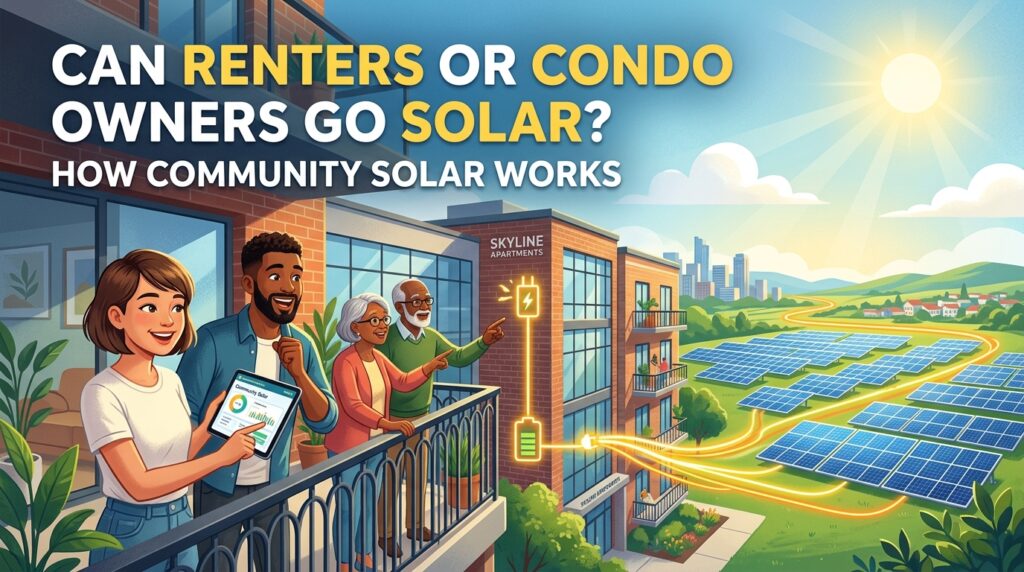
Community solar changes the process. Instead of placing panels on your home, you subscribe to a shared solar project located elsewhere. The electricity produced by the project is sent to the electric grid, and participating customers receive benefits based on their subscription or share of the project. :contentReference[oaicite:1]{index=1}
| Solar Option | Requires Roof Access? | Works for Renters? | Typical Setup |
|---|---|---|---|
| Rooftop solar | Yes | Usually no | Panels installed on the residence |
| Community solar | No | Often yes | Subscription to a shared solar project |
| Portable solar equipment | No | Sometimes | Small-scale personal solar devices |
How Community Solar Works
Community solar, sometimes called shared solar, uses a larger solar array to provide energy benefits to multiple customers. The panels are typically installed away from individual homes, such as on a solar farm, commercial property, or another suitable location.
The basic process is straightforward:
- A solar project generates electricity from sunlight.
- Multiple customers subscribe to receive benefits from the project.
- The electricity enters the utility grid.
- Subscribers receive credits or other financial benefits according to the program rules.
Community solar does not usually mean the electricity from the panels travels directly to your apartment or condo. Instead, the solar generation contributes energy to the grid while your participation is tracked through the program. :contentReference[oaicite:2]{index=2}
Why Community Solar Can Help Renters
Renters often face limitations that homeowners do not. They may not be able to modify the building, replace the roof, install equipment, or commit to a solar loan for a property they do not own.
Community solar can provide a way to support renewable energy without making permanent changes to a rental property. It may also be more flexible for people who expect to move, depending on the specific program agreement.
Can Condo Owners Install Solar Panels?
Condo ownership is different from single-family homeownership because some parts of the property may be shared. Roof ownership, building design, electrical systems, and association rules can all affect whether rooftop solar is possible.
A condo owner may be able to install solar if they have appropriate control over the roof area, their unit has suitable electrical connections, and the condominium association approves the project when required. Some condo communities may also consider shared solar installations that benefit multiple residents.
In Missouri, certain laws address solar panel restrictions for qualifying residential properties, including limits on homeowners associations prohibiting or restricting rooftop solar installations. However, individual situations can vary, especially for condominium properties with shared spaces. :contentReference[oaicite:3]{index=3}
Questions Condo Owners Should Ask Before Going Solar
- Who owns and maintains the roof?
- Does my unit have its own electric meter?
- Are there association rules about exterior improvements?
- Would the solar system serve one unit or multiple residents?
- Would community solar be a simpler option?
Community Solar vs. Rooftop Solar
Both options allow people to benefit from solar energy, but they work differently. Rooftop solar gives a property owner direct control over their equipment, while community solar allows participation without installing panels at home.
| Feature | Rooftop Solar | Community Solar |
|---|---|---|
| Panel location | Your home or building | Shared solar facility |
| Roof required | Yes | No |
| Best suited for | Property owners with suitable roofs | Renters, condo owners, and others without rooftop access |
| Equipment maintenance | Usually handled by the system owner | Usually handled by the project owner |
What Should St. Louis Residents Know About Community Solar?
Availability depends on local utility programs, project locations, and eligibility requirements. Some utilities and solar providers offer community solar programs that allow customers to participate without installing panels on their own property. For example, Ameren Missouri has offered community solar options for customers interested in receiving solar benefits without rooftop installation. :contentReference[oaicite:4]{index=4}
Before signing up, review the program details carefully. Important questions include:
- How are bill credits calculated?
- Is there a contract term?
- Are there cancellation fees?
- Can the subscription transfer if you move?
- Which utility account requirements apply?
Frequently Asked Questions About Solar for Renters and Condo Owners
Can a renter put solar panels on an apartment?
Most renters cannot install permanent rooftop solar without approval from the property owner. Community solar is often a more practical way for renters to participate in solar energy.
Do I need to own a home to use solar power?
No. Community solar programs are designed to allow people who cannot install rooftop systems, including many renters and condo residents, to benefit from solar energy. :contentReference[oaicite:5]{index=5}
Does community solar require solar panels on my building?
No. Most community solar projects use a shared solar array located away from participating homes. Some projects may be located on multifamily properties, but many are separate facilities.
Can condo owners use both rooftop solar and community solar?
Potentially. The right choice depends on roof access, association requirements, electrical setup, costs, and personal goals. A condo owner with a suitable property may explore rooftop solar, while another may prefer the simplicity of community solar.
Is community solar the same as owning solar panels?
No. In many community solar programs, customers subscribe to a project rather than owning the physical panels. The exact arrangement depends on the program structure.
Exploring Your Solar Options
Solar access is no longer limited to homeowners with large, sunny rooftops. Renters and condo owners have growing opportunities to participate through community solar and other shared energy solutions.
If you live in the St. Louis area and want to understand whether rooftop solar, community solar, or another option fits your situation, Rumos Chem provides residential solar information and installation guidance to help you evaluate available choices.