What Is the Difference Between a Solar AC Disconnect and a DC Disconnect?
When a solar energy system is installed on a home, several electrical components work together to safely move power from the solar panels to the household electrical system. Two important safety devices you may hear about are the solar AC disconnect and the DC disconnect. While they serve a similar purpose—allowing part of the solar system to be safely isolated—they operate on different sides of the system and handle different types of electricity.
For homeowners considering solar installation in St. Louis, Missouri, understanding these components can make it easier to review a system design, communicate with an installer, and understand how your solar equipment works. Rumos Chem helps homeowners learn about residential solar options and the electrical equipment involved in a properly designed installation.
Understanding the Two Sides of a Solar System
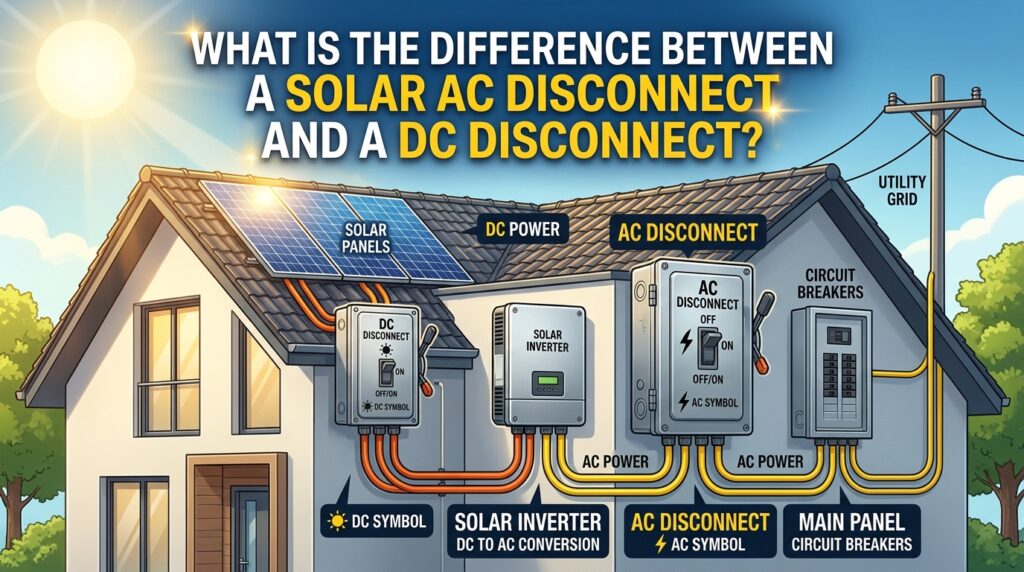
A typical grid-connected solar system has two electrical stages. Solar panels generate direct current (DC) electricity. The inverter then converts that DC power into alternating current (AC) electricity that can be used by your home and connected to the electrical grid.
The DC disconnect is located on the solar panel side of the inverter, while the AC disconnect is located after the inverter on the household electrical side. Because DC and AC electricity behave differently, the switches used to disconnect them must also be designed differently.
| Component | Where It Is Located | Electricity Type | Main Purpose |
|---|---|---|---|
| DC Disconnect | Between solar panels and inverter | Direct Current (DC) | Stops power flow from the solar array to the inverter |
| AC Disconnect | Between inverter and electrical service panel or utility connection | Alternating Current (AC) | Separates the solar system from the home’s electrical system or grid |
What Is a Solar DC Disconnect?
A DC disconnect is a switch designed to interrupt the electricity produced by solar panels before it reaches the inverter. Solar modules generate DC electricity whenever they receive sunlight, so the wiring between the panels and inverter can remain energized during daylight hours.
The DC disconnect gives qualified solar professionals a way to isolate the array from the inverter for maintenance, troubleshooting, or equipment replacement. It is specifically rated for photovoltaic (PV) applications because interrupting DC power requires specialized equipment.
Why DC Disconnects Are Different
Direct current behaves differently from alternating current when a circuit is opened. AC electricity naturally changes direction many times per second, which helps reduce an electrical arc when a properly rated switch opens. DC electricity does not have the same natural zero-crossing behavior, so a DC disconnect must be designed to safely control and extinguish potential electrical arcs.
This is why an ordinary AC switch should not be used on the DC side of a solar installation. Solar equipment must use components that are rated for the voltage and current characteristics of the PV system.
What Is a Solar AC Disconnect?
An AC disconnect is installed on the output side of the inverter. Once the inverter converts solar energy from DC into AC electricity, the AC disconnect provides a way to disconnect the solar system from the home’s electrical system or the utility connection.
Utilities and electrical inspectors may require accessible AC disconnect equipment so the solar system can be safely isolated when electrical work is being performed. The exact requirements can vary depending on local rules, utility policies, and the design of the solar installation.
The Role of the AC Disconnect in Home Solar
The AC disconnect can be useful for several purposes:
- Allowing electricians to safely work on the connection between the inverter and home electrical system.
- Providing a visible means of disconnecting solar generation from the grid.
- Helping meet applicable electrical code and utility interconnection requirements.
- Supporting safe maintenance procedures for solar equipment.
Key Differences Between AC and DC Solar Disconnects
| Feature | DC Disconnect | AC Disconnect |
|---|---|---|
| System Location | Solar panels to inverter | Inverter to home electrical system or utility connection |
| Current Type | Direct current | Alternating current |
| Primary Concern | Safely interrupting DC power and managing DC arcs | Safely isolating AC power from the inverter output |
| Common Location | Near inverter or integrated into inverter equipment | Near inverter, service equipment, or utility connection depending on design |
| Can They Be Interchanged? | No | No |
Do All Solar Homes Need Both Disconnects?
Many traditional string inverter solar systems include both DC and AC disconnecting equipment because the system has separate DC and AC sections. However, the exact equipment used depends on the type of solar technology installed.
For example, systems using microinverters convert electricity from DC to AC at the individual panel level. These systems may have a different equipment layout because there is less DC wiring leaving the roof area. The required disconnecting equipment depends on the system design, applicable electrical codes, and local utility requirements.
How Disconnects Support Solar Safety
Disconnect switches are important because solar panels continue producing electricity whenever sunlight is available. Simply turning off household appliances or shutting off a main breaker does not necessarily remove all energy from the solar equipment.
Properly installed disconnects help trained professionals isolate different parts of the system. They are one part of a complete solar safety design that also includes correct wiring, appropriate protective equipment, labeling, grounding, and inverter safety features.
Choosing the Right Solar Installation Partner in St. Louis
For homeowners in the St. Louis, Missouri area, a quality solar installation involves more than mounting panels on a roof. Electrical design, equipment selection, permitting, and safety components all affect how well a system performs over time.
Working with a residential solar company that understands local requirements can help ensure your system includes properly selected disconnect equipment and other necessary electrical components. Rumos Chem focuses on residential solar information and installation guidance rather than acting as a solar equipment distributor.
Frequently Asked Questions About Solar AC and DC Disconnects
What is the main difference between a solar AC disconnect and a DC disconnect?
The main difference is where they are installed and what type of electricity they control. A DC disconnect isolates the electricity coming from solar panels before it reaches the inverter. An AC disconnect isolates the inverter output from the home’s electrical system or utility connection.
Can a solar AC disconnect be used as a DC disconnect?
No. AC and DC disconnects are designed for different electrical characteristics. A disconnect must be specifically rated for the type of current and voltage it is controlling.
Why does solar equipment need disconnect switches?
Disconnect switches allow qualified personnel to safely isolate sections of a solar system during maintenance, repairs, inspections, or other electrical work.
Is the solar disconnect the same thing as turning off my home’s power?
No. A home’s main electrical breaker and solar disconnects serve different purposes. Turning off household power does not necessarily disconnect all parts of a solar energy system.
Where are solar disconnect switches usually installed?
The location depends on the system design and local requirements. DC disconnects are typically associated with the inverter and solar array wiring, while AC disconnects are commonly installed between the inverter and electrical service connection.
Final Thoughts
Solar AC disconnects and DC disconnects may look similar, but they perform different jobs in a photovoltaic system. The DC disconnect manages power before energy reaches the inverter, while the AC disconnect controls the connection after electricity has been converted for home use.
Understanding these components helps homeowners better understand their solar installation and the safety features built into their system. When planning residential solar in St. Louis, Missouri, proper equipment selection and professional installation are essential parts of creating a reliable solar energy system.