How Do You Check a Solar Installer’s License, Insurance and Reviews?
Choosing a solar installer is one of the most important steps in going solar. A properly designed and installed solar system can provide years of reliable energy production, while poor workmanship can lead to electrical problems, roof issues, permit delays, or unexpected repair costs.
Before signing a contract, St. Louis homeowners should take time to verify an installer’s qualifications. Checking licenses, insurance coverage, and customer reviews helps you understand whether a company is prepared to handle your home’s solar project safely and professionally.
Why Verifying a Solar Installer Matters
Solar installation involves more than placing panels on a roof. A complete residential solar project may include roof attachments, electrical wiring, inverters, utility interconnection, permitting, inspections, and system monitoring equipment.
A qualified installer should understand local building requirements, electrical standards, and utility procedures. In Missouri, solar projects may involve different trade requirements depending on the work being performed and the local jurisdiction. For example, electrical work associated with solar installations may require appropriate electrical licensing. :contentReference[oaicite:0]{index=0}
Taking time to verify an installer before hiring them can help you avoid contractors who lack experience, operate without proper coverage, or have a history of unresolved customer complaints.
How to Check a Solar Installer’s License
1. Ask the Installer for License Information
A reputable solar company should be willing to provide details about its business registration, electrical credentials, contractor licenses, and any certifications held by its team members.
Ask questions such as:
- What licenses are required for this solar installation?
- Who will perform the electrical connections?
- Are your electricians properly licensed for this type of work?
- Do you handle permits and inspections?
Be cautious if a company avoids answering licensing questions or cannot explain who is responsible for different parts of the installation.
2. Verify Local Requirements
Solar licensing rules can vary depending on where a home is located. St. Louis-area homeowners should check requirements with their city, county, or permitting authority because local rules may apply in addition to state requirements.
For example, St. Louis County provides residential solar permit guidance covering items such as electrical and building documentation required for solar energy devices. :contentReference[oaicite:1]{index=1}
| License or Credential | Why It Matters | What Homeowners Should Ask |
|---|---|---|
| Electrical contractor license | Helps verify that electrical portions of the project are handled by qualified professionals. | Who is responsible for wiring, inverter connections, and grid connection work? |
| Business registration | Confirms the company operates as a legitimate business entity. | Is the contract with the same company that holds the required credentials? |
| Solar certifications | Can demonstrate additional training and industry knowledge. | Do your installers have recognized solar training or certifications? |
How to Verify Solar Installer Insurance
Insurance protects both the homeowner and the workers performing the installation. Before hiring a solar contractor, request proof of insurance rather than simply accepting a verbal statement.
General Liability Insurance
General liability insurance can help cover certain types of property damage caused during installation. For example, if installation work accidentally damages part of your home, liability coverage may help address eligible claims.
Workers’ Compensation Insurance
Workers’ compensation coverage helps protect employees who are injured while working on your property. Without proper coverage, homeowners may face complications if an accident occurs during construction.
Missouri requirements for insurance can depend on the type of contractor and applicable licensing rules. For example, Missouri electrical contractor licensing requirements include proof of liability insurance for statewide electrical contractor licenses. :contentReference[oaicite:2]{index=2}
| Insurance Check | What to Request | Why It Is Important |
|---|---|---|
| General liability coverage | Certificate of insurance from the insurer or agent | Provides evidence that the company carries business protection. |
| Workers’ compensation | Confirmation of active coverage or applicable exemption documentation | Reduces risk related to workplace injuries. |
| Insurance limits | Ask what coverage amounts apply to your project | Helps you understand the protection available. |
How to Research Solar Installer Reviews
Reviews can provide valuable insight into an installer’s communication, workmanship, scheduling, and customer service. However, homeowners should look beyond a single rating and review multiple sources.
Look at Multiple Review Platforms
Check customer feedback from several sources, such as:
- Google Business reviews
- Better Business Bureau profiles
- Solar industry review platforms
- Local community discussions
A company with many reviews across different platforms may provide a clearer picture than a company with only a few testimonials on its own website.
Pay Attention to Review Details
The most useful reviews often mention specific parts of the solar process, including:
- How clearly the company explained pricing and equipment
- Whether permits and inspections were handled properly
- How the installation crew treated the property
- How quickly questions were answered after installation
Also look at how the company responds to negative reviews. A professional response that acknowledges concerns and explains next steps can provide useful information about customer service practices.
Questions to Ask Before Hiring a Solar Installer in St. Louis
Before moving forward with a solar installation, consider asking:
- How long have you installed residential solar systems?
- How many projects have you completed in the St. Louis area?
- Will your team handle permits and utility paperwork?
- Who will perform the electrical work?
- What warranties are included for equipment and workmanship?
- Can you provide references from recent customers?
A trustworthy installer should provide clear answers and help you understand the installation process from design through final inspection.
Red Flags to Watch For When Choosing a Solar Company
While every homeowner’s situation is different, some warning signs are worth paying attention to:
- Pressure to sign a contract immediately
- Promises of guaranteed savings without reviewing your energy use
- Unclear explanations about permits or inspections
- Refusal to provide insurance documentation
- No written warranty information
- Difficulty finding independent customer reviews
A careful review process can help you find an installer that matches your expectations and your home’s needs.
Understanding Certifications and Experience
Licensing is only one part of evaluating a solar installer. Experience with residential solar design, roof conditions, electrical systems, and local utility procedures can also make a difference.
Some installers pursue industry certifications to demonstrate additional training. While certifications do not replace required licenses or permits, they can be another factor homeowners consider when comparing companies.
FAQ: Checking a Solar Installer Before Hiring
How do I know if a solar installer is legitimate?
Start by verifying business information, required licenses, insurance coverage, and customer reviews. A legitimate installer should be transparent about qualifications and provide documentation when requested.
Does a solar installer need a license in Missouri?
Requirements depend on the type of work being performed and the location of the project. Electrical work connected with solar installations may require appropriate electrical licensing, and local jurisdictions may have additional requirements. :contentReference[oaicite:3]{index=3}
Should I ask for proof of insurance from a solar company?
Yes. Request proof of applicable insurance coverage before installation begins. Reviewing insurance documents helps confirm that the contractor has taken steps to protect homeowners and workers.
Are online reviews enough to choose a solar installer?
No. Reviews are useful, but they should be combined with license verification, insurance checks, project experience, warranty information, and a review of the proposed solar agreement.
What should a solar contract include?
A solar contract should clearly explain equipment, project costs, payment terms, warranties, installation responsibilities, expected timelines, and any assumptions about energy production or incentives.
Final Thoughts
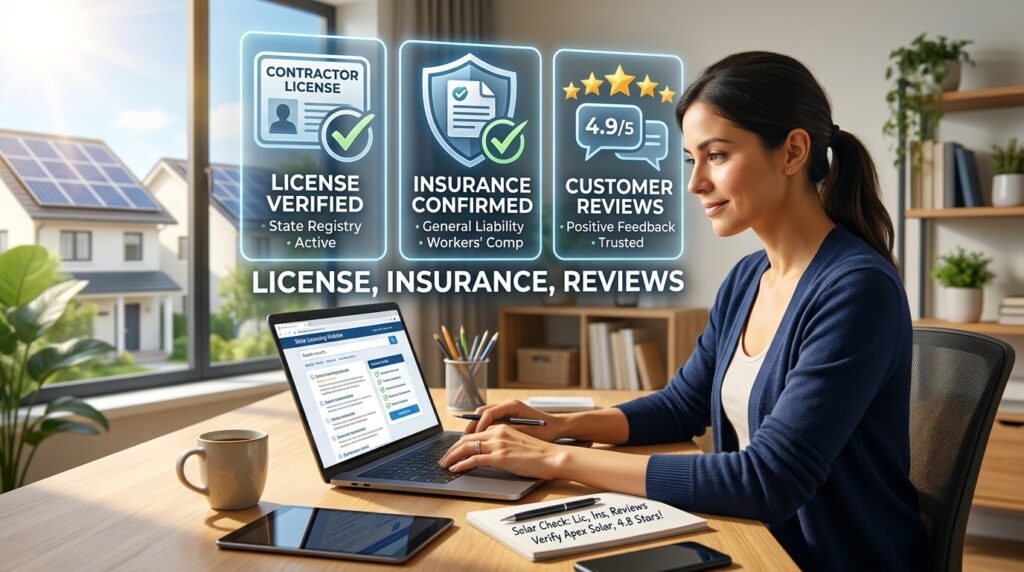
Checking a solar installer’s license, insurance, and reviews is an important step before investing in a home solar system. St. Louis homeowners can protect their property and make a more informed decision by verifying credentials, reviewing insurance documents, researching customer experiences, and asking detailed questions before signing an agreement.
A careful selection process helps ensure that your solar installation is completed by professionals who understand the technical, electrical, and permitting requirements involved in bringing solar energy to your home.