How Are Green Hydrogen and Solar Connected? A Homeowner’s Explainer
Green hydrogen is an emerging energy topic, not a routine residential appliance. Homeowners should treat it as a technology to understand rather than a promised product or savings opportunity. Solar electricity can power many loads directly, while hydrogen involves additional equipment, conversion steps, safety requirements, and professional oversight. This practical guide helps St. Louis homeowners understand the topic, ask better questions, and make decisions without relying on exaggerated claims. It is educational information, not a guarantee of performance, tax advice, or a substitute for a licensed professional.
Start With the Basic Concept
Solar planning works best when the homeowner separates what the system does today from what a future technology might do. Review your electricity use, roof, service equipment, and resilience goals before comparing products. A clear scope prevents a conversation about an interesting technology from becoming an unsupported promise.
Ask what energy is being produced, where it is used, what equipment converts it, and what happens when the grid is unavailable. Every additional component has its own operating limits, maintenance needs, warranty terms, and code requirements. Written answers are more useful than a sales presentation.
How the Pieces Fit Together
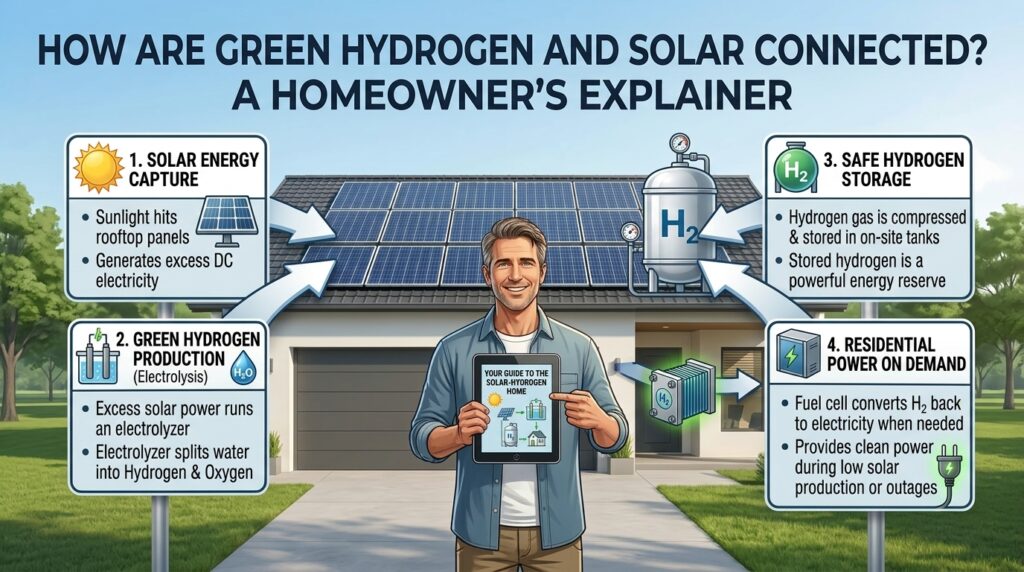
Residential solar is an electrical generation system. Panels make direct-current electricity, inverters convert it for household use, and monitoring shows production. Batteries can store electricity for later use. Other energy pathways may require compressors, electrolyzers, fuel cells, or specialized storage; those are not automatically part of a normal home solar installation.
Questions worth asking
- What problem is this equipment supposed to solve?
- What energy conversions occur, and what losses or limits should be expected?
- Who designs, permits, installs, inspects, and services each component?
- What happens during an outage or severe weather?
- Which claims are documented in the contract and which are only estimates?
Homeowner Planning Checklist
| Planning area | What to collect | Why it matters |
|---|---|---|
| Electricity use | Recent bills, major loads, and future changes | Shows the actual job the system must perform |
| Roof and site | Age, condition, shade, access, and structural questions | Determines feasibility and future maintenance |
| Electrical service | Panel capacity, disconnects, meter, and utility requirements | Supports safe design and permitting |
| Budget and ownership | Written scope, warranty, payment terms, and exclusions | Prevents surprises and unclear responsibility |
| Resilience goals | Critical circuits and desired outage behavior | Clarifies whether storage or load management is needed |
Safety, Codes, and Professional Oversight
Home energy equipment must be selected and installed for the actual site. Electrical work, pressurized systems, chemical processes, roof work, and backup operation can all create hazards when handled casually. A qualified installer should explain applicable permits, inspections, shutoffs, ventilation, clearances, and emergency procedures. Never open energized equipment or improvise a connection.
St. Louis weather also matters. Wind, hail, snow, heat, and storms can affect access and inspection timing. Ask how the design addresses water intrusion, serviceability, and safe shutdown. Keep manuals and emergency contacts where household members can find them.
Comparing Options Without Inventing Results
| Option | Potential role | Questions to verify |
|---|---|---|
| Solar with grid connection | Offsets some household electricity use | Utility rules, export treatment, and interconnection |
| Solar plus battery | Can shift energy and support selected loads | Usable capacity, controls, warranties, and outage limits |
| Efficiency and load management | Reduces the amount of energy needed | Which upgrades deliver measurable change in this home |
| Emerging technology | May address specialized future goals | Commercial maturity, safety, service, and total scope |
Compare like with like. A proposal should state equipment, assumptions, expected operation, exclusions, maintenance responsibilities, and what is not included. Avoid any provider that refuses to explain ownership, service, or what happens if a component fails.
Common Mistakes to Avoid
- Choosing equipment before defining the household goal.
- Comparing a guaranteed claim with an estimate from a different scope.
- Ignoring roof replacement, electrical upgrades, or permit timing.
- Assuming a battery or new fuel pathway automatically powers the whole home.
- Signing before reviewing warranty transfers and service response.
- Attempting DIY work on roof or electrical equipment.
A Practical Decision Process
Begin with a site assessment and a written description of the goal. Then ask for at least one proposal that identifies equipment and responsibilities. Review it with the utility, an electrician, roofing professional, tax adviser, or engineer when appropriate. Take time to compare operating assumptions rather than focusing on a single headline feature.
Keep a decision file with bills, photos, permits, proposals, contracts, serial numbers, and service notes. This record helps resolve questions later and makes future ownership changes easier. If the technology is emerging, ask what local service capability exists today and what happens if the original provider leaves the market.
When to Call a Qualified Professional
Call a qualified installer for error codes, recurring breaker trips, damaged panels, roof concerns, unfamiliar equipment, or any proposed change to wiring or controls. For specialized energy systems, consult professionals with the right license and training rather than assuming a general salesperson can design the complete installation. If there is smoke, sparking, a burning smell, or an unsafe condition, stay clear and contact emergency services as appropriate.
Frequently Asked Questions
Is this technology right for every homeowner?
No. The answer depends on the home, goal, budget, codes, utility rules, and available professional support. A site-specific review is essential.
Can I rely on a verbal production or savings promise?
No. Ask for written assumptions and verify current rules. Estimates vary with weather, usage, equipment, and contract terms.
Should I repair a system myself?
No. Use safe visual checks only and contact a qualified professional for electrical, roof, or specialized equipment work.
What should a proposal include?
It should identify scope, equipment, permits, interconnection, warranties, maintenance, exclusions, payment terms, and service contacts.
How can Rumos Chem help?
Rumos Chem serves St. Louis homeowners with residential solar information and installation guidance. Ask for a clear, site-specific explanation and verify details before committing.
Final Takeaway
Good solar decisions are built on a defined goal, accurate site information, careful safety review, and written responsibilities. Learn what the equipment can and cannot do, compare complete scopes, verify current utility and code requirements, and use qualified professionals for design and installation. That process is more dependable than chasing a headline claim.