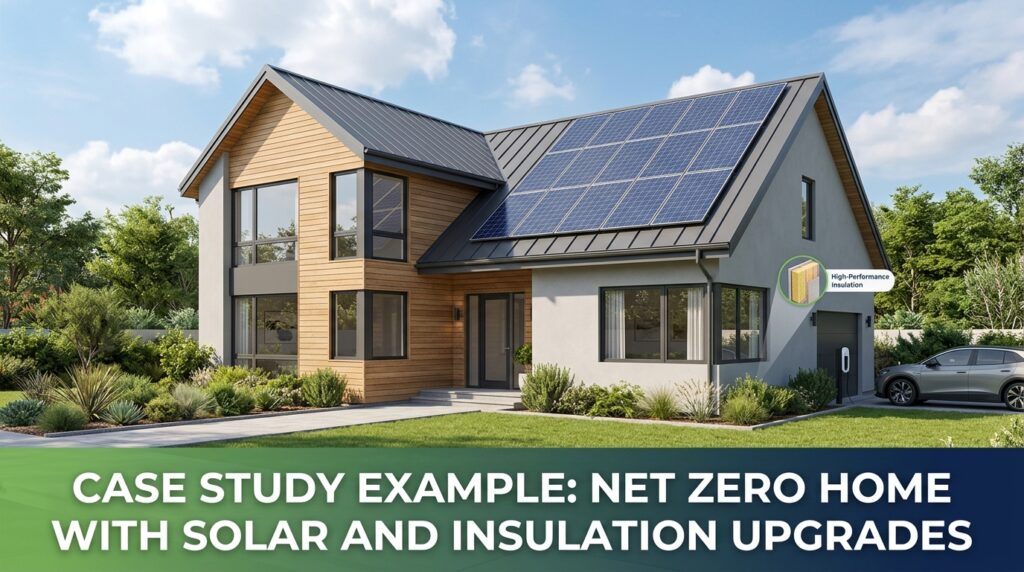
Case Study Example: Net Zero Home With Solar and Insulation Upgrades
Important note: This is an illustrative case study example created to explain how a homeowner in the St. Louis, Missouri area might approach a net zero home project. It is not based on a real Rumos Chem customer, and the home details, energy use, upgrade choices, and results described below are hypothetical. Every home has different conditions, and actual outcomes depend on factors such as home size, insulation levels, appliance efficiency, solar design, weather, and household energy habits.
Creating a net zero home requires more than simply installing solar panels. A successful project usually combines energy efficiency improvements with renewable energy production. For many homeowners, especially in climates like St. Louis where summers can be hot and winters can be cold, reducing energy waste before adding solar can make a major difference.
This example explores how a typical homeowner could combine insulation upgrades, air sealing, efficient equipment, and a properly designed solar system to move toward net zero energy performance.
What Is a Net Zero Home?
A net zero home is designed to produce approximately as much energy as it consumes over the course of a year. Instead of relying only on larger solar arrays to offset high energy use, net zero planning focuses first on reducing the amount of energy the home needs.
The basic strategy is:
- Improve the building envelope with insulation and air sealing.
- Upgrade inefficient heating, cooling, and appliances.
- Use energy monitoring to understand consumption patterns.
- Install solar panels sized to meet the remaining electricity demand.
For homeowners considering residential solar in St. Louis, efficiency upgrades can help create a more balanced and cost-effective energy system. Rumos Chem provides residential solar solutions designed around homeowner goals, property conditions, and energy needs. :contentReference[oaicite:0]{index=0}
Illustrative Home Profile: A St. Louis Net Zero Goal
In this example, a homeowner owns a single-family home in the St. Louis area and wants to reduce monthly energy costs while creating a more efficient and comfortable living space.
| Home Feature | Illustrative Example |
|---|---|
| Location | St. Louis, Missouri area |
| Home type | Existing single-family residence |
| Main goal | Reduce energy consumption and offset remaining electricity use with solar |
| Primary challenges | Older insulation, air leakage, seasonal heating and cooling demand |
| Project approach | Efficiency improvements followed by solar installation |
Step 1: Improving the Home Before Adding Solar
A common mistake homeowners make is installing solar before addressing major energy losses. If a home has poor insulation or significant air leakage, the solar system may need to be larger than necessary to compensate for wasted energy.
Insulation Upgrades
Insulation helps slow the movement of heat between the inside and outside of a home. In winter, it helps keep heated air indoors. During summer, it reduces the amount of heat entering the home.
Possible insulation improvements in an existing home may include:
- Adding attic insulation to improve thermal performance.
- Insulating areas with exposed gaps or insufficient coverage.
- Improving insulation around walls, floors, or crawl spaces where appropriate.
Air Sealing Improvements
Even well-insulated homes can lose energy through uncontrolled air leaks. Common areas for air leakage include attic access points, plumbing penetrations, electrical openings, doors, and windows.
Air sealing can help create a more consistent indoor temperature and reduce the workload placed on heating and cooling equipment.
Step 2: Reducing Electricity Consumption
After insulation and air sealing improvements, the next step is evaluating how the home uses electricity. A net zero design depends on understanding current consumption and identifying opportunities for improvement.
| Upgrade Area | Potential Benefit |
|---|---|
| LED lighting | Lower electricity use compared with older lighting technologies |
| High-efficiency HVAC equipment | Improved heating and cooling performance |
| Efficient appliances | Reduced daily electricity demand |
| Smart thermostats and controls | Better temperature scheduling and energy awareness |
| Energy monitoring | Helps identify high-use patterns |
These improvements do not generate energy, but they reduce the amount of energy the solar system needs to produce.
Step 3: Designing the Solar System
Once efficiency improvements are completed, the remaining electricity needs can be used to design a solar system. A solar installer typically considers factors such as roof orientation, available roof space, shading, electrical requirements, and historical energy consumption.
A properly sized solar system aims to match the homeowner’s energy goals rather than simply maximizing the number of panels installed.
Solar Design Considerations
- Roof condition: A roof should be evaluated before installation to avoid unnecessary removal and reinstallation later.
- Sun exposure: Shade from trees, buildings, or other structures can affect solar production.
- Energy usage: Past electricity bills provide valuable information for system planning.
- Future needs: Homeowners may consider electric vehicles, heat pumps, or other future electricity demands.
Rumos Chem offers residential solar installation services that include project evaluation, design, installation, and system activation processes. :contentReference[oaicite:1]{index=1}
Step 4: Monitoring and Maintaining Performance
After completing a solar and efficiency project, homeowners can track system performance and household energy use. Monitoring helps identify unusual changes and provides insight into how lifestyle choices affect energy consumption.
Regular solar maintenance can also help protect the long-term performance of the investment. Professional inspections and repairs can address issues involving panels, inverters, wiring, or other system components when needed. :contentReference[oaicite:2]{index=2}
Lessons From This Illustrative Net Zero Project
This example demonstrates an important principle: solar works best as part of a complete home energy strategy. A homeowner who improves efficiency first may be able to achieve similar energy goals with a more appropriately sized solar system.
Key takeaways include:
- Energy efficiency and solar work together.
- Insulation improvements can improve comfort as well as energy performance.
- Solar system sizing should be based on actual household needs.
- Every home requires a customized evaluation.
Frequently Asked Questions About Net Zero Homes and Solar
Can an older home become a net zero home?
Yes, many existing homes can move toward net zero performance through a combination of efficiency improvements and renewable energy upgrades. The exact process depends on the home’s condition, available space, and energy usage.
Should insulation be upgraded before installing solar?
In many cases, improving insulation and reducing energy waste before solar installation can help create a more efficient overall project. However, each home should be evaluated individually.
Does solar alone make a home net zero?
Not always. A home with high energy consumption may require a very large solar system to offset usage. Energy efficiency improvements often play an important role in reducing the required solar capacity.
Can a net zero home still use electricity from the grid?
Yes. Many net zero homes remain connected to the utility grid. Over the course of a year, the home’s energy production and consumption are balanced rather than requiring complete independence from the grid.
How do St. Louis homeowners start planning a solar project?
The first step is usually an evaluation of the home’s energy use, roof conditions, and solar potential. A professional solar consultation can help homeowners understand available options and determine whether solar is a good fit.
Final Thoughts
A net zero home is achieved through thoughtful planning, not just adding more technology. For homeowners in St. Louis, combining insulation improvements, energy efficiency upgrades, and solar power can create a more comfortable and sustainable home.
This illustrative case study shows the general process homeowners can follow when exploring a net zero energy goal. Because every property is different, a customized assessment is essential before choosing upgrades or designing a solar system.
Rumos Chem helps homeowners explore residential solar options with solutions focused on clean energy, efficiency, and long-term performance. :contentReference[oaicite:3]{index=3}