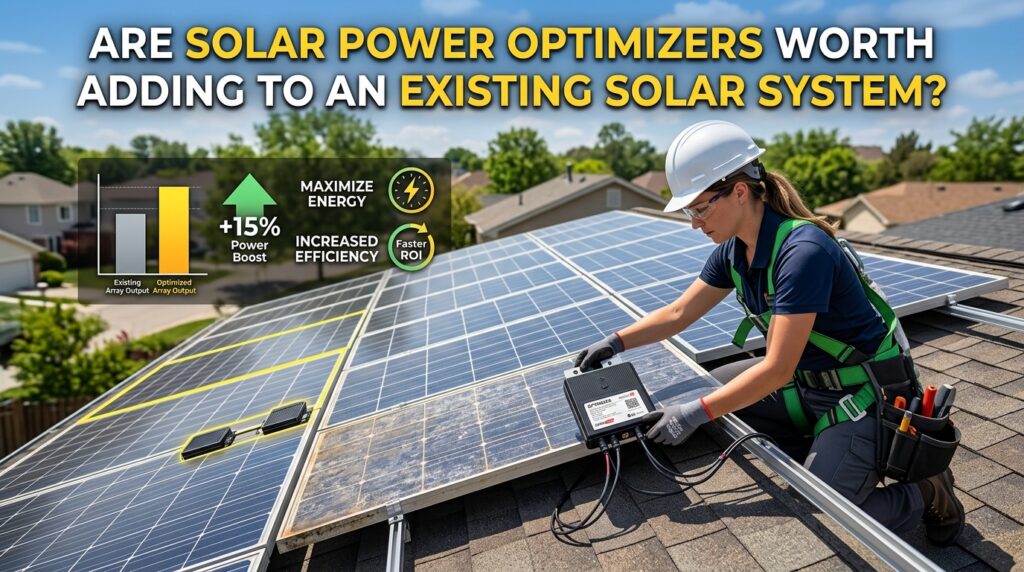
Are Solar Power Optimizers Worth Adding to an Existing System?
Solar power optimizers can be a useful upgrade for some existing solar installations, but they are not automatically the right choice for every home. Whether adding optimizers makes sense depends on your current system design, roof conditions, shading patterns, inverter type, and your goals for improving performance or monitoring.
For homeowners in St. Louis, Missouri, factors such as mature trees, changing seasonal sunlight, roof angles, and older solar equipment can influence whether module-level power electronics are worth considering. Rumos Chem helps homeowners understand solar options and make informed decisions about improving residential solar systems rather than simply adding equipment without a clear benefit.
What Are Solar Power Optimizers?
A solar power optimizer is a small electronic device connected to an individual solar panel. Unlike a traditional string inverter that manages groups of panels together, optimizers allow each panel to operate closer to its own maximum power point. They are a type of module-level power electronics (MLPE), along with microinverters.
Optimizers do not replace the main inverter in most systems. Instead, they manage the direct current (DC) electricity produced by each panel before sending it to a central inverter that converts the electricity into usable alternating current (AC) for the home.
This approach can help reduce losses caused by conditions where panels are not performing equally, such as partial shade, different roof orientations, or module mismatch. :contentReference[oaicite:0]{index=0}
How Solar Optimizers Work in an Existing System
In a traditional solar array, panels are often connected in strings. Because the panels are electrically connected, differences between modules can affect overall string performance. For example, a panel affected by shade from a tree branch, chimney, or nearby structure may operate differently from panels receiving full sunlight.
A power optimizer adjusts the voltage and current coming from an individual panel so that the panel can contribute energy more effectively without being affected as strongly by other modules in the same string. Optimizers may also provide panel-level monitoring, allowing homeowners and technicians to identify problems with individual modules rather than only seeing total system output. :contentReference[oaicite:1]{index=1}
| Solar System Type | How Power Is Managed | Potential Benefit |
|---|---|---|
| Traditional string inverter | Multiple panels operate together through shared inverter tracking | Simple design and fewer electronic components |
| Optimizer-equipped system | Each panel receives module-level DC optimization before the central inverter | Better handling of shade, mismatch, and monitoring needs |
| Microinverter system | Each panel converts DC electricity to AC individually | Independent panel operation and detailed monitoring |
When Adding Solar Optimizers May Be Worth It
Your Roof Has Partial Shading
Partial shade is one of the most common reasons homeowners consider adding optimizers. A roof that receives morning shade from trees or afternoon shade from nearby buildings may have panels operating under different conditions throughout the day.
Optimizers can reduce the impact of these differences by allowing affected panels to be managed independently. However, they cannot create electricity where sunlight is completely blocked. A heavily shaded panel will still produce less energy than a panel receiving full sun.
Your Panels Face Different Directions
Some homes have solar panels installed across multiple roof sections. A south-facing roof plane may receive different sunlight than an east- or west-facing section. Without module-level control, these differences can create design challenges.
Optimizers can help systems handle orientation differences by allowing each module to operate according to its own conditions. This can be useful for homes with complex roof layouts.
You Want Better System Monitoring
Many homeowners only see total solar production through their inverter or monitoring app. If production drops, it may be difficult to determine whether the issue involves one panel, wiring, the inverter, or another component.
Module-level monitoring from optimizer systems can make troubleshooting easier by providing more detailed information about individual panels.
When Solar Optimizers May Not Be Worth Adding
Not every existing solar system needs optimizers. If your roof has consistent sunlight exposure, panels have similar orientations, and your current system is operating properly, adding extra electronics may not provide enough improvement to justify the cost.
| Situation | Are Optimizers Usually Considered? | Reason |
|---|---|---|
| Roof receives full sun most of the day | May not be necessary | There may be limited mismatch for optimizers to correct |
| Panels have frequent partial shade | Often considered | Can help reduce the effect of uneven panel conditions |
| Need detailed panel diagnostics | May be useful | Provides additional monitoring information |
| Older inverter is failing | Depends on system design | A broader equipment upgrade may make more sense |
Considerations Before Retrofitting Optimizers
System Compatibility
Not all solar equipment works together. The existing inverter, panel specifications, wiring configuration, and optimizer model all need to be compatible. A solar professional should review the current system before recommending an upgrade.
Installation Access
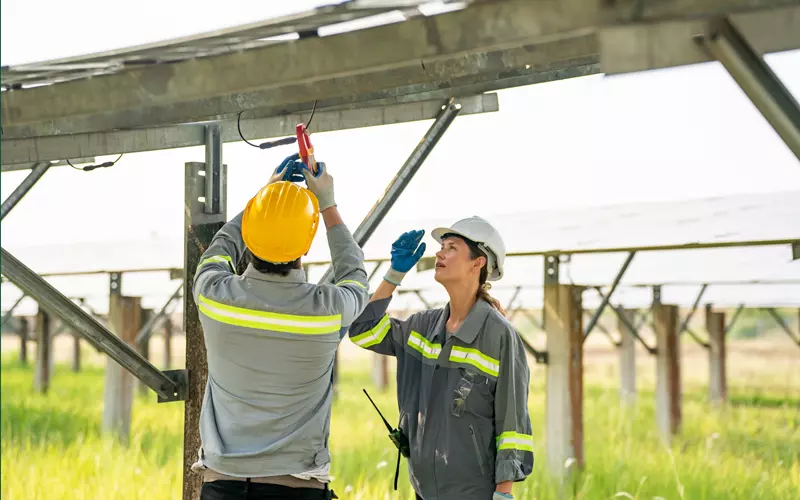
Adding optimizers to an existing array usually requires access to the panels. Depending on the roof design and installation method, this may involve removing and reinstalling panels. The condition of the roof and mounting equipment should also be considered.
Cost Versus Expected Benefit
The value of optimizers comes from solving a specific problem. If shade or mismatch is limiting production, the improvement may be meaningful. If the system already performs well, the added cost and complexity may not provide a noticeable advantage.
Solar Optimizers vs. Other Solar Upgrades
Before adding optimizers, homeowners may want to compare other possible improvements. In some cases, replacing an aging inverter, trimming shading obstacles, adding battery storage, or expanding the solar array may better address their goals.
A solar evaluation should look at the entire system rather than focusing on one component. The best upgrade depends on what is limiting performance today.
Are Solar Power Optimizers Worth It for St. Louis Homeowners?
For many St. Louis-area homes, the answer depends on the individual property. Tree coverage, roof direction, seasonal shade, and the age of the solar equipment all play a role.
Homes with shading challenges or complicated roof designs may benefit from optimizer technology. Homes with simple, unobstructed solar arrays may not see enough improvement to justify the upgrade.
Rumos Chem provides residential solar information and installation services in St. Louis, Missouri, helping homeowners evaluate practical solar improvements based on their existing equipment and energy goals.
Frequently Asked Questions About Solar Power Optimizers
Can solar optimizers be added to an existing solar system?
Yes, some existing systems can be upgraded with optimizers, but compatibility with the inverter, panels, and wiring must be reviewed first.
Do solar optimizers increase solar panel output?
Optimizers can improve performance when losses are caused by shade, mismatch, or different panel conditions. They do not increase the amount of sunlight available to a panel.
Are optimizers the same as microinverters?
No. Both are module-level power electronics, but optimizers manage DC electricity at the panel level while typically working with a central inverter. Microinverters convert DC electricity into AC at each individual panel.
Will optimizers fix a shaded solar panel?
Optimizers can reduce the impact of partial shading, but they cannot eliminate production losses caused by a panel receiving little or no sunlight.
Should I add optimizers before replacing my inverter?
It depends on the condition and compatibility of your current equipment. If the inverter is nearing the end of its service life, a larger system upgrade may be more practical.