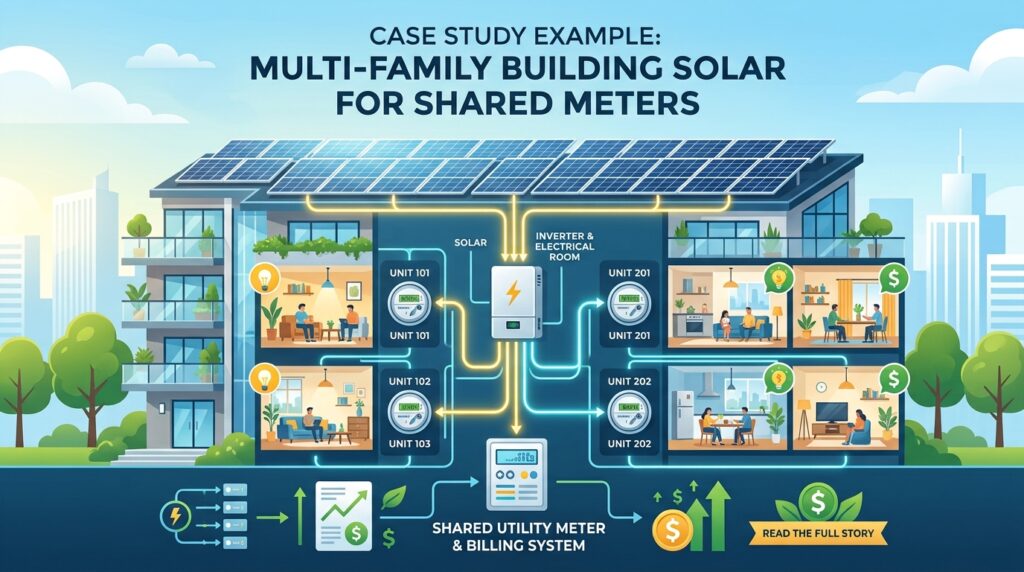
Case Study Example: Multi-Family Building Solar for Shared Meters
Note: This is an illustrative case study example created to explain how a multi-family solar project with shared meters may be planned and evaluated. It is not based on a real Rumos Chem customer project, and no specific building, savings results, installation details, or customer outcomes are being claimed.
Adding solar to a multi-family building can be more complex than installing panels on a single-family home. Apartment buildings, condominiums, and other shared residential properties often have multiple electrical accounts, common-area electricity usage, and unique ownership considerations. When a property uses shared meters, solar planning must focus on how electricity is consumed, how the system connects to the building, and how the benefits are allocated.
For property owners and managers in St. Louis, Missouri, understanding the process behind a multi-family solar project can make it easier to evaluate whether solar is a practical option. This example walks through a hypothetical shared-meter solar project and the important decisions involved.
Understanding Shared Meter Solar for Multi-Family Buildings
In a typical single-family home, one electric meter measures the household’s energy use, and a solar system is designed around that customer’s consumption. Multi-family buildings may have a different setup.
A building may have:
- A single utility meter serving the entire property
- Separate meters for individual units
- One or more meters dedicated to shared areas
- Electric loads such as lighting, elevators, HVAC equipment, or laundry facilities
A shared-meter solar project generally involves installing a solar array that offsets electricity measured through a common meter or another approved arrangement. The exact approach depends on the utility rules, building design, ownership structure, and applicable regulations.
Illustrative Case Study: Evaluating a Multi-Family Solar Opportunity
Imagine a hypothetical apartment building in the St. Louis area that is considering rooftop solar. The property owner wants to understand whether the available roof space and electrical setup could support a solar installation.
The first step is not selecting panels. The first step is evaluating the building itself.
| Evaluation Area | Questions to Consider |
|---|---|
| Electric usage | How much electricity does the shared meter consume throughout the year? |
| Roof conditions | Is there enough usable roof area, and can the roof support the additional equipment? |
| Electrical system | Can the existing electrical infrastructure support a solar connection? |
| Ownership structure | Who owns the building, and who will own and maintain the solar system? |
| Utility requirements | What interconnection requirements apply to the project? |
Step 1: Reviewing the Building’s Energy Profile
A solar assessment begins with understanding how the building uses electricity. A shared meter provides a combined picture of energy consumption, but the timing of usage also matters.
For example, a property with significant daytime electricity demand may have a different solar opportunity than one where most energy is used at night. Common-area lighting, building systems, and other electrical equipment can influence how much solar energy is consumed directly on-site.
An assessment may review:
- Historical electricity usage information
- Seasonal energy patterns
- Available roof orientation and shading conditions
- Potential system size based on site limitations
Step 2: Designing Around Shared Electrical Loads
In this example, the goal is not simply to cover every possible electricity need. Instead, the solar design is matched to the building’s practical limitations and electrical goals.
A shared-meter system may be designed to offset electricity used by areas such as:
- Hallway and exterior lighting
- Mechanical equipment
- Common-area appliances
- Other electricity loads connected to the shared meter
If individual apartment units have separate utility meters, additional considerations may apply. The building owner may need to explore available options for distributing solar benefits, depending on local utility programs and applicable rules.
Step 3: Considering Equipment and Installation Requirements
Multi-family solar projects require careful coordination because the system becomes part of a larger building infrastructure. Equipment selection depends on the project design, electrical requirements, and installation conditions.
| Project Component | Purpose |
|---|---|
| Solar panels | Convert sunlight into direct current electricity. |
| Inverter equipment | Converts solar electricity into usable alternating current electricity for the building. |
| Mounting system | Secures solar panels to the roof or approved installation area. |
| Monitoring system | Helps track system operation and energy production. |
| Electrical connections | Allow the solar system to connect safely with the building’s electrical infrastructure. |
Challenges That Multi-Family Solar Projects May Face
Roof and Structural Considerations
Multi-family buildings often have larger roofs, but not all roof space is automatically available for solar. Roof age, repairs, equipment placement, and structural requirements can affect project planning.
Addressing roof conditions before installation can help avoid complications later. In some cases, roof improvements may need to be completed before solar equipment is installed.
Electrical Coordination
Connecting solar to a larger building electrical system requires careful review. The project must account for existing electrical equipment and utility interconnection requirements.
Ownership and Financial Planning
A multi-family property may involve owners, associations, tenants, or management companies. Before moving forward, stakeholders typically need to understand responsibilities for system ownership, maintenance, financing, and long-term operation.
Why a Site-Specific Solar Assessment Matters
Every multi-family property is different. A building’s solar potential depends on factors such as roof design, energy consumption, shading, electrical configuration, and local requirements.
A professional solar assessment helps property owners understand realistic possibilities rather than relying on assumptions based only on roof size or building type.
For a residential solar information and installation company serving St. Louis, Missouri, the focus is helping homeowners, property owners, and communities understand how solar systems work and what factors influence a successful installation.
Frequently Asked Questions About Multi-Family Shared Meter Solar
Can apartment buildings install solar panels?
Yes, apartment buildings and other multi-family properties can potentially install solar panels. The feasibility depends on factors such as roof conditions, electrical design, ownership structure, and applicable utility requirements.
What is a shared meter in a multi-family building?
A shared meter measures electricity used by multiple building areas or systems rather than a single residential unit. Common examples include shared lighting, mechanical systems, or other common-area electricity loads.
Can solar power individual apartments if they have separate meters?
It may be possible in some situations, but the approach depends on local utility rules, available programs, and the building’s electrical setup. A project must be evaluated based on the specific property.
Does a larger roof always mean more solar?
No. Roof size is only one factor. Shading, roof condition, orientation, structural limitations, and electrical requirements all affect how much solar can realistically be installed.
Is this case study based on a real Rumos Chem project?
No. This is an illustrative example created to explain the planning process for multi-family shared-meter solar. It does not represent a real customer installation or specific project results.
Conclusion
Multi-family solar projects with shared meters require more planning than many single-family installations, but they can be an important option for reducing reliance on traditional electricity sources when a property is suitable.
The best way to understand a building’s solar opportunity is through a detailed evaluation of energy use, roof conditions, electrical requirements, and project goals. For St. Louis property owners exploring residential solar options, careful planning is the foundation of a successful solar project.