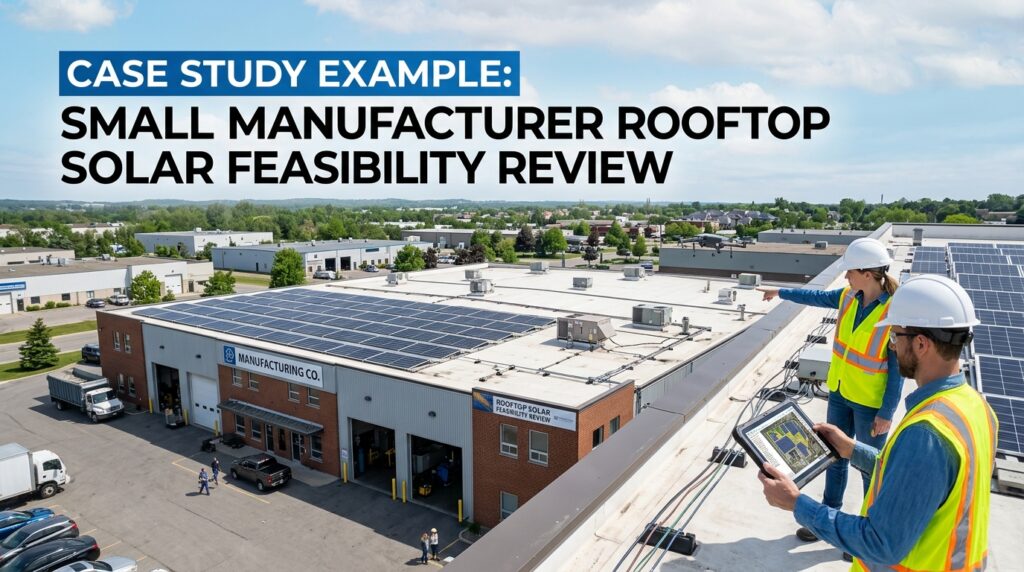
Case Study Example: Small Manufacturer Rooftop Solar Feasibility Review
Important note: This is an illustrative example only. It does not describe a real customer, a real facility, or a real Rumos Chem project, and it contains no actual results, savings, or performance data. The “manufacturer” below is a hypothetical business used to show how a rooftop solar feasibility review can be organized. Every real property is different, so use this as a framework for asking better questions, not as a prediction of what any building will do.
Rumos Chem provides residential solar information and installation services in the St. Louis, Missouri area, and we are not a distributor. Many of the same fundamentals apply when a small business owner considers a rooftop system: the roof, the electrical service, the energy use pattern, and the incentives and rules that apply. This walkthrough shows how a careful review might unfold for a small manufacturer and where outside professionals need to be involved.
The Hypothetical Scenario
Imagine a small manufacturer operating out of a single-story building in the St. Louis region. The business runs during daytime hours, has a mix of lighting, compressed air, and light machinery, and is curious whether a rooftop solar system could reduce its electricity purchases. The owner leases the building, has a few years left on the lease, and wants to understand the questions to answer before requesting formal proposals.
Because this is a hypothetical, we deliberately leave out building dimensions, utility bills, and system sizes. In a real review, those details come from documents and site visits, not assumptions.
Why a Feasibility Review Comes First
A feasibility review is a structured, early-stage look at whether solar is worth pursuing further. It is not a design, a quote, or an engineering approval. Its job is to surface deal-breakers early, such as an aging roof, a lease that prohibits modifications, or an electrical service that would need major upgrades, before the business spends time and money on detailed proposals.
Step 1: Understand the Building’s Energy Use
Solar is most useful when a system’s production lines up reasonably well with how a building uses power. Manufacturers often have daytime loads, which can be a natural fit, but the details matter.
- Gather at least twelve months of electric bills to see seasonal swings.
- Ask the utility whether interval (hourly or 15-minute) data is available for the account.
- Note which equipment runs during the day and which runs at night or on weekends.
- Identify any planned expansions, new machinery, or efficiency upgrades that would change usage.
- Check the current rate schedule, since business rates can include demand charges that behave differently from simple per-kilowatt-hour pricing.
Practical tip: Before sizing anything, look for low-cost efficiency improvements. Reducing baseline usage first can change what size system, if any, makes sense.
Step 2: Evaluate the Roof
The roof is often the deciding factor. A solar array may stay in place for decades, so the roof underneath it has to be in good shape for the same period or be scheduled for work first.
Key Roof Questions
- What is the roof type and material, and how old is it?
- Is there a known history of leaks, ponding water, or repairs?
- Is there a current warranty, and would installing solar affect it?
- Which parts of the roof face favorable directions and stay clear of shade?
- How much space is taken up by vents, HVAC units, skylights, and access paths?
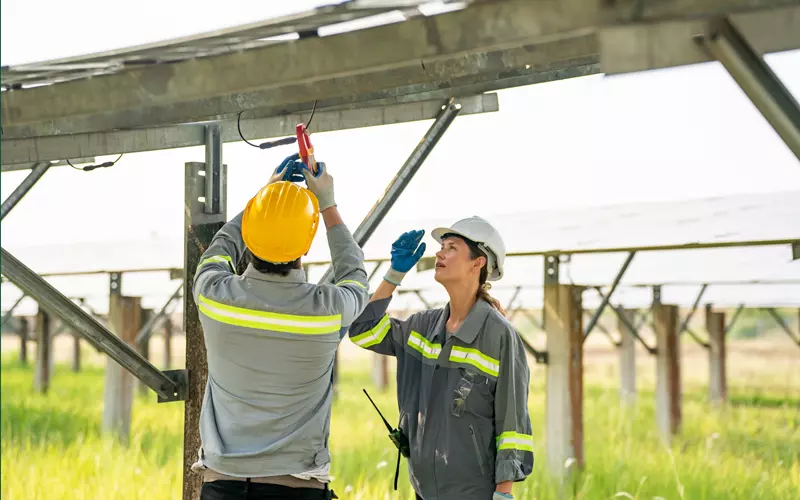
A licensed structural engineer or qualified roofing professional should confirm that the roof can carry the added weight and wind loads. Do not rely on a rule of thumb for this.
Step 3: Review Electrical Service and Interconnection
Commercial buildings vary widely in their electrical service. The size and condition of the main panel, the service voltage, and the utility’s interconnection requirements all influence whether a system is straightforward or costly to connect.
- Locate the electrical single-line diagram or ask an electrician to help document the service.
- Confirm the voltage and phase configuration of the service.
- Ask the utility about its interconnection process, timelines, and any application requirements for commercial customers.
- Ask how the utility credits or values energy exported to the grid, since these rules can change.
A licensed electrician or qualified solar engineer should review the electrical side. Utility rules and net metering policies differ by provider and change over time, so confirm current terms directly with the utility.
Step 4: Consider Ownership, Lease, and Insurance
Solar decisions are not only technical. If the business does not own the building, the landlord’s permission and the remaining lease term can make or break the idea.
Questions for the Business Side
- Does the lease allow roof penetrations or rooftop equipment?
- Would the landlord agree in writing, and would they want their own engineer to review it?
- Is the remaining lease term long enough to make the investment sensible?
- Will the property insurer need to be notified or approve the installation?
- Who is responsible for roof maintenance and for removing equipment if the lease ends?
Example Feasibility Checklist
The table below shows how a reviewer might organize findings. The entries are generic prompts, not results from any real building.
| Review Area | What to Check | Who Typically Helps | Possible Outcome |
|---|---|---|---|
| Energy use | Twelve months of bills, rate schedule, daytime load pattern | Business owner, utility, energy advisor | Clear picture of when and how much power is used |
| Roof condition | Age, material, leaks, warranty, available space | Roofing professional, structural engineer | Proceed, repair first, or reconsider |
| Electrical service | Panel capacity, voltage, condition, single-line diagram | Licensed electrician, solar engineer | Simple connection or upgrades needed |
| Utility rules | Interconnection process, export crediting, commercial requirements | Local utility | Understand timeline and financial treatment |
| Permits and codes | Local building, electrical, and fire code requirements | Local permitting office, installer | Know approvals needed before design |
| Lease and insurance | Landlord consent, remaining term, insurer notice | Landlord, attorney, insurance agent | Permission granted or project stops early |
Step 5: Compare Financial Pathways
Once the technical basics look workable, the next question is how the business might pay for a system and what financial factors apply. Available incentives, tax treatment, and financing products change, so verify the current details with a qualified tax professional and with official sources before relying on any of them.
Common Ways to Approach the Decision
| Approach | General Idea | Things to Ask About |
|---|---|---|
| Purchase with cash | The business pays for the system and owns it | Tax treatment, maintenance responsibility, effect on cash flow |
| Loan financing | The business borrows to purchase the system | Interest terms, fees, collateral, monthly obligations |
| Lease or power purchase agreement | A third party owns the system and the business pays under a contract | Contract length, escalators, transfer terms, end-of-term options |
Each option has different risks and obligations. Read contracts carefully, and have an attorney or financial advisor review anything long-term.
Step 6: Weigh Risks and Unknowns
A good review also lists what could go wrong or remain uncertain. That honesty helps the owner decide whether to move forward.
- Roof risk: The roof may need repair or replacement sooner than expected.
- Policy risk: Utility rate structures, export rules, and incentives can change.
- Usage risk: A change in production schedule could shift how much solar power the business can use directly.
- Business risk: Moving or ending a lease early could strand the investment.
- Maintenance: Systems need periodic inspection and occasional repairs over their lifetime.
Practical Tips for Getting Started
- Collect your documents first: bills, roof records, building drawings, lease, and insurance information.
- Request more than one proposal, and ask each provider to explain their assumptions in plain language.
- Ask for the scope of any site visit and what is and is not included in a written proposal.
- Be cautious about any proposal that promises specific savings without showing the assumptions behind it.
- Confirm that installers and electricians are properly licensed and insured for work in Missouri and your local jurisdiction.
- Keep a written record of every question and answer so decisions are easy to review later.
When to Consult Qualified Professionals
A feasibility review is a starting point, not a substitute for professional judgment. Bring in experts when:
- The roof’s condition or structural capacity is uncertain (structural engineer or roofing professional).
- The electrical service looks limited or outdated (licensed electrician or engineer).
- You are considering a lease, loan, or power purchase agreement (attorney and financial advisor).
- You want to understand tax treatment or incentives (tax professional).
- You need permits or code compliance guidance (local building and permitting authorities).
- You are unsure about utility interconnection or crediting rules (your electric utility).
Rumos Chem focuses on residential solar in the St. Louis area, so for a commercial or industrial building, look for professionals with commercial experience and check their credentials and references.
Frequently Asked Questions
Is this case study based on a real business?
No. It is a hypothetical example created to show how a rooftop solar feasibility review can be structured. It does not reflect a real customer, project, or result.
Can a small manufacturer’s rooftop support solar panels?
It depends on the roof’s age, condition, structure, and available space. A qualified structural engineer or roofing professional should evaluate the specific building before any design work begins.
Does solar always make financial sense for a business?
Not necessarily. The answer depends on energy use, rate structure, roof and electrical conditions, financing, and current incentives and policies. A careful review with qualified advisors helps determine whether it fits your situation.
What should I ask a solar provider before signing anything?
Ask about their licensing and insurance, the assumptions behind any production or savings estimate, warranty terms, maintenance responsibilities, and what happens if the system underperforms. Get key terms in writing and have an attorney review long-term contracts.
Do I need permission from my landlord or utility?
If you lease your building, you will likely need the landlord’s written consent. You will also need to follow your utility’s interconnection process and any local permit requirements before a system can operate.
Final Thoughts
A thoughtful feasibility review looks at far more than the panels themselves. It weighs energy use, roof condition, electrical capacity, lease terms, financing, and policy risks together. By organizing your questions early and involving the right professionals at the right moments, a small manufacturer can decide with confidence whether to pursue rooftop solar further or to skip it. Remember that this article is an illustrative example, and any real decision should rest on your own building’s documents, site inspections, and professional advice.