Installing solar panels is one of the most effective ways for homeowners to reduce long-term electricity costs while gaining more control over their energy use. However, many homeowners want to understand what solar savings might actually look like before investing in a system. A real-world solar project depends on factors such as electricity rates, roof conditions, sunlight availability, system size, and financing options.
Important note: The case study below is an illustrative, hypothetical example created for educational purposes. The household, system design, costs, savings, and timeline shown are not based on a real Rumos Chem customer project and should not be considered a guarantee of results. Actual solar performance and savings will vary depending on location, energy consumption, utility rates, incentives, and installation conditions.
Project Overview: Example of an 8 kW Rooftop Solar System
For this example, consider a typical U.S. household interested in reducing its dependence on grid electricity. The homeowner uses electricity for common residential needs, including lighting, appliances, heating or cooling equipment, electronics, and daily household activities.
The homeowner decides to install an 8 kW rooftop solar system designed to offset a significant portion of annual electricity consumption. An 8 kW system is a common residential solar size that can provide meaningful energy production without requiring an unusually large roof area.
Illustrative Household Energy Profile
The example household has the following energy characteristics:
- Average monthly electricity usage: approximately 900 kWh
- Annual electricity usage: approximately 10,800 kWh
- Average utility electricity rate: approximately $0.18 per kWh
- Goal: reduce monthly electricity costs through rooftop solar generation
The actual savings from solar depend heavily on utility pricing, available incentives, net metering policies, and how much of the generated electricity is used directly by the homeowner.
| Example Project Detail | Illustrative Value |
|---|---|
| Property Type | Single-family residential home |
| Solar System Size | 8 kW rooftop system |
| Estimated Annual Solar Production | Approximately 10,000 kWh |
| Estimated Roof Space Needed | Approximately 400-500 square feet |
| Primary Objective | Reduce electricity purchases from the utility |
System Design: How an 8 kW Rooftop Solar Installation Works
An 8 kW solar system uses multiple photovoltaic panels installed on the home’s roof to convert sunlight into usable electricity. The electricity produced by the panels first powers the home’s appliances and electrical systems. Any excess energy may be sent back to the grid depending on local utility rules.
Example Solar System Components
- Solar panels: High-efficiency photovoltaic modules designed to generate electricity from sunlight.
- Inverter: Converts the direct current (DC) electricity generated by panels into alternating current (AC) electricity used by household devices.
- Mounting equipment: Secures panels safely to the rooftop while supporting proper orientation and durability.
- Monitoring system: Allows homeowners to track energy production and system performance.
- Electrical connections: Integrates the solar system with the home’s existing electrical infrastructure.
Example Energy Production
Solar production changes throughout the year because of weather conditions, seasonal sunlight differences, shading, and panel orientation. The following figures demonstrate a simplified example of how an 8 kW system could contribute to household electricity needs.
| Energy Category | Illustrative Annual Amount |
|---|---|
| Household Electricity Consumption | 10,800 kWh |
| Solar Electricity Generated | 10,000 kWh |
| Electricity Purchased from Utility After Solar | 2,000 kWh |
| Example Energy Offset | Approximately 80-90% |
Cost and Savings Breakdown
The cost of a solar installation varies based on equipment selection, labor requirements, permitting, location, incentives, and financing method. In this hypothetical example, round numbers are used to show how a homeowner might evaluate the financial impact of an 8 kW system.
Illustrative Installation Cost
| Cost Category | Example Amount |
|---|---|
| Solar Equipment and Installation | $24,000 |
| Estimated Incentives or Tax Benefits | $7,000 |
| Example Net Project Cost | $17,000 |
Available incentives differ by location and may change over time. Homeowners should review current federal, state, and local programs when planning a solar investment.
Illustrative Electric Bill Reduction
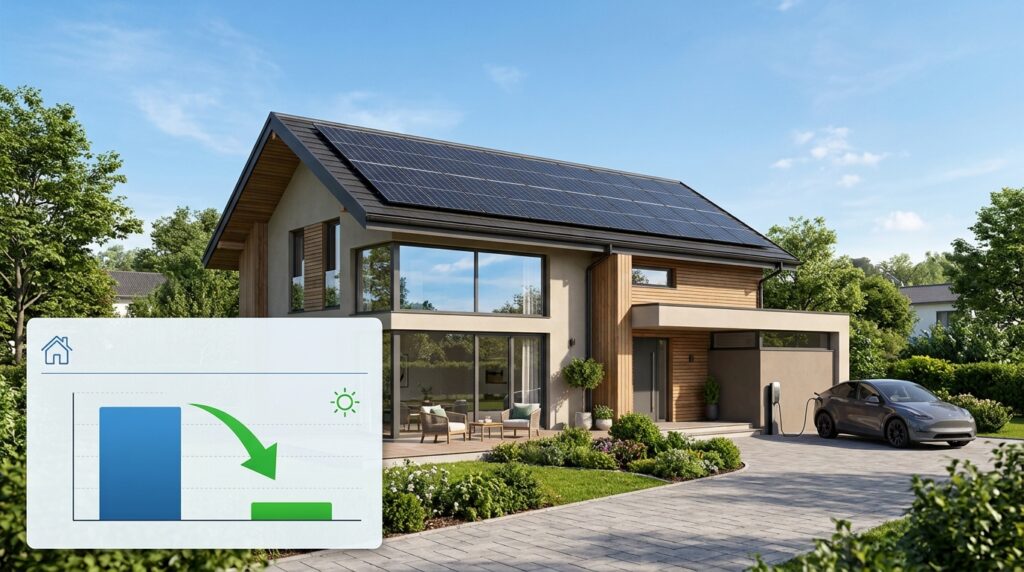
Before solar installation, the example homeowner pays approximately $160 per month for electricity. After installing solar, the remaining utility bill is reduced because much of the household’s electricity comes from the rooftop system.
| Electricity Cost Example | Before Solar | After Solar |
|---|---|---|
| Average Monthly Electricity Bill | $160 | $35 |
| Annual Electricity Cost | $1,920 | $420 |
| Illustrative Annual Savings | $1,500 per year | |
Using these example numbers, the homeowner could potentially recover the net system cost over many years through reduced electricity expenses. The actual payback period will depend on future electricity rates, system performance, maintenance costs, financing terms, and incentive availability.
Example Installation Timeline: From Consultation to Activation
A professional solar installation involves several steps beyond simply placing panels on a roof. Planning, approvals, equipment delivery, installation, and utility requirements all affect the project schedule.
| Project Stage | Illustrative Timeframe |
|---|---|
| Initial Consultation and Site Review | 1-2 weeks |
| System Design and Proposal | 1-2 weeks |
| Permitting and Approvals | 2-6 weeks |
| Equipment Installation | 1-3 days |
| Inspection and Utility Approval | 1-4 weeks |
Timelines can vary significantly depending on local permitting requirements, utility processes, weather conditions, and project complexity.
Key Takeaways From This Illustrative 8 kW Solar Example
This hypothetical example highlights several important factors homeowners should consider when evaluating rooftop solar:
- System size matters: An appropriately sized solar system can help match electricity production with household energy needs.
- Electricity rates influence savings: Higher utility rates generally increase the value of offsetting purchased electricity.
- Solar is a long-term investment: The financial benefits typically occur over many years rather than immediately.
- Professional installation is important: Proper design, permitting, and installation help ensure safe and reliable operation.
- Every property is different: Roof angle, shading, location, and energy habits all affect solar performance.
How to Evaluate Whether an 8 kW Solar System Is Right for Your Home
Before investing in solar, homeowners should review several factors:
- Analyze past electricity bills to understand current energy consumption.
- Check whether the roof receives sufficient sunlight throughout the day.
- Consider future electricity needs, such as electric vehicles or home upgrades.
- Compare equipment options, warranties, and installation experience.
- Request a detailed solar proposal with estimated production and costs.
A qualified solar installer can evaluate the property and create a system design based on actual conditions rather than general assumptions.
Frequently Asked Questions
1. How much electricity can an 8 kW solar system produce?
An 8 kW solar system can produce different amounts of electricity depending on location, sunlight availability, panel orientation, shading, and weather. In this illustrative example, the system produces approximately 10,000 kWh annually, but actual production will vary.
2. Can an 8 kW solar system eliminate my electric bill?
Solar may significantly reduce electricity costs, but many homeowners continue to receive utility bills due to fixed charges, seasonal changes, electricity usage patterns, and local utility policies. Complete bill elimination is not guaranteed.
3. How long does an 8 kW solar installation take?
The physical installation of an 8 kW rooftop system may only take a few days, but the entire process can take several weeks or longer because of design, permitting, inspections, and utility approval requirements.
4. Does solar increase a home’s value?
Solar panels may be a valuable feature for some homeowners because they can reduce future electricity expenses. However, the impact on property value depends on market conditions, system ownership, location, and buyer preferences.
Conclusion: Explore Your Solar Options With Rumos Chem
This illustrative 8 kW rooftop solar case study shows how a properly designed solar system could help a household reduce electricity expenses and increase energy independence. While every home has different energy needs and financial considerations, understanding system size, costs, savings, and installation steps can make the decision process easier.
Rumos Chem helps residential and commercial customers explore solar solutions designed around their unique properties and energy goals. Contact Rumos Chem today to request a free solar quote and learn what a customized solar installation could look like for your home or business.