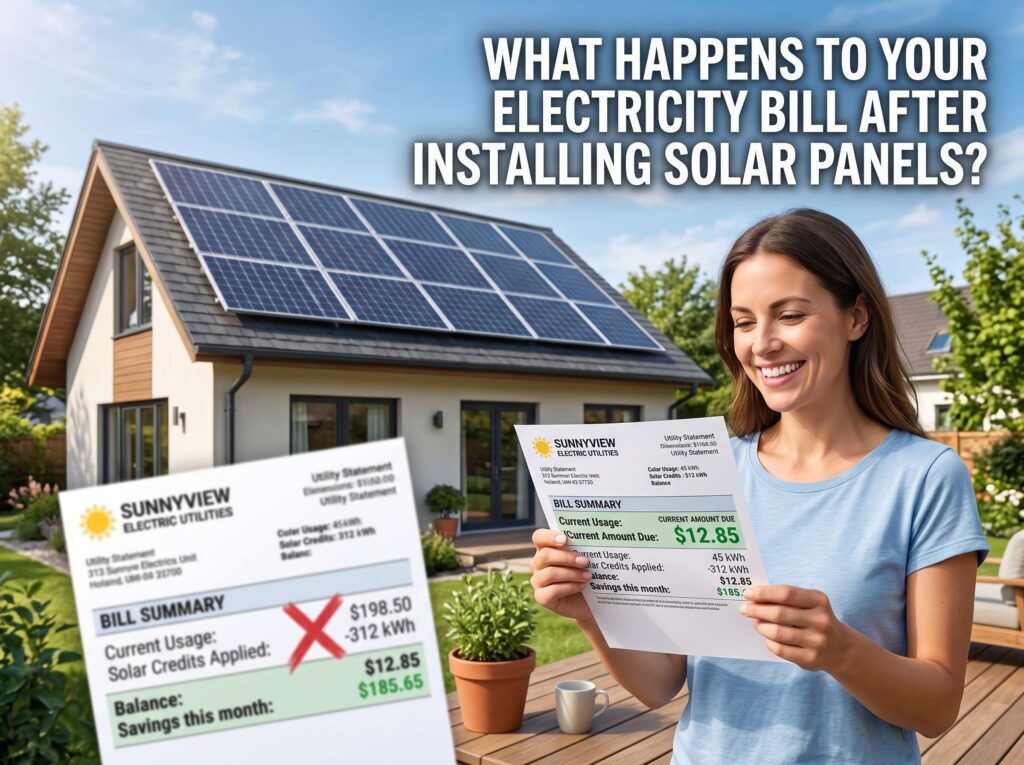
One of the biggest reasons homeowners consider solar panels is the possibility of lowering their monthly electricity bill. But what actually happens to your electric bill after solar panels are installed?
The answer depends on how much electricity your solar system produces, how much energy your home consumes, your utility company’s billing structure, and whether your area offers net metering or another form of solar energy compensation.
In many cases, solar panels can significantly reduce the amount of electricity you purchase from the grid. However, going solar does not always mean your electricity bill will become completely $0.
Your bill may still include fixed utility charges, electricity you purchase from the grid when your solar system is not producing enough power, or other charges established by your utility provider.
Understanding how solar affects your electricity bill can help you set realistic expectations before installing a system.
How Do Solar Panels Change Your Electricity Bill?
Before solar, your home generally gets most or all of its electricity from the utility grid.
Your utility measures how much electricity you consume and charges you based on your usage and applicable rates.
After installing solar panels, your home can generate some of its electricity directly from the sun.
This changes the way you use electricity.
During sunny periods, your solar panels may produce enough electricity to power your home. If your panels produce more electricity than your home needs at that moment, the excess may be sent to the electrical grid, depending on your system and utility rules.
When your solar system is not producing enough electricity, such as at night or during periods of low sunlight, your home can draw electricity from the grid.
The result is that you may purchase significantly less electricity from your utility.
Your Electricity Bill Usually Does Not Simply Disappear
A common misconception is that installing solar automatically eliminates your electricity bill.
In reality, many homeowners continue to receive a monthly utility bill after installing solar.
The difference is that the bill may be much lower because you are purchasing less electricity from the utility.
For example, imagine your home previously used 1,000 kWh of electricity per month.
Without solar, your utility may supply nearly all 1,000 kWh.
After installing solar, your panels might generate a significant portion of your home’s electricity needs.
You could then purchase only the remaining electricity from the grid.
The exact amount depends on your solar production and how your home consumes electricity.
What Is Self-Consumption?
Self-consumption means using the electricity generated by your solar panels directly in your home.
For example, your solar panels are producing electricity at 1 p.m. and your air conditioner is running at the same time.
Instead of purchasing that electricity from the grid, your home can use the solar electricity directly.
This can reduce the amount of electricity you need to buy from your utility.
Self-consumption is an important part of understanding solar savings because solar panels generate electricity based on sunlight, while your home’s electricity consumption occurs throughout the day and night.
What Happens to Excess Solar Electricity?
Your solar panels may sometimes produce more electricity than your home is using.
For example, your system could be generating 8 kW while your home is only consuming 3 kW.
The extra 5 kW may be sent to the electrical grid if your system is configured for grid export and your utility allows it.
What happens to that excess electricity depends on your utility’s solar compensation program.
Depending on the location and utility, excess electricity may be:
- Credited against your electricity usage
- Compensated at a specific rate
- Applied to your account under a net billing program
- Subject to other utility-specific rules
This is why understanding your local utility’s solar policy is important before purchasing a solar system.
What Is Net Metering?
Net metering is a billing arrangement that can allow homeowners with qualifying solar systems to receive credits for electricity they send to the grid.
The details vary by utility and location.
Under a traditional net metering arrangement, electricity exported to the grid can offset electricity consumed from the grid at another time, subject to the applicable rules.
For example, your solar panels may produce more electricity than your home needs during the afternoon.
That excess electricity goes to the grid and may generate a credit.
Later that evening, when your solar panels are no longer producing electricity, your home can draw power from the grid.
The credits may help offset some of the electricity you consume from the grid.
However, not every utility offers traditional net metering, and some have moved toward other compensation structures.
Always check the current rules that apply to your property.
What Is Net Billing?
Some utilities use net billing or similar arrangements instead of traditional net metering.
Under these programs, electricity you export to the grid may be credited at a rate that differs from the retail electricity rate you pay when purchasing electricity.
For example, your utility could charge one rate for electricity you consume from the grid while providing a different credit for electricity your solar system exports.
This difference can significantly affect the economics of a solar installation.
Because utility policies vary, homeowners should understand the specific program available in their area before estimating their future electricity bill.
Can Solar Panels Give You a $0 Electricity Bill?
Sometimes, but it is not guaranteed.
A solar system that produces enough electricity to offset your annual consumption may significantly reduce your electricity charges.
However, your utility bill can still contain charges that solar production does not completely eliminate.
These may include:
- Fixed customer charges
- Grid connection charges
- Taxes
- Fees
- Minimum monthly charges
- Electricity purchased from the grid
The exact charges depend on your utility and location.
Therefore, it is more realistic to think of solar as a way to reduce your electricity purchases and long-term energy costs, rather than automatically eliminating every charge on your utility bill.
Why Do You Still Need the Grid?
Most residential solar systems remain connected to the electrical grid.
Your home can use solar electricity when it is available and draw electricity from the grid when solar production is insufficient.
This is especially important at night.
Your solar panels generally do not produce electricity after sunset, but your home may still be using lights, appliances, HVAC equipment, electronics, and other devices.
Without a battery, that electricity may come from the grid.
This means your home can remain connected to the utility even after installing solar panels.
What Happens to Your Bill at Night?
At night, solar panels typically produce little or no electricity.
If your home continues using electricity, the system may draw power from the grid.
For example, you might use electricity for:
- Lighting
- Air conditioning
- Heating
- Refrigeration
- Entertainment
- Internet equipment
- Appliances
- EV charging
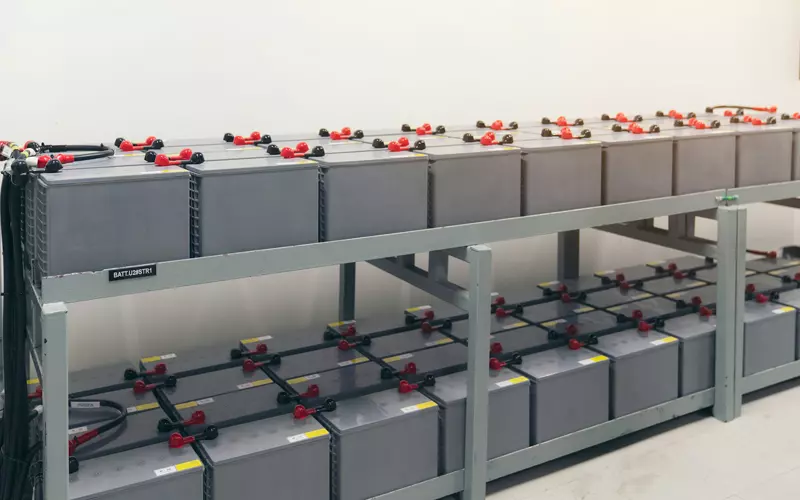
If you have a solar battery, some of this nighttime electricity could instead come from stored solar energy.
Without battery storage, the grid usually supplies the electricity when your solar panels are not producing enough.
How Does a Solar Battery Affect Your Electricity Bill?
A battery can change how much solar electricity you use directly in your home.
Instead of sending all excess daytime solar electricity to the grid, a battery can store some of that energy for later use.
For example:
During the day:
Solar panels → Home → Excess electricity → Battery
At night:
Battery → Home
This can increase your use of your own solar-generated electricity.
However, whether adding a battery reduces your electricity bill enough to justify its cost depends on your utility rates, solar compensation rules, battery pricing, energy consumption, and other factors.
A battery can also provide backup power during qualifying outages when the system is designed for backup operation.
What If You Produce More Solar Electricity Than You Use?
Producing more electricity than your home consumes does not necessarily mean your utility will pay you the full retail value for all of that electricity.
The treatment of excess production depends on your utility’s rules.
Some programs provide credits, while others compensate exported electricity at a different rate.
This is one reason why oversizing a solar system is not automatically the best financial decision.
The ideal system size should consider your electricity consumption, roof space, solar resource, utility program, and energy goals.
How Much Can Solar Reduce Your Electricity Bill?
There is no single percentage that applies to every homeowner.
Your potential savings depend on factors such as:
- Your current electricity consumption
- Electricity rates
- Solar system size
- Solar panel production
- Roof orientation
- Roof shading
- Local weather
- System efficiency
- Utility billing structure
- Net metering or net billing rules
- Battery storage
- Changes in future electricity usage
For example, a homeowner with high electricity rates and excellent solar exposure may have a different financial outcome from a homeowner with low electricity rates and a roof with significant shading.
This is why a solar quote should be based on your actual electricity usage and property rather than a generic savings estimate.
Example: Electricity Bill Before and After Solar
Let’s consider a simplified example.
Suppose a household previously consumed approximately 1,000 kWh per month.
Before solar, the homeowner purchases most of that electricity from the utility.
After installing solar, assume the system produces enough electricity to cover a significant portion of the home’s annual energy requirements.
During the day, the household uses some solar electricity directly.
Excess solar production may be exported to the grid.
At night, the household may purchase electricity from the grid.
The homeowner’s new utility bill could therefore be based on a much smaller amount of net electricity purchased, plus any applicable fixed charges and other fees.
The actual savings would depend on the utility’s rates and solar compensation program.
Why Your Electricity Bill May Be Higher in Some Months
Solar production changes throughout the year.
Your electricity bill may therefore fluctuate even after installing solar panels.
For example, you might produce more solar electricity during months with longer days and favorable weather.
During other months, production may decrease because of:
- Shorter daylight hours
- Cloudy weather
- Snow
- Rain
- Increased shading
- Higher household electricity consumption
Your home may also use more electricity during certain seasons.
For example, heavy air conditioning use during summer can increase electricity consumption even when solar production is high.
This is why solar performance is generally evaluated over a longer period rather than by looking at one month’s electricity bill.
What If My Electricity Usage Increases After Going Solar?
Your electricity consumption can change after installing solar.
Perhaps you purchase an electric vehicle, add a pool, install a heat pump, or increase your use of air conditioning.
Your solar system may then cover a smaller percentage of your total electricity consumption than originally expected.
This is one reason it is important to consider your future energy needs when designing a solar system.
If you know that your electricity consumption is likely to increase, tell your solar installer before the system is designed.
How Solar Changes Your Relationship With the Utility
Installing solar does not necessarily mean leaving your utility company.
Instead, your relationship with the utility changes.
You may purchase less electricity from the grid while occasionally sending excess solar electricity to the grid.
Your utility continues to provide electricity when your solar system cannot meet your home’s needs, subject to your system configuration and applicable utility rules.
In a grid-connected system, the utility remains an important part of your home’s energy infrastructure.
Does Solar Work During a Power Outage?
This is an important point that many homeowners overlook.
A standard grid-tied solar system generally shuts down during a utility outage for safety reasons.
That means having solar panels does not automatically mean you will have electricity during a blackout.
If backup power is important to you, your system may need additional equipment such as:
- Battery storage
- Backup power equipment
- Appropriate transfer and control equipment
- A solar system designed for backup operation
A properly configured solar-plus-storage system can potentially keep selected circuits or larger portions of a home powered during an outage, depending on the system design.
How to Read Your Electricity Bill After Solar
After solar installation, your utility bill may look different.
Depending on your utility, you may see information such as:
Energy consumed: Electricity your home purchased from the grid.
Energy exported: Electricity your solar system sent to the grid.
Solar credits: Credits applied according to your utility’s compensation program.
Net usage: The difference between electricity consumed and electricity exported, where applicable.
Fixed charges: Charges that may apply regardless of how much electricity you purchase.
The exact terminology varies between utilities, so check your provider’s billing documentation if something is unclear.
How Long Does It Take to See Solar Savings?
Your solar system starts generating electricity once it is operational and connected according to the applicable requirements.
However, the amount you save on your electricity bill depends on how much electricity the system generates and how much energy your home consumes.
Your savings can also vary from month to month.
Over time, the financial benefit of solar can come from reducing the amount of electricity you purchase from the utility.
The overall financial outcome also depends on the initial cost of the solar system, financing costs if applicable, incentives, maintenance, utility rates, and system performance.
What Should You Check Before Installing Solar?
Before purchasing solar panels, look beyond the panel specifications.
You should understand:
Your Current Electricity Usage
Review at least 12 months of electricity bills if possible.
Your Utility’s Solar Program
Find out whether your utility offers net metering, net billing, or another compensation structure.
Your Roof
Evaluate roof condition, orientation, available space, and shading.
Your Future Energy Needs
Consider EV charging, heating and cooling changes, pool equipment, and other future electricity loads.
Your Solar System Design
Ask how much electricity the proposed system is expected to generate annually and how that compares with your current consumption.
Battery Storage
Determine whether a battery makes sense based on your energy goals, electricity rates, utility program, and backup-power requirements.
Questions to Ask Your Solar Installer
Before signing a solar agreement, ask your installer:
- How much electricity is the proposed system expected to generate each year?
- What percentage of my current electricity consumption will it offset?
- How much electricity will I likely still purchase from the grid?
- How does my utility compensate excess solar electricity?
- Does my utility offer net metering or another program?
- What happens if my electricity consumption increases?
- Would battery storage benefit my home?
- How will shading affect production?
- What happens to the system during a power outage?
- What warranties are included?
Getting clear answers can help you understand what your electricity bill may look like after installation.
Final Thoughts
So, what happens to your electricity bill after installing solar panels?
For many homeowners, the biggest change is simple: they need to purchase less electricity from the utility.
Your solar panels generate electricity during the day, allowing your home to use solar energy directly. Depending on your system and utility program, excess electricity may be exported to the grid and potentially earn credits. When your solar system is not producing enough electricity, your home can draw power from the grid.
Your final bill will depend on your electricity consumption, solar production, utility rates, net metering or net billing rules, fixed charges, and whether you have battery storage.
The best way to understand your potential savings is to evaluate your actual electricity usage and property rather than relying on a generic estimate.
If you’re considering going solar, a professional solar assessment can help determine the right system size, expected energy production, and how solar could affect your electricity costs over time.