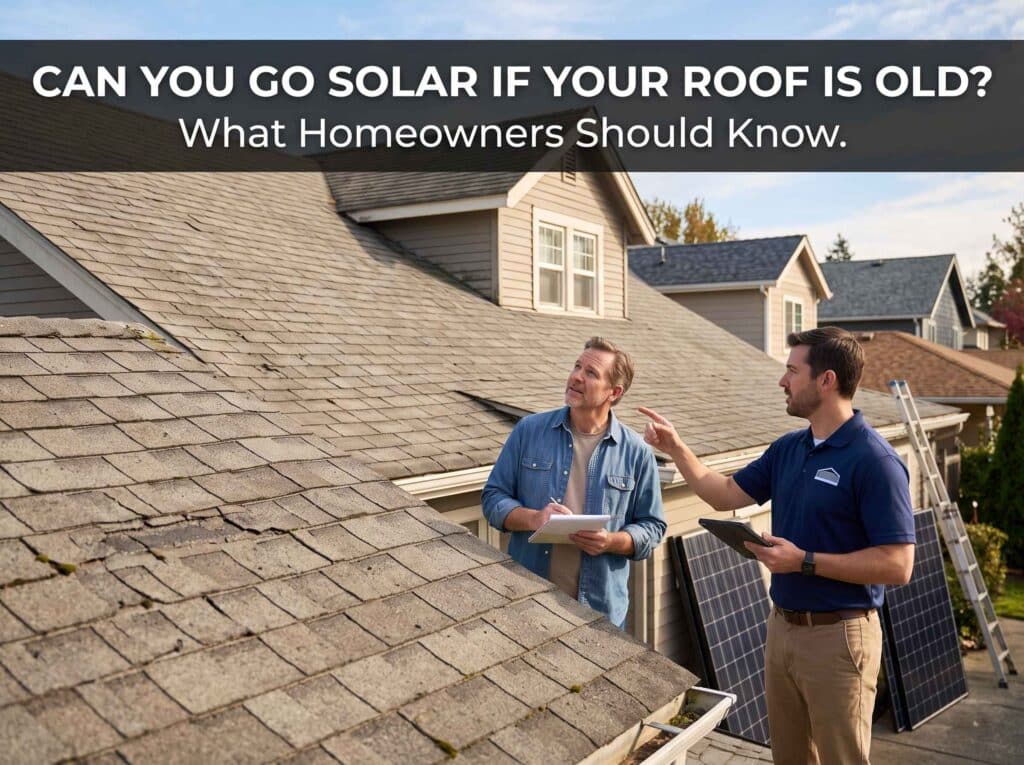
If you are thinking about installing solar panels but your roof is already several years old, you may be wondering whether you need to replace the roof first.
The short answer is: not necessarily.
An older roof does not automatically mean that you cannot install solar panels. However, the age, condition, material, and remaining lifespan of your roof are important factors to consider before moving forward with a solar installation.
Solar panels can remain on a roof for decades, so installing them on a roof that needs replacement soon could create unnecessary costs. In some situations, replacing or repairing the roof before installing solar makes more financial sense.
This guide explains what homeowners should know about installing solar panels on an older roof and how to determine whether your roof is ready for solar.
How Old Is Too Old for Solar Panels?
There is no universal age at which a roof becomes unsuitable for solar.
A roof’s condition matters more than its age alone.
For example, a 15-year-old roof that has been well maintained may be in better condition than a poorly maintained 10-year-old roof.
Before installing solar, homeowners should consider:
- The roof’s current condition
- The type of roofing material
- The expected remaining lifespan
- Signs of water damage
- Missing or damaged shingles
- Roof leaks
- Sagging or structural problems
- Previous repairs
- The location of roof penetrations
- Whether the roof needs replacement soon
If the roof is structurally sound and has many years of useful life remaining, installing solar may be reasonable.
If the roof is approaching the end of its lifespan, replacing it before installing solar may be the better option.
Why Roof Condition Matters Before Solar Installation
Solar panels are designed to last for many years.
Depending on the equipment, solar panels can continue producing electricity for 25 years or more. That means your roof needs to be able to support the system for a significant period of time.
If you install solar panels on a roof that needs replacement in just a few years, you may eventually have to remove the panels before the roof can be replaced.
That creates an additional expense.
The process generally involves:
- Removing the solar panels.
- Removing or adjusting the mounting equipment.
- Completing the roof replacement.
- Reinstalling the solar system.
- Inspecting and reconnecting the system.
You may also have to deal with additional labor, scheduling, and potential downtime.
For this reason, evaluating the roof before solar installation can help prevent avoidable costs later.
Can Solar Panels Be Installed on a 10-Year-Old Roof?
In many cases, yes.
A 10-year-old roof is not automatically too old for solar.
If the roof has been properly maintained and has plenty of useful life remaining, it may be suitable for a solar installation.
However, the answer depends heavily on the roofing material and its current condition.
For example, an asphalt shingle roof may have a different expected lifespan than a metal or tile roof.
A professional solar installer should evaluate the roof rather than making a decision based solely on its age.
What If Your Roof Is 15 or 20 Years Old?
This is where homeowners should pay closer attention.
If your roof is 15 or 20 years old, it may be approaching the end of its expected service life depending on the roofing material and installation quality.
Installing solar without considering the roof’s remaining lifespan could lead to additional expenses later.
For example, imagine you have a 20-year-old asphalt shingle roof and install a new solar system today.
If the roof needs replacement in three years, you could potentially have to pay to remove and reinstall the solar panels.
In that situation, replacing the roof before installing solar may make more sense.
What Roofing Materials Can Have Solar Panels?
Solar panels can be installed on many common roofing materials.
These may include:
- Asphalt shingles
- Metal roofing
- Tile roofing
- Standing-seam metal
- Certain flat roofing systems
- Other roofing materials suitable for solar mounting
The installation method depends on the roof type.
For example, mounting equipment for an asphalt shingle roof will be different from the equipment used on a standing-seam metal roof.
Tile roofs may also require specialized installation techniques to reduce the risk of damaging the tiles.
The important point is that roof material alone does not determine whether solar is possible. The roof’s condition and structural suitability are also important.
What If My Roof Has Leaks?
If your roof currently leaks, it should generally be repaired before solar panels are installed.
Solar panels and mounting equipment should not be used as a solution for an existing roofing problem.
A roof leak could indicate:
- Damaged shingles
- Failed flashing
- Damaged underlayment
- Improper previous repairs
- Aging roofing materials
- Water intrusion around roof penetrations
Installing solar over an unresolved leak can make future roof maintenance more complicated.
It is much better to identify and repair roofing problems before the solar installation begins.
What If My Roof Has Damaged or Missing Shingles?
A few damaged shingles do not necessarily mean you need a completely new roof.
However, damaged areas should be inspected and repaired before installing solar.
Your installer may recommend addressing:
- Missing shingles
- Cracked shingles
- Curling shingles
- Granule loss
- Soft or damaged roof areas
- Damaged flashing
- Water-damaged sections
The goal is to make sure the roof is in good enough condition to support a long-term solar installation.
Should You Replace Your Roof Before Installing Solar?
Sometimes, yes.
Replacing the roof before installing solar can be a smart decision if the roof is already nearing the end of its useful life.
For example, replacing the roof first may make sense if:
- The roof has widespread damage.
- There are recurring leaks.
- The roofing material is near the end of its expected lifespan.
- A professional roofer recommends replacement.
- The roof has significant structural concerns.
- You expect to need a roof replacement within the next few years.
Doing both projects together can allow you to complete the roofing work before the solar system is installed.
However, you do not necessarily need to replace a roof that is still in good condition simply because it is older.
Can You Install Solar Panels on a Roof That Needs Replacement Soon?
Technically, solar panels can often be installed on many types of roofs. But the bigger question is whether doing so makes financial sense.
If your roof is likely to require replacement soon, installing solar first could result in additional costs later.
Consider this example:
Your roof is expected to last another three years, while your solar panels could produce electricity for 25 years or longer.
If you install solar today, you may have to remove the panels when the roof needs to be replaced.
That means paying for work that could potentially have been avoided by replacing the roof first.
The best approach depends on the condition of your roof, the cost of replacement, your solar plans, and your expected timeline.
Does Installing Solar Damage Your Roof?
A properly designed and professionally installed solar system should not cause unnecessary damage to a suitable roof.
However, solar installations commonly involve mounting equipment that must be properly secured to the roof.
This makes proper installation and waterproofing extremely important.
Installers need to account for:
- Mounting locations
- Roof structure
- Flashing
- Waterproofing
- Roof penetrations
- Drainage
- Local building requirements
Poor installation practices can increase the risk of leaks and other problems.
That is why homeowners should work with an experienced solar installer and make sure the installation is performed according to applicable requirements.
What About Roof Warranties?
Your roof may have a manufacturer’s warranty or workmanship warranty.
Before installing solar, it is worth understanding what your existing roofing warranty covers and whether any requirements apply to modifications made to the roof.
You should also ask your solar installer about the installation warranty and how roof penetrations are handled.
If you are replacing your roof before installing solar, coordinate the two projects carefully.
The roofing contractor and solar installer should understand where the solar equipment will be installed and what the completed roof needs to accommodate.
Can Solar Panels Be Installed on a Metal Roof?
Metal roofs can be excellent candidates for solar.
In particular, standing-seam metal roofs can sometimes allow solar mounting systems to attach without making the same type of roof penetrations used on some other roofing systems.
However, the exact mounting method depends on the roof design and the solar equipment being used.
A metal roof should still be inspected to make sure it is structurally sound and appropriate for the proposed installation.
Can Solar Panels Be Installed on a Tile Roof?
Solar panels can also be installed on many tile roofs.
However, tile can be more fragile than some other roofing materials, which means installation requires appropriate techniques and equipment.
Installers may need to work carefully around the tiles and mounting locations to avoid unnecessary breakage.
If your tile roof is already damaged or aging significantly, it may be worth addressing those issues before installing solar.
What Happens If You Need a New Roof After Installing Solar?
If you already have solar panels and later need a new roof, the solar system does not necessarily prevent you from replacing the roof.
However, the solar panels and mounting equipment may need to be temporarily removed.
The general process can involve:
- Solar system shutdown and preparation.
- Removal of the solar panels.
- Removal or adjustment of mounting hardware as necessary.
- Roof replacement.
- Installation of appropriate flashing and roofing materials.
- Reinstallation of the solar equipment.
- System inspection and reconnection.
The exact process depends on the solar system, roof design, mounting equipment, and roofing contractor.
Because removing and reinstalling a solar system adds cost, it is worth considering the roof’s condition before the original installation.
Should You Install Solar and Replace Your Roof at the Same Time?
If both projects are needed, coordinating them can be beneficial.
A common approach is to complete the roof replacement first and then install the solar system on the new roof.
This provides a clean roofing surface for the solar installation and reduces the likelihood that the solar system will need to be removed shortly after installation.
Some homeowners may also explore roofing products designed to integrate with solar, although conventional roofing combined with traditional solar panels remains a common approach.
The right solution depends on your property, budget, roofing material, and energy goals.
How to Tell If Your Roof Is Ready for Solar
Before scheduling a solar installation, look for signs that your roof may need attention.
Your Roof May Be Ready If:
- It is in good overall condition.
- There are no significant leaks.
- There is no major structural damage.
- Roofing materials are still in good condition.
- The roof has sufficient remaining lifespan.
- There is adequate space for solar panels.
- Shading is manageable.
- The roof can support the proposed solar mounting system.
You May Need Roof Repairs or Replacement If:
- You have recurring leaks.
- Shingles are extensively damaged or missing.
- The roof is sagging.
- There is significant water damage.
- Roofing materials are near the end of their expected lifespan.
- There are structural concerns.
- A roofing professional recommends replacement.
What Should You Do Before Getting Solar?
If you have an older roof and are considering solar, do not make the decision based on age alone.
Start by reviewing your roof’s condition and expected remaining lifespan.
If you are unsure, consider having a qualified roofing professional inspect it before signing a solar installation contract.
You should also ask your solar installer:
- How will the roof be evaluated?
- What mounting system will be used?
- Where will the mounting points be located?
- How will roof penetrations be waterproofed?
- What happens if the roof needs replacement later?
- What warranties cover the solar installation?
- Will the installation affect the existing roofing warranty?
Getting clear answers before installation can help you avoid expensive surprises later.
Can You Go Solar If Your Roof Is Old?
Yes, an older roof can still be suitable for solar.
The key is not simply how old the roof is. What matters is its condition, structural integrity, roofing material, and remaining useful life.
If your roof is in good condition and expected to last for many more years, you may be able to install solar without replacing it first.
If the roof is damaged or approaching the end of its lifespan, repairing or replacing it before installing solar may be the more practical choice.
Solar is a long-term investment, so it makes sense to look at the entire property rather than focusing only on the panels.
Final Thoughts
An old roof does not automatically prevent you from going solar.
However, installing a solar system is a long-term decision, and your roof is an important part of that decision. A roof that is nearing the end of its life could create additional costs if it needs to be replaced after the solar panels have already been installed.
Before moving forward, have your roof evaluated, understand its remaining lifespan, and discuss the condition of the roof with your solar installer.
If you’re considering solar for your home, a professional solar assessment can help determine whether your existing roof is suitable and whether repairs or replacement should be completed before installation.