LFP vs NMC Home Batteries: Which Chemistry Should Homeowners Choose?
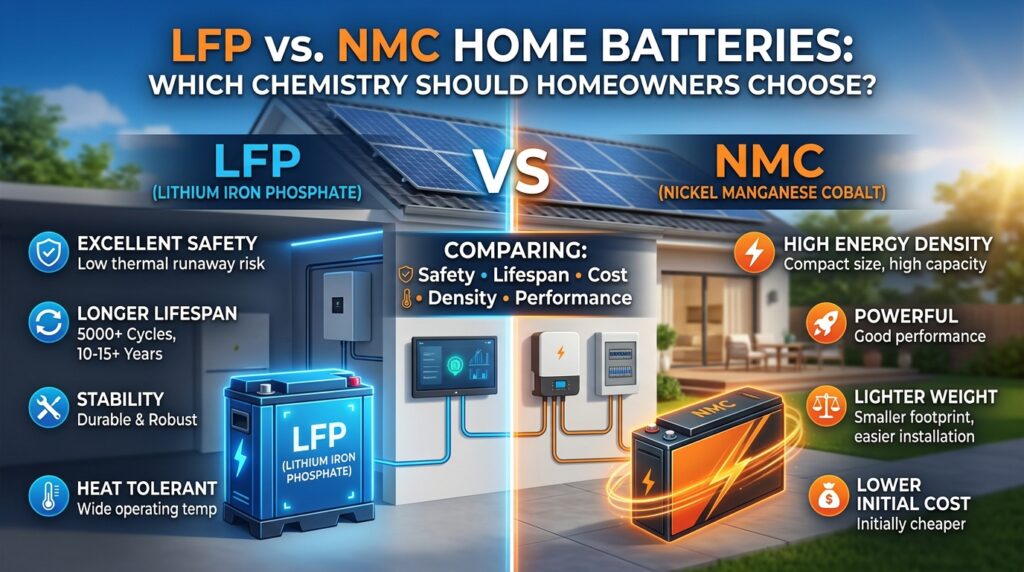
LFP vs NMC Home Batteries: Which Chemistry Should Homeowners Choose? deserves a careful explanation rather than a one-size-fits-all answer. This Rumos Chem guide is for homeowners in and around St. Louis and focuses on practical questions, safety, documentation, and tradeoffs.
Begin with the household goal, recent electricity use, roof and electrical conditions, and the current utility rules. A responsible proposal describes equipment, assumptions, ownership, warranty, maintenance, and limitations. It should not pressure you to accept unsupported claims.
Define the Decision
Write down which outcome matters most: lower grid purchases, outage support, predictable budgeting, environmental goals, or understanding an existing system. Then identify what could change, such as retirement income, medical needs, a roof replacement, an electric vehicle, or a move. A good design fits the home and the decision horizon.
- Gather recent bills and note unusual usage.
- List critical appliances and future loads.
- Review roof age, shade, access, and service equipment.
- Separate estimates from contract commitments.
- Ask who will answer service questions later.
Understand the Equipment
Panels generate electricity, inverters convert it, monitoring reports it, and batteries store it for later use. Batteries also have power limits, usable capacity, controls, temperature requirements, and warranty conditions. Chemistry is only one part of the decision; installation, controls, service, and intended operation matter as much.
Questions for a battery proposal
- What loads will be backed up and how are they selected?
- How does the system behave during a long outage?
- What are the operating temperature, location, and clearance requirements?
- Who handles software, warranty, and replacement service?
- What is included in the quoted scope?
Comparison Checklist
| Factor | What to compare | Why it matters |
|---|---|---|
| Goal | Bill reduction, resilience, budgeting, or future flexibility | Prevents buying features that do not solve the problem |
| Power | Startup and continuous demands of selected loads | Affects what can operate together |
| Capacity | Usable energy, reserve settings, and recharge path | Affects duration and recovery |
| Service | Installer, manufacturer, monitoring, and response | Defines support after installation |
| Contract | Ownership, warranty, payment, and exclusions | Clarifies financial and practical responsibility |
Financial and Life-Stage Questions
Retirement or a fixed income can make predictable obligations important, but a solar decision is not automatically affordable or worthwhile. Compare the full cost, financing terms, maintenance, roof work, insurance, taxes, and likely time in the home. Do not assume a future sale, incentive, or bill change.
If comparing cash and financing, request written schedules and ask what happens if the home is sold, the loan is paid early, or equipment needs service. A qualified tax or financial professional can discuss matters outside an installer’s role. Never provide financial information to a high-pressure salesperson beyond what is necessary for a written proposal.
Approaches and Tradeoffs
| Approach | May suit | Verify |
|---|---|---|
| Grid-tied solar | Homes focused on producing electricity for use | Utility rules and outage behavior |
| Solar plus storage | Homes with selected resilience goals | Loads, runtime, controls, and service |
| Cash purchase | Owners prioritizing no loan payment | Opportunity cost, warranty, and reserve funds |
| Financing | Owners who prefer to preserve cash | Rate, term, fees, security, and transfer terms |
Safety and Local Conditions
St. Louis weather includes heat, storms, hail, snow, pollen, and falling leaves. Ask how equipment is protected, inspected, and safely accessed. Do not climb on the roof, open energized enclosures, or modify wiring. For batteries, follow manufacturer clearances and emergency guidance. Call emergency services for smoke, fire, sparking, or an immediate hazard.
How to Evaluate a Provider
Look for a clear written scope, licensing and insurance information, permit and utility responsibilities, equipment list, monitoring plan, warranty terms, and service contact. Compare more than one proposal when practical. Be wary of promises that ignore weather, usage, roof condition, or contract details, and of requests to sign before you can read everything.
Decision Process
Collect data, define priorities, ask for a site assessment, compare complete scopes, verify current utility and incentive rules, and discuss unusual loads with licensed professionals. Keep bills, proposals, permits, manuals, serial numbers, and service records in one file. Good documentation reduces confusion when ownership or equipment changes.
Frequently Asked Questions
Is one battery chemistry always best?
No. Suitability depends on the equipment, site, controls, warranty, service, space, and intended use. Compare the complete system.
Is solar automatically a good retirement investment?
No. Review time in the home, cash flow, roof condition, obligations, and professional tax or financial advice.
Should I choose cash or a loan?
There is no universal answer. Compare written terms and consider your own reserves and plans with a qualified adviser.
Can I install or repair this myself?
Do not perform roof or electrical work without appropriate licensing and training. Use qualified professionals.
How can Rumos Chem help?
Rumos Chem provides residential solar information and installation guidance for St. Louis homeowners with clear, site-specific discussions.
Final Thoughts
A sound decision matches the system to the home, the household’s goals, and the owner’s ability to maintain it. Read the complete proposal, verify current rules, question pressure tactics, and keep written records. Careful comparison is more valuable than any single headline number.