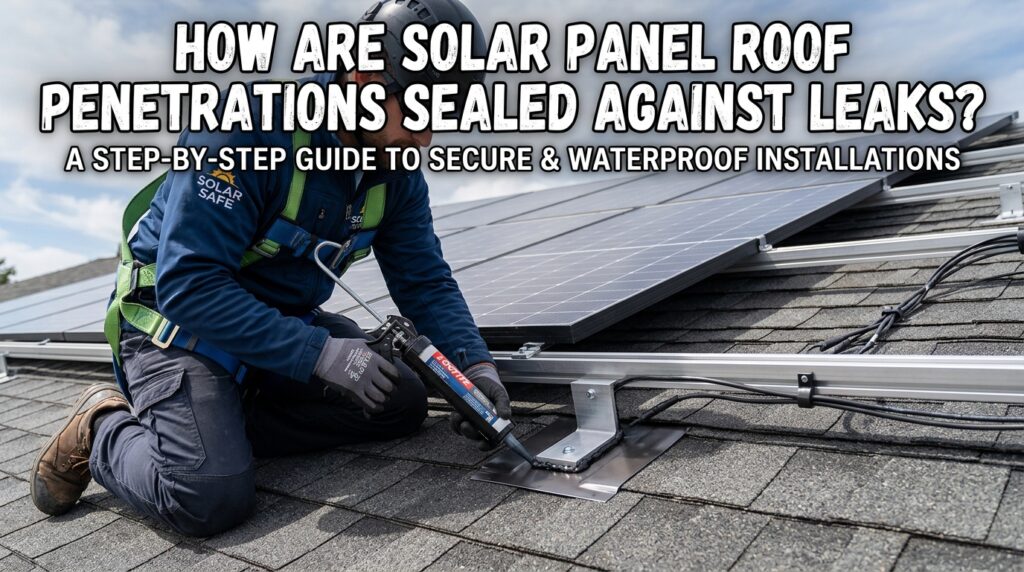
How Are Solar Panel Roof Penetrations Sealed Against Leaks?
One of the most common concerns homeowners have when considering residential solar energy is whether drilling into their roof will cause leaks. It is a completely valid question. Mounting a solar array requires attaching metal racking directly to your roof’s structural rafters, which means making intentional penetrations through your shingles or decking.
1. The Primary Components of a Watertight Solar Attachment
However, when installed according to industry standards, modern solar penetrations are completely watertight and engineered to last as long as—or longer than—the roof itself. Rather than relying on simple caulk or glue, professional solar installers use multi-layered waterproofing systems designed to channel water away from the entry points. Understanding these components and installation practices gives St. Louis homeowners confidence that their investment will remain secure through every season.
2. Advanced Attachment Methods for Modern Solar Racking
Preventing leaks around solar panel mounts relies on a combination of mechanical barriers and specialized sealants. No single material carries the entire burden of waterproofing; instead, multiple layers work together to create an impenetrable barrier against moisture.
3. Sealing Penetrations Across Different Roofing Materials
Solar mounting technology has evolved significantly over the past decade. Today’s hardware designs prioritize water management just as much as structural strength.
4. Severe St. Louis Weather and Thermal Expansion Challenges
Traditional lag-bolt attachments require finding the exact center of a roof rafter, drilling a pilot hole, injecting sealant, and securing an L-foot plate with a metal flashing plate beneath the shingle above. The metal flashing acts like a shingle itself, encouraging water to flow smoothly down the roof slope without ever contacting the penetration beneath.
5. Roof Inspections, Maintenance, and Leak Prevention
More recently, bracket systems featuring integrated waterproofing gaskets have gained widespread popularity. These mounts utilize flexible sealant rings compressed under extreme mechanical force. When the lag bolt is tightened, the gasket compresses into the shingle surface and sealing orifice, forming a long-lasting seal that seals on contact without relying solely on liquid caulk that can degrade over time.
6. Roof Warranties and Working with Professional Installers
Not all roofs are constructed the same way, and sealing methods must adapt to the specific characteristics of your roofing material. Below is a comparison of how solar mounts are sealed on common residential roofs:
7. Frequently Asked Questions (FAQ)
Residential roofs in St. Louis, Missouri experience extreme weather swings throughout the year. From scorching humid summers to freezing winter storms with ice dams and hail, roof penetrations face constant environmental stress.
Temperature fluctuations cause roof materials and metal solar mounts to expand and contract at different rates—a phenomenon known as thermal movement. If an installer uses cheap, non-flexible caulk, temperature changes can cause the seal to crack or pull away within just a few seasons. Proper installations utilize elastomeric polyurethanes and weather-resistant EPDM rubber components that retain elasticity from sub-zero temperatures up to high heat.
Furthermore, St. Louis winters bring freeze-thaw cycles. Water that trickles into an unprotected hole can freeze, expand, and force small cracks wider. Layered sheet metal flashings ensure that water sheds naturally via gravity before it ever has a chance to pool or freeze around lag bolts.
Proper installation is the most critical step in leak prevention, but routine maintenance guarantees long-term durability. A well-designed solar array should be checked periodically as part of your standard home maintenance routine.
Homeowners often worry that installing solar panels will void their existing roof warranty. Maintaining your coverage requires coordination between your solar company and roofing guidelines.
When professional teams perform solar installations, they use hardware approved by major roofing manufacturers. For home solar projects handled by regional specialists like Rumos Chem, local installation teams ensure that attachment methods conform to local building codes and regional climate requirements in the St. Louis metropolitan area. Experienced technicians inspect the underlying structural rafters and shingle health before setting a single lag bolt.
Not if installed correctly. Professional installers use flashing hardware and techniques that comply with standard roofing manufacturer requirements. Penetrations are typically covered under the solar company’s workmanship warranty.
Quality metal flashings and commercial-grade EPDM gaskets are designed to last 25 years or longer, matching the standard power production warranty of modern photovoltaic panels.
If a leak occurs due to an installation issue, it is covered under your installer’s workmanship guarantee. A technician will detach the affected solar module, repair or replace the damaged flashing or sealant, and resecure the panel.
On standing seam metal roofs, non-penetrating clamps attach directly to raised seams without drilling any holes. However, for standard asphalt shingle roofs common in St. Louis homes, mechanical rafter penetrations are required to meet wind-load structural standards safely.
Practical Tips
- Metal Flashing: A rigid aluminum or galvalume plate inserted under upper shingle layers to divert water around the lag bolt or mount.
- Polyurethane and Silicone Sealants: High-grade exterior sealants applied around lag holes and under flashing bases to act as secondary liquid gaskets.
- EPDM Rubber Boots and Collars: Flexible synthetic rubber seals that wrap tightly around elevated attachment posts, accommodating thermal expansion and vibration.
- Structural Mount Assemblies: Specialized rafter attachments (such as L-feet or integrated flashing mounts) that elevate the attachment point above the roof plane.
- Asphalt Composite Shingles
- Layered metal flashing & compressed rubber gaskets
- Flashing must tuck beneath the course of shingles above the penetration point.
- Standing Seam Metal
- Non-penetrating seam clamps
- No roof penetrations required; hardware clamps directly onto raised metal seams.
- Corrugated or R-Panel Metal
- Gasketed fasteners & raised rib mounts
- Mounts must be attached to high ribs rather than low valleys where water collects.
- Concrete or Clay Tile
- Tile replacement mounts or hooks with sub-flashing
- Requires removing or carefully modifying tiles and sealing directly to the roof deck beneath.
- Debris Management: Leaves, twigs, and pine needles can build up behind solar racking and block water drainage. Ensure your roof channels remain clear.
- Visual Hardware Inspection: Check exposed rubber boots or conduit penetrations for cracking, dry rot, or damage caused by squirrels or birds.
- Attic Space Verification: Inspecting the underside of the roof decking inside the attic provides immediate proof of watertight integrity.
- Upper Shingle / Flashing Overlap
- First line of defense; sheds bulk rainwater via gravity.
- 25–30+ Years
- Compressed EPDM Ring / Boot
- Seals mechanical shaft against wind-driven rain and moisture.
- 20–25 Years
- Polyurethane Sealant Pocket
- Fills internal timber grain and pilot hole voids around hardware.
- 20+ Years
- Deck Underlayment Membrane
- Secondary moisture barrier directly on roof plywood.
- 20–30 Years
| Roofing Material Primary Waterproofing Method Key Considerations for Installation |
|---|
| Protection Layer Function in Leak Prevention Expected Lifespan |
|---|
FAQ
Will installing solar panels void my roof warranty?
Not if installed correctly. Professional installers use flashing hardware and techniques that comply with standard roofing manufacturer requirements. Penetrations are typically covered under the solar company’s workmanship warranty.
How long do solar roof seals last?
Quality metal flashings and commercial-grade EPDM gaskets are designed to last 25 years or longer, matching the standard power production warranty of modern photovoltaic panels.
What happens if a leak develops under my solar array?
If a leak occurs due to an installation issue, it is covered under your installer’s workmanship guarantee. A technician will detach the affected solar module, repair or replace the damaged flashing or sealant, and resecure the panel.
Can solar panels be installed without penetrating the roof?
On standing seam metal roofs, non-penetrating clamps attach directly to raised seams without drilling any holes. However, for standard asphalt shingle roofs common in St. Louis homes, mechanical rafter penetrations are required to meet wind-load structural standards safely.