How Do You Maintain a Home Solar Battery? A Simple Yearly Checklist
Installing a solar energy system paired with home battery storage is one of the most effective ways for St. Louis homeowners to build energy independence and maintain backup power during severe Midwest storms. Modern energy storage units, such as modern Lithium Iron Phosphate (LFP) systems, require far less hands-on care than old flooded lead-acid banks. However, “low maintenance” does not mean “zero maintenance.” Simple annual inspections and basic upkeep protect your investment, maximize capacity retention, and keep your warranty valid. This checklist breaks down safe home solar battery maintenance into straightforward seasonal and yearly steps tailored for residential properties in St. Louis, Missouri.
Why Home Battery Maintenance Matters in St. Louis
St. Louis experiences extreme climate variation—from icy winters with temperatures dropping below freezing to hot, humid summers exceeding 90°F. These temperature shifts impact chemical performance, ventilation needs, and enclosure integrity. Performing regular checkups ensures your backup power triggers instantly during power outages caused by local thunderstorms or winter ice events.
Routine care offers several core benefits:
-
Extended Lifespan: Prevents heat build-up and physical degradation that reduce battery cell life.
-
Sustained Energy Output: Ensures maximum round-trip efficiency during daily peak charge and discharge cycles.
-
Safety Assurance: Identifies loose wiring, wear, or debris before minor issues escalate.
-
Warranty Protection: Keeps required operational parameters intact according to manufacturer terms.
Safety First: Basic Rules for Home Solar Battery Upkeep
Before performing any checks, safety must be your top priority. Home solar batteries store high-voltage electricity and should be treated with care. Homeowners should limit their maintenance to non-invasive visual inspections and light exterior cleaning.
-
Never Open Battery Enclosures: Internal cell modules and wiring circuits should only be serviced by certified technicians.
-
Keep Water Away: Do not use liquid sprays, high-pressure hoses, or wet cloths on electrical housings, conduits, or inverters.
-
Maintain Clear Clearance: Never store flammable materials, paints, gasoline, or clutter within three feet of your battery unit.
-
Wear Basic Protection: Put on safety glasses and work gloves when clearing dust, leaves, or debris around outdoor enclosures.
Visual and Physical Inspection: Cleaning and Enclosure Checks
Physical debris and dust accumulation can block heat dispersion and clog intake filters. Over time, heat accumulation forces internal cooling fans to run longer, using extra energy and causing component wear.
Exterior Cleaning
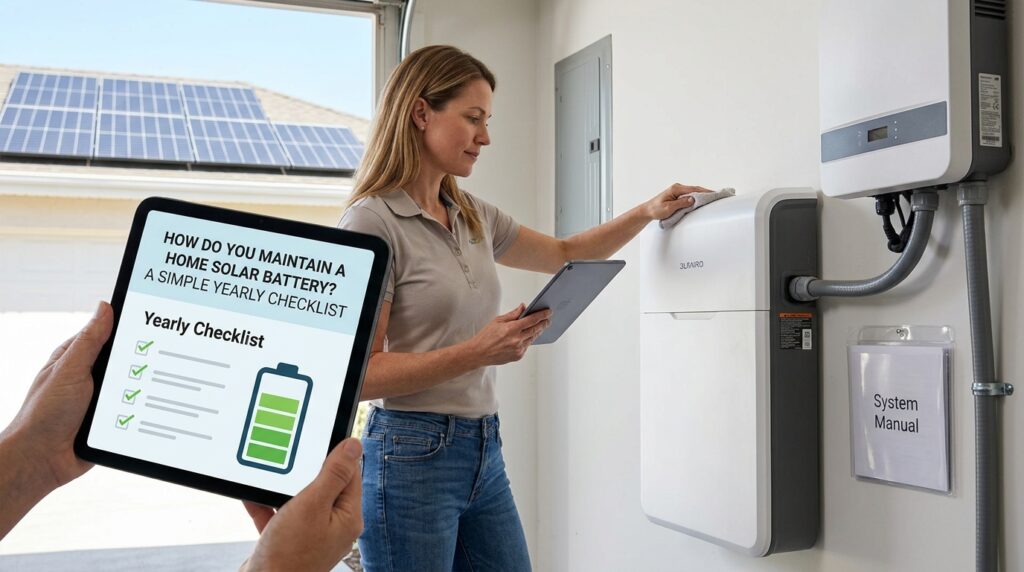
Wipe down the exterior casing with a dry or slightly damp microfiber cloth to remove household dust, spiderwebs, or pollen. For outdoor wall-mounted units, clear away fallen leaves, mud splashes, or drifting snow surrounding the lower base.
Enclosure and Seal Verification
Inspect the physical housing for scratches, rust spots, or physical damage. Check that all exterior conduit seals and rubber gaskets are intact to prevent insects or moisture from penetrating electrical connections.
Ventilation, Airflow, and Temperature Control
Temperature regulation is crucial for battery longevity. Most modern solar batteries perform best between 50°F and 80°F, though they are rated for wider operation.
In St. Louis, batteries installed in garages or on exterior walls face high summer humidity and severe winter chills. Ensure the surrounding environment remains well-ventilated during summer months. Verify that integrated cooling vents and fan grates are completely free of dirt, dryer lint, or pest nests.
Software Updates and Mobile App Monitoring
Most residential energy storage systems connect to home Wi-Fi to send telemetry data to mobile apps and receive firmware updates. Firmware updates optimize charge cycles, update grid communication protocols, and enhance thermal management algorithms.
-
Check Network Connectivity: Open your monitoring application monthly to verify that the system is online and actively reporting data.
-
Enable Automatic Updates: Ensure automatic firmware updates are toggled on within your app settings.
-
Review Performance Trends: Track your daily charge and discharge logs. Unexplained drops in available storage capacity may indicate a software glitch or a degrading module.
Inspecting Wiring, Terminals, and External Conduit
While internal wiring must remain untouched, visually inspecting external electrical pathways helps catch physical damage caused by pests, lawn equipment, or natural settling.
-
Conduit Integrity: Inspect PVC or metal conduits leading from the battery to your main breaker panel or solar inverter. Look for cracks, separation, or loose mounting clamps.
-
Pest Inspection: Mice and squirrels occasionally chew on external wiring or build nests in garage corners near warm equipment. Look for chewing marks or loose insulation.
-
Professional Terminal Check: Schedule a routine visit from a qualified local residential solar installer every few years to torque electrical terminals to factory specifications.
Recognizing Emergency Signs: When to Call a Professional
Knowing when to step back and call an expert is essential for safety. Contact a professional solar installer immediately if you notice any of the following warning signs:
-
Error Codes: Persistent red status lights or error alerts on your monitoring dashboard.
-
Physical Swelling: Any visible bulging, warping, or cracking along the battery casing.
-
Unusual Odors: Chemical, sweet, or acrid burning smells near the unit.
-
Audible Noise: Buzzing, grinding, or popping sounds coming from inside the housing.
-
Excessive Heat: Casing surfaces that feel unusually hot to the touch during normal operation.
Understanding Your Solar Battery Warranty Requirements
Solar battery warranties typically last between 10 and 15 years, guaranteeing a specific percentage of original capacity (usually 60% to 70%) or a total energy throughput measured in megawatt-hours (MWh). Failing to maintain basic operational conditions can void your coverage.
To ensure your warranty remains valid:
-
Maintain uninterrupted Wi-Fi connection so the manufacturer can log telemetry and verify operating conditions.
-
Never operate the battery outside its specified temperature ratings.
-
Keep records or invoices of professional routine service visits.
The Simple Yearly Solar Battery Maintenance Checklist
Use this comprehensive annual checklist to keep your St. Louis home solar battery operating safely and efficiently.
By following this simple routine, St. Louis homeowners can enjoy seamless backup power during grid disruptions while extending the total operational life of their system. If you ever have questions about system performance, expansion, or physical safety, consult with trusted local residential solar installation professionals like the team at Rumos Chem to ensure your home energy storage functions flawlessly for years to come.
Frequently Asked Questions (FAQ)
Do home solar batteries require water refilling like old batteries?
No. Modern residential solar storage systems use sealed technology, most commonly Lithium Iron Phosphate (LFP) or Lithium Nickel Manganese Cobalt (NMC). They are fully sealed and never require water additions, acid balancing, or internal liquid maintenance.
How long do home solar batteries usually last in Missouri?
Most residential solar batteries are designed to last between 10 and 15 years, depending on usage cycles, discharge depth, and operating ambient temperatures. Proper ventilation and staying within recommended temperature limits help maximize lifespan in Missouri’s climate.
Can I service internal solar battery components myself?
No. High-voltage energy storage systems present electrical shock hazards. Homeowners should only perform basic external cleaning, clear ventilation paths, and check mobile apps. Any internal service, wiring modification, or cell testing must be handled by a licensed professional.
What should I do if my battery goes offline in the app?
First, check your home Wi-Fi router to ensure your network is working properly. If your internet is active, try resetting the Wi-Fi gateway according to the manufacturer manual. If the system remains offline or displays a red status LED, reach out to your installation technician for remote or on-site support.
Is outdoor installation safe for solar batteries in St. Louis winters?
Yes, provided the battery is rated for outdoor installation (NEMA 3R or IP65 enclosure ratings) and includes internal thermal management or heating elements. However, installing batteries inside a garage or temperature-managed utility area provides added protection against extreme freeze-thaw cycles.