Across the country, homeowners are seeking ways to improve energy independence, reduce reliance on aging utility infrastructure, and keep critical systems running during unexpected power outages. While individual rooftop solar installations offer individual benefit, community-scale resilience is taking a major step forward through neighborhood solar microgrids. In places like St. Louis, Missouri, where severe seasonal weather, summer heatwaves, and winter storms can strain the central electric grid, localized energy sharing models offer a practical path toward reliable, continuous power. This guide explains what a solar microgrid is, how neighborhood microgrids function, key control systems, battery integration, ownership structures, and local St. Louis installation considerations.
1. Defining the Solar Microgrid
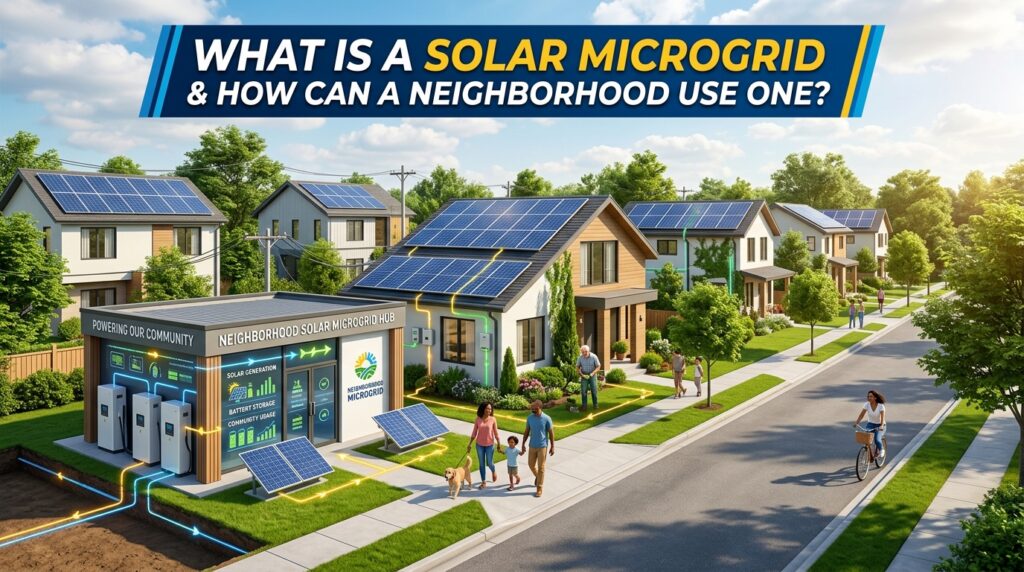
A solar microgrid is a localized power system that generates electricity using solar photovoltaic (PV) arrays, stores energy in battery energy storage systems (BESS), and manages electrical loads within a defined geographic boundary. Unlike a standard grid-tied rooftop solar setup—which shuts off automatically during a utility blackout for grid safety—a microgrid is engineered to operate both connected to the traditional utility power grid and independently as a self-contained power island.
Key components of a solar microgrid include:
-
Distributed Solar PV Generation: Solar panels installed on individual home roofs, shared carports, or common neighborhood ground spaces.
-
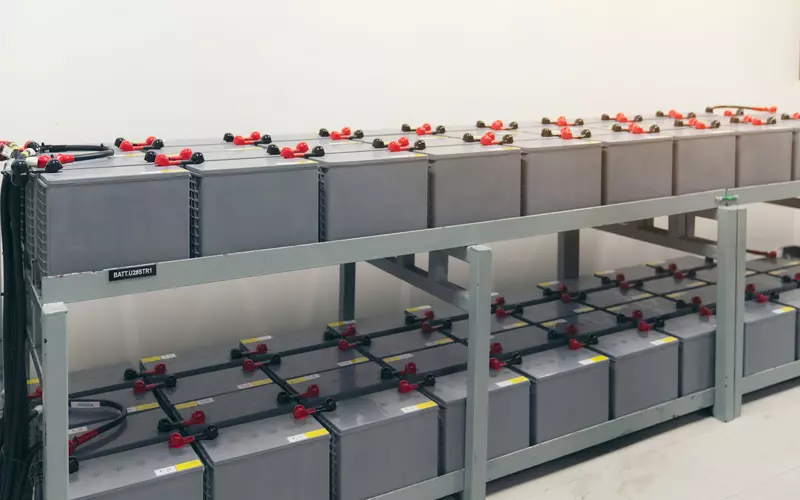
Centralized or Distributed Energy Storage: Lithium-ion or advanced battery systems that capture excess daytime solar production for use at night or during power interruptions.
-
Smart Inverters and Controllers: Digital controls that monitor voltage, frequency, and real-time load demand across connected properties.
-
Point of Common Coupling (PCC) Switch: An automated isolation switch that safely disconnects the microgrid from the primary utility power lines during an outage.
2. How a Neighborhood Shares Solar Microgrid Infrastructure
In a residential microgrid architecture, multiple homes connect to a shared microgrid distribution loop or communicate via standard utility lines under a master control system. During normal grid operations, each household consumes power generated by its own rooftop panels or the local microgrid pool, drawing supplementary energy from the central power utility as needed.
Neighborhood energy sharing operates through two main architecture types:
By aggregating the power output of multiple solar arrays, microgrids smooth out generation peaks and power consumption valleys across participating households, increasing total energy efficiency.
3. Microgrid Controls, Islanding, and Grid Disconnection
The defining technical capability of a solar microgrid is its ability to perform islanding. Islanding occurs when the microgrid detects a fault or blackout on the primary utility grid and instantly opens its master transfer switch at the Point of Common Coupling.
Practical operational phases include:
-
Grid-Connected Mode: The microgrid balances local generation with utility electricity, selling excess power or storing it in batteries based on electricity rates.
-
Seamless Islanding Transition: When the main grid fails, intelligent microgrid controllers detect the voltage loss in milliseconds, isolate the neighborhood grid, and switch local solar and battery capacity online without interrupting power to household appliances.
-
Islanding Operation: The local controller continuously balances household electricity demand with real-time battery storage levels and available daytime solar output.
-
Re-synchronization: Once utility technicians restore the central power grid, the microgrid controller matches its voltage and phase frequency with the utility grid before safely reclosing the connection switch.
4. Battery Energy Storage Systems (BESS) and Utility Coordination
Battery energy storage forms the backbone of microgrid resilience. Without energy storage, solar generation alone cannot sustain a neighborhood during a night-time power outage or intermittent cloudy weather. In neighborhood microgrid designs, batteries perform load leveling, frequency regulation, and emergency backup power dispatch.
Successful neighborhood microgrids require active coordination with the local electric distribution utility. Utilities set technical standards for interconnection, relay protection, anti-islanding safeguards, and power quality. Working alongside local service professionals like Rumos Chem ensures residential solar arrays, battery backup circuits, and switching equipment comply with local utility guidelines and regional electrical code standards from planning to final inspection.
5. Neighborhood Ownership, Governance, and Business Models
Deploying a neighborhood microgrid requires clear organizational governance to manage shared equipment, maintenance schedules, and administrative responsibilities. Neighborhoods typically choose one of three common ownership models:
6. Safety Systems, Protection Protocols, and Electrical Codes
Safety is critical in any high-voltage electrical installation. Residential microgrids must implement multiple protection layers to safeguard line maintenance personnel, property, and electrical equipment:
-
Anti-Islanding Protection: Standard solar inverters are equipped with certified automatic shutdown protection to prevent backfeeding power into damaged utility lines where line workers may be conducting repairs.
-
Rapid Shutdown Compliance: Solar arrays must comply with National Electrical Code (NEC) rapid shutdown mandates, allowing first responders to quickly de-energize rooftop arrays in an emergency.
-
Overcurrent and Surge Protection: Advanced circuit breakers and protective relays isolate faults within individual homes so a single household short circuit does not compromise the entire neighborhood microgrid.
-
Battery Thermal Management: Commercial-grade lithium-iron-phosphate (LFP) battery enclosures feature localized fire suppression, thermal monitoring, and clear clearance zones.
7. Solar Microgrid Project Costs and Economic Factors
The financial investment required for a neighborhood solar microgrid varies significantly depending on system capacity, physical distance between properties, battery storage duration, underground wiring complexity, and microgrid control software choices. Rather than relying on generic estimates, communities should evaluate key economic factors that influence total project investment:
-
Existing Solar Infrastructure: Retrofitting homes that already have compatible rooftop solar arrays is generally more cost-effective than starting from ground level.
-
Storage Capacity Requirements: Total battery sizing depends on whether the neighborhood intends to back up critical electrical loads (refrigeration, heating/cooling, medical equipment, lighting) or full household power over extended periods.
-
Site Survey and Engineering Design: Professional engineering assessments, structural evaluations, ground trenching for private interconnects, and utility interconnection study fees form necessary foundational expenditures.
-
Financial Incentives: Federal clean energy tax credits, state-level renewable incentives, and utility energy efficiency rebates can lower overall implementation costs for participating property owners.
8. St. Louis Considerations: Climate, Utility Rules, and Installation Factors
Designing a residential solar microgrid in St. Louis, Missouri, requires accounting for specific local climate patterns and regional grid conditions. St. Louis experiences distinct weather variations throughout the year, including hot, humid summers with intense cooling demands and freezing winter weather accompanied by ice storms or heavy snow.
Practical factors for St. Louis solar microgrid planning include:
-
Ameren Missouri Interconnection Rules: Residential solar microgrid projects must comply with Ameren Missouri net metering guidelines, interconnection safety protocols, and standard switchgear requirements.
-
Seasonal Load Patterns: Microgrids in the St. Louis metropolitan area must account for high summer electricity demand driven by air conditioning, as well as reduced winter solar production during shorter daylight hours.
-
Local Building Codes: Municipalities across St. Louis County and St. Louis City enforce specific structural wind load limits, snow load factors for roof-mounted solar hardware, and electrical code revisions.
-
Local Technical Guidance: Engaging with experienced residential solar information and installation specialists such as Rumos Chem helps homeowners navigate site feasibility evaluations, solar panel placement, battery system integration, and municipal permitting across the St. Louis region.
Frequently Asked Questions (FAQ)
What is the main difference between community solar and a solar microgrid?
Community solar allows multiple households to buy or subscribe to power generated by a off-site solar farm, receiving credit on their monthly utility bills. A solar microgrid, by contrast, is a physical energy installation connected directly to participating homes that can island and provide power during utility power outages.
Can a microgrid power homes at night during a multi-day utility blackout?
Yes, provided the microgrid includes adequate battery energy storage. During the day, rooftop and community solar panels power household loads and recharge the battery reserves. At night, the microgrid draws stored energy from the battery system to maintain power until morning.
Can existing rooftop solar installations be converted into a neighborhood microgrid?
In many cases, yes. Existing solar PV systems can often be retrofitted into a microgrid structure by adding microgrid-compatible smart inverters, localized battery energy storage systems, central control software, and automated transfer switches.
How do St. Louis weather extremes affect solar microgrid battery storage systems?
Extreme summer heat and freezing winter temperatures require outdoor battery storage systems to feature climate-controlled enclosures or indoor installation in garages or utility rooms to maintain battery lifespan and performance.
Who oversees maintenance for a neighborhood solar microgrid?
Maintenance responsibility depends on the chosen ownership structure. In HOA-owned setups, the association contracts a qualified solar and storage maintenance provider. In Energy-as-a-Service (EaaS) or utility-owned models, the third-party operator handles routine maintenance and repairs.