Can You Add a Battery to an Existing Solar System Later?
Yes, many homeowners can add a battery to an existing solar system later. In fact, installing solar panels first and adding energy storage in the future is a common approach. As battery technology improves and homeowners’ energy needs change, a solar battery retrofit can help store excess solar energy, provide backup power during outages, and give homeowners more control over when they use electricity.
For homeowners in St. Louis, Missouri, adding a battery to an existing solar installation requires looking closely at the equipment already installed. The type of inverter, age of the system, electrical panel setup, and backup power goals all affect which battery solution makes sense.
At Rumos Chem, we focus on residential solar information and installation guidance rather than acting as a solar equipment distributor. Understanding how your current system works is the first step before deciding whether adding storage is a good fit.
How Does Adding a Battery to Existing Solar Work?
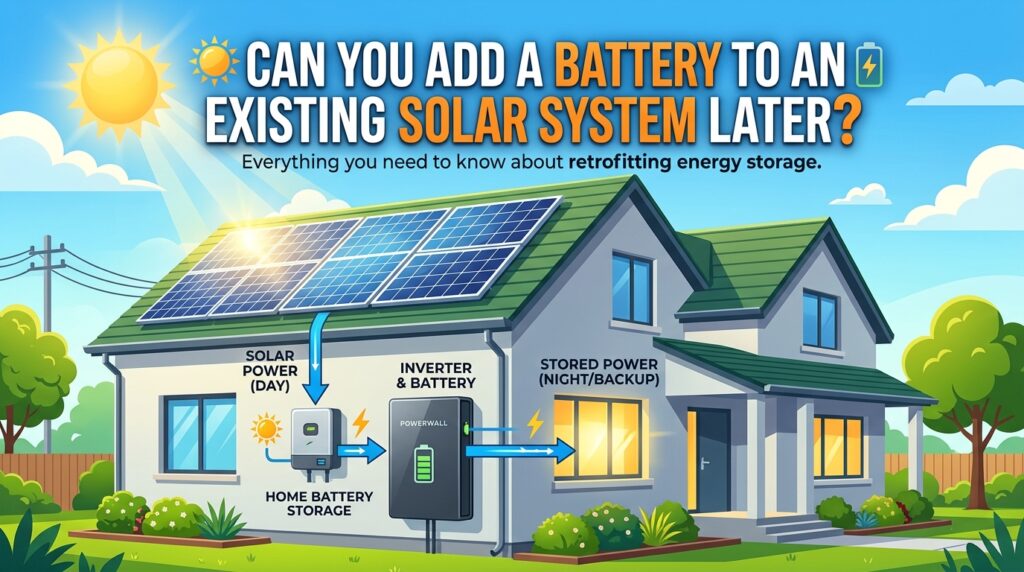
A solar battery retrofit adds energy storage to a system that was originally installed without a battery. Your solar panels continue producing electricity, but instead of sending all unused energy back to the grid, some of that energy can be stored for later use.
The main question is not usually whether a battery can be added. The important question is how the battery connects with your existing solar equipment.
| Retrofit Approach | How It Works | What Happens to Existing Solar Equipment? |
|---|---|---|
| AC-coupled battery | The battery connects on the home’s AC electrical side and uses its own inverter. | The existing solar inverter can often remain in place. |
| DC-coupled battery | The battery connects on the DC side through a compatible hybrid inverter. | The existing inverter may need replacement or modification. |
AC-coupled and DC-coupled designs are the two primary ways batteries are integrated into existing solar systems. AC coupling is often used for retrofits because it allows many homeowners to keep their existing solar inverter, while DC coupling may involve replacing equipment to combine solar and battery management into one inverter. :contentReference[oaicite:0]{index=0}
Option 1: Adding an AC-Coupled Battery to Existing Solar
An AC-coupled battery system is often the simplest retrofit option. With this setup, your current solar panels and solar inverter continue operating normally. A separate battery inverter manages charging and discharging the battery.
During sunny periods, your solar system produces electricity for your home. If production exceeds your immediate usage, the battery system can store some of that energy. Later, the stored energy can be used when solar production is lower, such as in the evening.
Benefits of AC-Coupled Retrofits
- Keeps many existing solar components in place.
- Can work well with many existing inverter types.
- May require fewer changes to the original solar array.
- Can be a practical choice when the current solar system is working well.
Potential Limitations
- The system may require additional equipment space.
- Energy may pass through more conversion steps compared with some DC-coupled designs.
- The battery must be properly matched with your existing solar and electrical system.
Option 2: Adding a DC-Coupled Battery System
A DC-coupled battery system connects solar generation and battery storage through a shared hybrid inverter. Instead of keeping the original solar inverter, the system may replace it with equipment designed to manage both solar panels and batteries.
This approach is more common when designing a new solar-plus-storage system, but it can also make sense for an existing solar home if the current inverter is older or already approaching replacement.
Possible Advantages of DC Coupling
- Solar and battery operation can be managed through one inverter platform.
- It can reduce some energy conversion steps.
- It may be a good opportunity to upgrade aging equipment.
Possible Challenges
- More extensive electrical work may be required.
- The existing inverter may need replacement.
- The project can involve more planning than a simple battery addition.
What Should You Check Before Adding a Battery?
Before installing a battery, a homeowner should review several parts of the existing solar system. A professional evaluation can help determine whether the current equipment is compatible and what changes may be necessary.
| Item to Review | Why It Matters |
|---|---|
| Solar inverter type | Determines available battery integration options. |
| System age | Older equipment may influence whether replacement makes sense. |
| Electrical panel capacity | Battery installation must meet electrical requirements. |
| Backup power goals | Whole-home backup and essential-load backup require different designs. |
| Available installation location | Batteries require appropriate placement and clearance. |
Can You Add a Battery Years After Installing Solar?
Yes. Many homeowners add batteries years after their original solar installation. Some choose storage after experiencing power outages, changing electricity rates, or wanting more control over how they use their solar energy.
Waiting to add a battery can also allow homeowners to learn how much electricity their home uses and identify which loads are most important during an outage. This information helps create a better storage plan.
Will Adding a Battery Require Replacing Solar Panels?
Usually, adding a battery does not require replacing functioning solar panels. The battery is generally added to the electrical side of the system rather than replacing the roof-mounted modules.
However, other equipment may need updates depending on the design of your existing system. For example, an older inverter may not support a preferred battery configuration, or electrical upgrades may be needed to meet installation requirements.
Is a Solar Battery Worth Adding to an Existing System?
Whether a battery is worthwhile depends on your goals. Homeowners who want backup power, increased energy independence, or better use of excess solar production may find storage valuable.
However, a battery is not automatically the right choice for every home. Factors such as electricity usage patterns, existing solar production, utility policies, and installation conditions all affect the decision.
Adding Battery Storage to a St. Louis Solar System
Missouri homeowners experience seasonal changes in solar production, making it important to evaluate how a battery will operate throughout the year. A properly designed system considers your household energy habits, existing solar equipment, and backup priorities.
For homeowners in the St. Louis area, the best starting point is a review of your current solar installation. Understanding your inverter type, electrical setup, and energy goals can help determine whether an AC-coupled retrofit, DC-coupled upgrade, or another approach is appropriate.
Frequently Asked Questions
Can I add a battery to solar panels that are already installed?
Yes. Many existing solar systems can be upgraded with battery storage. The available options depend on your current inverter, electrical system, and battery compatibility.
Do I need a new inverter to add a solar battery?
Not always. AC-coupled battery systems can often work alongside an existing solar inverter. DC-coupled systems typically require a compatible hybrid inverter.
Can a battery provide backup power during an outage?
Yes, if the battery system is designed and installed for backup operation. Some systems provide backup only for selected essential circuits, while others can support larger portions of a home depending on system design.
How long does a solar battery retrofit take?
The installation timeline depends on the equipment selected, electrical requirements, permitting, and the complexity of the existing solar system.
Should I add a battery when I install solar or wait?
Both approaches can make sense. Installing solar and storage together may simplify design, while waiting allows homeowners to add storage later when their needs, technology options, or energy goals change.