How Do Floating Solar Farms Work? Where They Make Sense.
Solar power is usually associated with rooftops, open fields, and ground-mounted arrays. However, another approach is gaining attention: floating solar farms, also called floating photovoltaic (FPV) systems or floatovoltaics. Instead of installing panels on land, these systems place solar modules on floating platforms built over suitable bodies of water.
Floating solar farms can help expand renewable energy production while reducing competition for land. They are most often considered for reservoirs, water treatment ponds, irrigation ponds, and other controlled water surfaces where large-scale solar development is practical. For homeowners in St. Louis, Missouri, and surrounding areas, floating solar is generally not a residential option, but understanding the technology helps explain how solar continues to evolve beyond traditional rooftop installations.
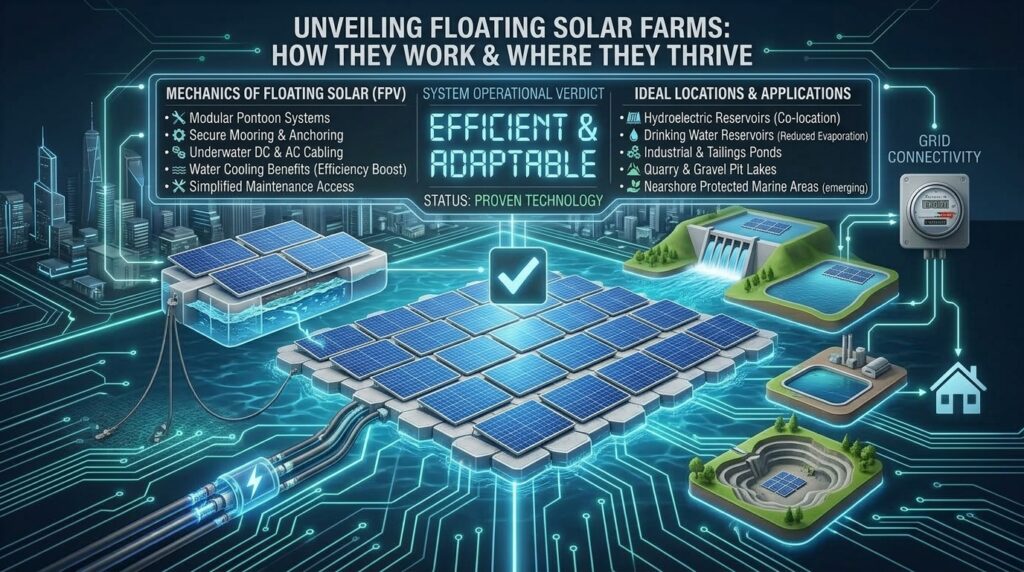
Floating photovoltaic systems combine many familiar solar components with specialized equipment designed to handle water, movement, and environmental conditions. :contentReference[oaicite:0]{index=0}
What Is a Floating Solar Farm?
A floating solar farm is a group of photovoltaic panels installed on a floating structure that rests on the surface of a body of water. The solar panels generate electricity in the same way as land-based solar systems: sunlight is converted into direct current electricity, which is then sent through inverters to produce usable alternating current power.
The main difference is the foundation. Instead of being mounted on roofs, poles, or ground racks, floating solar panels sit on buoyant platforms connected together to form a solar array.
| System Type | Where Panels Are Installed | Common Applications |
|---|---|---|
| Rooftop solar | Homes and buildings | Residential electricity generation |
| Ground-mounted solar | Open land | Homes with available property space, businesses, utilities |
| Floating solar | Reservoirs, ponds, and other water bodies | Utility projects, municipalities, industrial facilities |
How Do Floating Solar Farms Work?
Floating solar farms operate through the same electrical principles as traditional photovoltaic systems, but the installation requires additional structural and anchoring components.
1. Floating Platforms Support the Solar Panels
The foundation of a floating solar project is a network of buoyant platforms or pontoons. These structures keep solar panels above the water surface while allowing the array to move naturally with changing water conditions.
Floating platforms are typically made from durable materials designed to resist UV exposure, corrosion, and long-term outdoor use. The platforms also provide pathways and support areas for installation and maintenance activities.
2. Solar Modules Generate Electricity
Photovoltaic modules mounted on the floating structure capture sunlight and convert it into DC electricity. The panels are generally positioned at a fixed angle designed to balance energy production, stability, and resistance to wind forces.
3. Inverters Convert Electricity for Use
Solar inverters convert DC electricity from the panels into AC electricity that can be used by buildings, connected to the grid, or combined with other energy systems.
4. Mooring Systems Keep the Array in Place
Floating solar farms are not simply placed on water and left to drift. They use mooring and anchoring systems connected to the shoreline or the bottom of the water body. These systems help prevent excessive movement caused by wind, waves, and changing water levels.
5. Cables Transfer Electricity
Electrical cables connect the floating array to equipment on land. Because these cables operate near water, they require careful design, protection, and installation to maintain safety and reliability.
Where Do Floating Solar Farms Make Sense?
Not every body of water is suitable for floating solar. Successful projects depend on factors such as sunlight availability, water conditions, environmental considerations, grid access, and permitting requirements. Research on floating solar siting highlights solar resources, transmission access, water use, and protected areas as important factors when evaluating locations. :contentReference[oaicite:1]{index=1}
Reservoirs
Artificial reservoirs are among the most common locations for floating solar because they often have relatively stable water conditions and existing infrastructure nearby.
Water Treatment Facilities
Wastewater treatment ponds and industrial water reservoirs may provide suitable space for solar generation while avoiding the need for additional land development.
Irrigation Ponds
Agricultural operations with large water storage ponds may consider floating solar as a way to combine water management with energy production.
Hydropower Reservoirs
Floating solar can complement hydropower facilities by using existing water surfaces and electrical infrastructure. These hybrid approaches may help diversify renewable energy production.
Benefits of Floating Solar Farms
| Potential Benefit | How It Helps |
|---|---|
| Uses water surfaces instead of land | Can reduce competition for valuable land areas |
| Cooling effect from water | Lower temperatures may improve solar panel operating conditions |
| Potential reduction in evaporation | Panel coverage can reduce sunlight exposure on portions of the water surface |
| Works with existing infrastructure | Some projects can connect with nearby electrical facilities |
Water can naturally help cool solar modules, which may improve operating conditions compared with some land-based installations. However, the actual performance depends on system design, climate, and site conditions. :contentReference[oaicite:2]{index=2}
Challenges and Limitations of Floating Solar
Although floating solar has advantages, it is not a replacement for every type of solar installation.
Higher Installation Complexity
Building on water requires specialized floating structures, anchoring systems, and electrical designs. These added requirements can increase project complexity compared with standard ground-mounted solar.
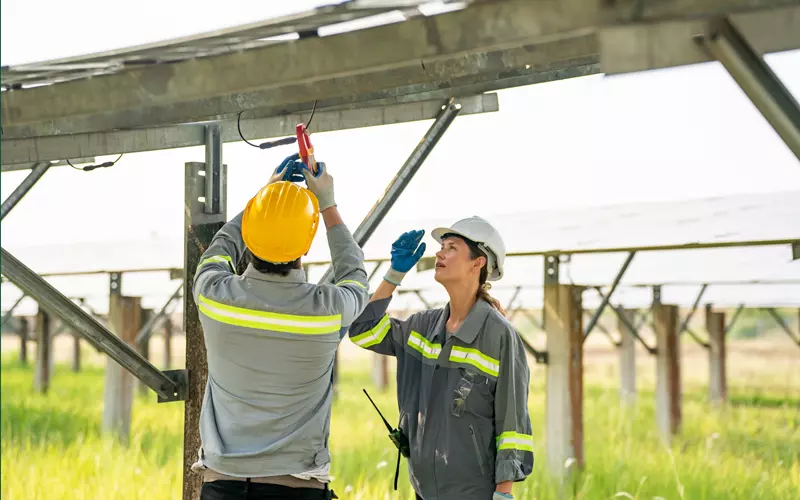
Maintenance Access
Solar panels on land can usually be accessed with common maintenance equipment. Floating arrays may require boats, specialized tools, and additional safety procedures.
Environmental Considerations
Before construction, developers typically evaluate how a floating solar project could affect water quality, aquatic ecosystems, recreation, and other uses of the water body.
Weather and Water Conditions
Wind, waves, storms, and changing water levels can place additional stress on floating structures. Proper engineering is required to keep systems secure over their operating life.
How Are Floating Solar Farms Maintained?
Maintenance activities are similar to traditional solar in some ways but require additional planning because the system is located on water.
- Inspecting solar modules for damage or reduced performance
- Checking floats, connections, and mooring systems
- Monitoring electrical equipment and cables
- Removing debris when necessary
- Performing safety inspections for access equipment
Modern solar monitoring systems can help operators identify performance issues without relying only on physical inspections.
Permitting and Planning Considerations
Floating solar projects typically require more than standard solar approvals because they involve both energy infrastructure and water use. Permitting may involve local authorities, environmental agencies, water managers, utilities, and property owners.
Developers must consider questions such as:
- Who owns or manages the water surface?
- Is the water body suitable for solar development?
- How will the project connect to the electrical grid?
- Will the installation affect recreation, wildlife, or water operations?
Does Floating Solar Make Sense for Homeowners?
For most homeowners, rooftop solar or a ground-mounted system remains the more practical choice. Residential floating solar would require access to an appropriate private water body, specialized engineering, and a project size that usually does not match typical household electricity needs.
However, homeowners can benefit indirectly from floating solar technology. As more renewable energy options develop, utilities, municipalities, and large organizations may use innovative solar approaches to expand clean energy production.
Frequently Asked Questions About Floating Solar Farms
Are floating solar panels different from regular solar panels?
The photovoltaic modules are generally similar to those used in land-based systems. The major differences are the floating platforms, anchoring systems, and water-specific engineering requirements.
Can floating solar farms be installed on oceans?
Most floating solar projects today are located on calmer inland water bodies. Offshore floating solar faces additional challenges, including stronger waves, marine conditions, and more demanding engineering requirements.
Do floating solar farms damage water?
Potential impacts depend on the design, location, and amount of water surface covered. Projects are typically evaluated for environmental effects before approval.
Can I install floating solar panels on my backyard pond?
In theory, small floating solar systems are possible, but most floating solar development is designed for larger water bodies. Homeowners should evaluate whether rooftop or ground-mounted solar would be more practical first.
Final Thoughts
Floating solar farms demonstrate how solar energy can expand beyond traditional rooftops and fields. By combining photovoltaic technology with floating structures, these systems can make use of certain water surfaces while helping address land-use challenges.
For most Missouri homeowners, rooftop solar remains the most accessible option. However, floating solar represents an important development in the broader renewable energy landscape and may become increasingly useful for utilities, communities, and organizations with suitable water resources.