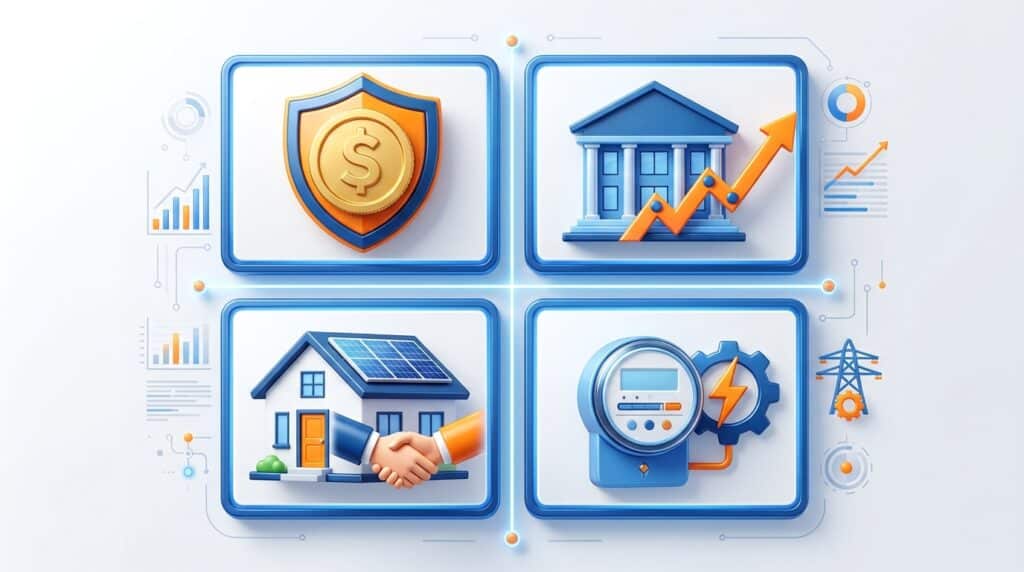
Solar Panel Financing Options: Cash vs Loan vs Lease vs PPA
Installing solar panels is a major investment that can help homeowners and businesses reduce dependence on traditional electricity sources while gaining more control over long-term energy costs. However, choosing the right way to pay for a solar system is just as important as selecting the right equipment and installer.
For many customers, the biggest question is not whether to go solar, but how to finance it. The four most common solar financing options are cash purchases, solar loans, solar leases, and power purchase agreements (PPAs). Each option has different effects on ownership, upfront costs, monthly payments, maintenance responsibilities, and long-term financial benefits.
At Rumos Chem, we help residential and commercial customers understand their solar financing choices so they can select an option that matches their goals, budget, and energy needs. Financing terms, incentives, and available programs can vary by location and change over time, so homeowners and businesses should verify current details before making a final decision.
Understanding the Four Main Solar Financing Options
Solar financing generally falls into two categories: owning the solar system or paying a third party to provide solar energy. Cash purchases and solar loans allow you to own the equipment, while leases and PPAs allow a solar provider to own the system while you receive the benefits of solar electricity.
| Financing Option | System Owner | Upfront Cost | Monthly Payment | Maintenance Responsibility |
|---|---|---|---|---|
| Cash Purchase | Homeowner or business | Highest upfront investment | Usually none after purchase | Owner typically manages maintenance |
| Solar Loan | Homeowner or business | Often low upfront cost depending on terms | Fixed loan payments over an agreed period | Owner typically manages maintenance |
| Solar Lease | Solar company or third party | Often little or no upfront cost | Monthly lease payment | Usually handled by the system owner |
| Power Purchase Agreement (PPA) | Solar company or third party | Often little or no upfront cost | Payment based on solar electricity produced | Usually handled by the system owner |
Option 1: Paying for Solar Panels With Cash
A cash purchase means you pay the full cost of your solar installation upfront and immediately own the system. This approach removes financing charges and allows you to receive the full financial benefit of owning the equipment.
Advantages of a Cash Solar Purchase
- You own the solar panels from day one.
- You avoid loan interest and financing fees.
- You receive the long-term value of the system after it has paid back its initial cost.
- The system can be easier to manage when selling a property because there is no financing contract to transfer.
- You maintain full control over equipment upgrades and energy decisions.
Potential Drawbacks of Paying Cash
- It requires significant available capital upfront.
- The money used for solar cannot be used for other investments or expenses.
- You are responsible for reviewing warranties and maintenance needs.
Cash is often attractive for customers who have available funds and prefer maximizing ownership benefits. However, every homeowner should consider their overall financial situation before committing a large amount of money to a solar installation.
Option 2: Solar Loans
A solar loan allows you to purchase and own a solar system while spreading the cost over time through monthly payments. Similar to financing a vehicle or home improvement project, the loan covers the installation cost and you repay the lender according to the agreed terms.
Benefits of Solar Loans
- You can own the solar system without paying the entire cost upfront.
- You may preserve cash for other financial priorities.
- You can benefit from the long-term value of system ownership.
- Many loan options offer predictable monthly payments.
Things to Review Before Choosing a Solar Loan
- Interest rate and total repayment amount.
- Loan length and monthly payment structure.
- Any financing fees included in the agreement.
- Whether the loan terms match your expected time in the home or business location.
Solar loans are popular because they combine ownership benefits with a lower upfront financial barrier. However, customers should compare the full loan cost against the cash purchase price when reviewing proposals.
Option 3: Solar Lease
With a solar lease, a third-party company owns the solar panels installed on your property. You pay a set monthly amount to use the system and benefit from the electricity it produces.
Advantages of Solar Leases
- Lower upfront costs compared with buying a system.
- The system owner may handle repairs and maintenance.
- Payments may be predictable depending on contract terms.
- You can access solar energy without purchasing the equipment.
Possible Considerations
- You do not own the solar panels.
- The contract may affect the process of selling a home.
- You should review payment increases, contract length, and transfer requirements.
A solar lease can be useful for customers who prioritize simplicity and lower upfront costs. The long-term financial structure may differ from owning a system, so reviewing the agreement carefully is important.
Option 4: Power Purchase Agreement (PPA)
A power purchase agreement is another third-party ownership model. Instead of paying for the equipment, you purchase the electricity generated by the solar system at an agreed rate.
How a PPA Works
- A solar provider installs and owns the system.
- The system generates electricity for your property.
- You pay for the electricity produced according to the PPA terms.
- The provider generally manages system maintenance and monitoring.
PPA Benefits and Considerations
- Often requires little upfront investment.
- Can provide predictable energy costs depending on contract terms.
- Does not provide direct equipment ownership.
- Contract details should be reviewed carefully before signing.
| Factor | Cash | Solar Loan | Solar Lease | PPA |
|---|---|---|---|---|
| Ownership | You own the system | You own the system | Third party owns the system | Third party owns the system |
| Best For | Customers wanting maximum ownership | Customers wanting ownership without full upfront payment | Customers wanting simplicity | Customers wanting energy access without ownership |
| Upfront Investment | Highest | Usually lower | Usually lower | Usually lower |
| Long-Term Control | Highest | High | Lower | Lower |
| Contract Complexity | Lowest | Moderate | Higher | Higher |
How to Choose the Right Solar Financing Option
The best financing option depends on your financial priorities, ownership preferences, and future plans. Before choosing a payment method, consider these practical steps:
- Determine your budget: Decide whether you prefer an upfront investment or monthly payments.
- Compare total costs: Look beyond monthly payments and review the full financial impact over the contract period.
- Understand ownership: Decide whether owning the solar equipment is important to you.
- Review your timeline: If you may sell your home or business property, understand transfer requirements.
- Check available incentives: Incentives vary by location and eligibility, so verify current programs with qualified professionals.
- Request multiple quotes: Compare equipment, warranties, installation quality, and financing terms.
Questions to Ask a Solar Installer
- What is the total system cost before financing?
- Who owns the solar equipment after installation?
- What warranties are included?
- What happens if I sell my property?
- Are there any additional fees or contract requirements?
Solar Financing for Residential and Commercial Projects
Homeowners and businesses often have different solar goals. Residential customers may focus on reducing household energy expenses and increasing energy independence. Commercial customers may prioritize operating cost management, sustainability goals, and long-term facility planning.
Rumos Chem works with both residential and commercial clients to design solar solutions that fit different energy requirements and financing preferences. Whether you are interested in purchasing a system outright or exploring financing options, a customized solar assessment can help identify the right approach.
Frequently Asked Questions About Solar Financing
1. Is paying cash for solar better than financing?
Cash purchases can reduce financing costs and provide immediate ownership, but financing may be better for customers who want to preserve available funds. The right choice depends on your financial goals and circumstances.
2. Do solar loans mean I own the panels?
Yes, with most solar loans, the customer purchases and owns the solar system. However, loan terms, security interests, and other details can vary, so review the agreement carefully.
3. What is the main difference between a solar lease and a PPA?
A solar lease typically involves paying a fixed payment to use a solar system, while a PPA usually charges based on the amount of electricity the system produces. Both generally involve third-party ownership.
4. How can I know which solar financing option is right for my property?
The best option depends on your budget, ownership goals, tax situation, property plans, and energy needs. A professional solar consultation can help compare available choices.
Conclusion: Explore Your Solar Financing Options With Rumos Chem
Choosing how to finance solar panels is an important decision that can affect your costs, ownership, and long-term energy strategy. Cash purchases, solar loans, leases, and PPAs each offer unique benefits depending on your priorities.
Rumos Chem helps residential and commercial customers evaluate solar solutions with confidence. Our team can help you understand installation options, financing choices, and the potential benefits of going solar.
Request a free solar quote from Rumos Chem today to explore the right solar financing option for your property and take the next step toward a smarter energy future.