Is Higher Solar Panel Efficiency Worth Paying For? How to Compare Ratings
Is Higher Solar Panel Efficiency Worth Paying For? How to Compare Ratings is best answered by reviewing the actual home, current utility rules, roof condition, electricity use, and the complete written proposal. This Rumos Chem article gives St. Louis homeowners a practical framework without promising savings or eligibility.
Start With the Goal
Decide whether the priority is lower grid purchases, outage support, appearance, roof planning, predictable budgeting, or learning about an existing system. Record recent bills and future loads. A good design serves the goal rather than adding features simply because they are available.
- Gather bills and note seasonal or unusual use.
- Review roof age, shade, access, and planned repairs.
- List essential circuits and future loads.
- Ask who owns and services every component.
- Separate estimates from contractual commitments.
Understand the Technology
Panels produce electricity, inverters convert it, and monitoring reports it. Batteries store electricity but have capacity, power, control, and warranty limits. Roof-integrated products may combine a roofing function with generation and therefore require careful questions about repair, replacement, ventilation, and service. No technology should be treated as a guaranteed answer for every roof.
Questions for a proposal
- What is included and excluded?
- How were production, cost, or appearance assumptions developed?
- Who obtains permits and utility approval?
- What happens if a roof repair is needed?
- Who handles monitoring, warranty, and service?
Site Review Table
| Area | Review | Reason |
|---|---|---|
| Roof | Age, structure, penetrations, shade, and access | Protects the building and supports maintenance |
| Electrical | Service rating, panel space, circuits, and disconnects | Supports safe design and inspection |
| Usage | Bills, appliances, future changes, and outage priorities | Matches the system to actual needs |
| Rules | Utility, permit, tax, and program documents | Rules can differ and change |
| Contract | Ownership, warranty, maintenance, and exclusions | Defines responsibility after installation |
Compare the Options
| Option | Possible strength | Important question |
|---|---|---|
| Traditional panels | Established installation and service path | Roof condition, appearance, and attachment plan |
| Roof-integrated product | May be part of a broader roof design | Repair, replacement, and product availability |
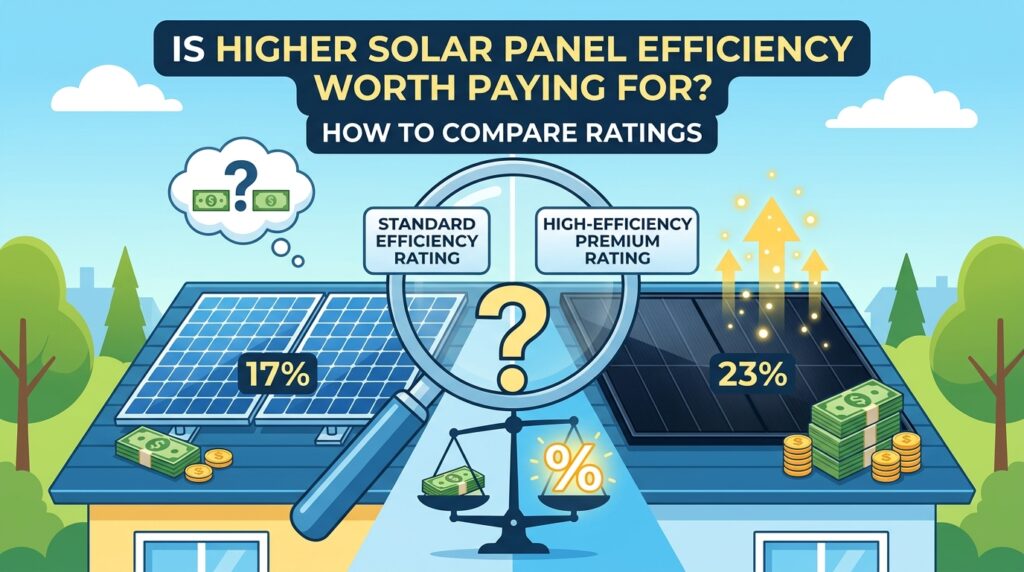
| Higher efficiency panel | May use less roof area for a target output | Whether the added price solves a real constraint |
| Efficiency upgrades | Can reduce energy needed | Which improvements fit this home |
Cost and Output Without False Precision
Cost and production depend on site, equipment, roof work, design, labor, utility rules, and contract terms. Efficiency is a rating under test conditions, not a promise of a particular bill reduction. Ask for comparable assumptions and a clear explanation of what is guaranteed, estimated, or excluded. Avoid invented statistics and headline comparisons that ignore installation scope.
Weather, Maintenance, and Roof Life
St. Louis heat, humidity, storms, hail, snow, pollen, and leaves can affect equipment and access. Ask how the design handles water, wind, inspections, and safe cleaning. Keep roof and system records together. Never climb on the roof or open electrical equipment unless properly qualified; call a professional for damage, leaks, error codes, or recurring breaker trips.
How to Choose a Provider
Look for a written equipment list, site assessment, permit scope, utility responsibilities, warranties, monitoring plan, service contact, and change-order process. Take time to read cancellation terms and transfer conditions. A trustworthy provider answers questions and does not require an immediate signature.
Practical Decision Steps
Gather documents, define the goal, request a site-specific assessment, compare complete scopes, verify current rules, and ask a licensed professional about electrical or roof issues. Save proposals, invoices, permits, manuals, serial numbers, and service notes. This file helps with future repairs and ownership changes.
Frequently Asked Questions
Is the most efficient panel always the best choice?
No. Compare the complete system, available roof area, warranty, service, price, and the actual constraint the rating is meant to solve.
Are incentive claims guaranteed?
No. Verify current rules and eligibility with official sources and qualified advisers before relying on them.
Will solar protect my roof?
It depends on the product and installation. Ask about roof condition, attachment, water management, repair access, and warranties.
Can I inspect or clean the system myself?
Use safe ground-level observation only. Avoid roof and electrical work and call a qualified professional.
How can Rumos Chem help?
Rumos Chem provides residential solar information and installation guidance for St. Louis homeowners.
Final Takeaway
The right choice is the one that fits the home, goal, roof, budget, rules, and service plan. Compare complete written scopes, verify current information, and choose qualified professionals rather than relying on pressure or a single headline rating.