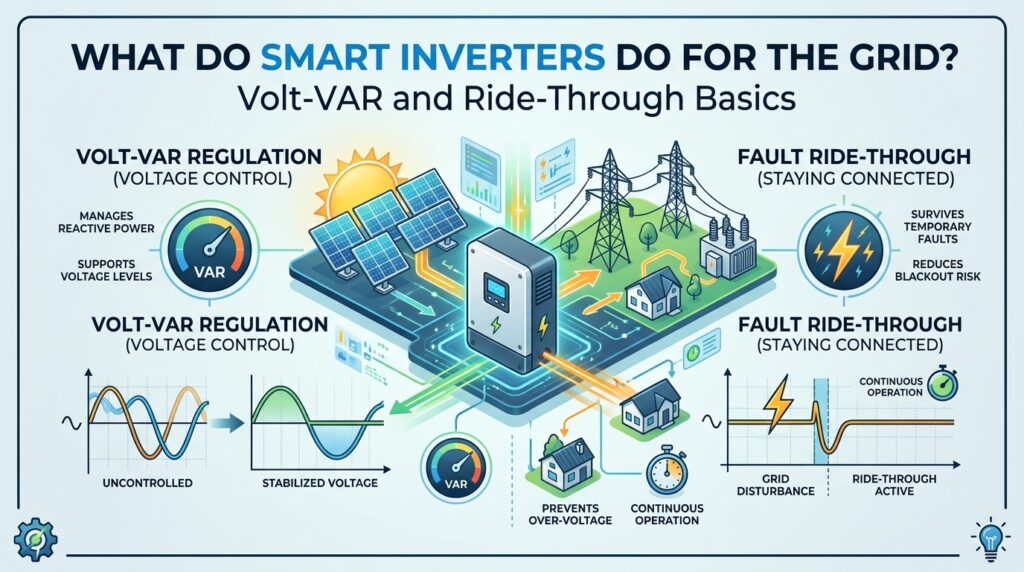
What Do Smart Inverters Do for the Grid? Volt-VAR and Ride-Through Basics
As residential solar adoption grows across St. Louis, Missouri, the electrical grid faces new opportunities and complex management challenges. Traditional solar inverters operated as simple, standard power converters: they converted the direct current (DC) generated by rooftop solar panels into alternating current (AC) used by home appliances, shutting down immediately whenever grid voltage or frequency flickered. However, modern residential installations rely on advanced technology known as smart inverters.
Smart inverters do far more than convert energy. They act as automated, responsive grid assets that dynamic communicate and make real-time adjustments to stabilize power lines, prevent localized outages, and allow higher percentages of renewable energy to integrate seamlessly into local utility distribution systems. At Rumos Chem, we work directly with St. Louis homeowners to select, install, and optimize solar systems equipped with modern smart inverters that comply with local utility guidelines while delivering reliable, efficient clean energy.
1. The Evolution: Traditional Inverters vs. Smart Inverters
To understand the grid benefits of smart inverters, it helps to contrast them with first-generation traditional inverters. Older inverters were designed with rigid operational parameters. If local grid conditions drifted even slightly outside standard voltage or frequency thresholds, legacy inverters would instantly disconnect to protect themselves and avoid feeding power into a potentially unstable grid.
While this binary “on or off” behavior protected the device, it created systemic issues for utility providers. As neighborhoods added more solar installations, simultaneous disconnections during minor utility fluctuations caused sudden drop-offs in power supply, worsening grid instability instead of fixing it. Smart inverters solve this issue by dynamically adjusting their electrical output to support the grid during brief disruptions.
2. Understanding Volt-VAR Control for Voltage Regulation
Voltage on the power grid fluctuates continuously depending on local demand, industrial loads, and solar generation spikes during sunny afternoons. If voltage rises too high, sensitive home electronics can be damaged; if it drops too low, electrical equipment can brown out or stall. Smart inverters regulate this through a mechanism called Volt-VAR control.
In alternating current electricity, total power consists of active power (watts used to do work) and reactive power (measured in Volt-Amperes Reactive, or VARs). Reactive power manages the electromagnetic fields required by inductive equipment like motor drives, transformers, and air conditioners. Volt-VAR control allows a smart inverter to inject or absorb reactive power to modulate local line voltage without sacrificing significant solar output.
-
When line voltage rises too high: The smart inverter absorbs reactive power (inductive mode), pulling the local grid voltage back down into safer operational bands.
-
When line voltage drops too low: The smart inverter injects reactive power (capacitive mode), pushing local grid voltage back up toward normal levels.
-
Volt-Watt function: If voltage exceeds maximum safe thresholds despite Volt-VAR adjustments, the inverter can curtail active power output gradually rather than disconnecting abruptly.
3. What is Ride-Through Capability?
Power grids experience momentary trips, voltage sags, or frequency spikes due to lightning strikes, falling tree branches, or sudden equipment switching. Ride-through capability refers to a smart inverter’s ability to remain connected and online during these brief, sub-second disturbances.
Instead of disconnecting at the first sign of grid turbulence, smart inverters “ride through” transient events. By remaining online, the system avoids cascading grid failures where hundreds of solar homes suddenly drop off the network simultaneously, compounding a minor utility issue into a widespread blackout.
4. Grid Support and Local Utility Coordination in St. Louis
In the greater St. Louis metropolitan area, residential power distribution is managed primarily by Ameren Missouri. Electric utilities establish detailed interconnection standards to preserve service quality across neighborhoods. Modern solar installations in St. Louis must feature smart inverters certified to standards such as IEEE 1547-2018 and UL 1741 SB.
Through pre-configured grid profiles loaded into the inverter during installation, smart inverters coordinate directly with utility expectations. This local responsiveness enables utility feeders to accommodate higher concentrations of residential rooftop solar without expensive physical infrastructure upgrades, such as replacing line transformers or rebuilding substation capacity.
5. Safety, Rapid Shutdown, and Anti-Islanding Protection
A common question from homeowners is whether grid-supportive ride-through functionality poses a safety hazard to utility line workers during power outages. Smart inverters are built with rigorous safety protocols to prevent dangerous conditions such as unintended islanding.
Unintended islanding occurs when a solar power system continues feeding electricity into local power lines that have been disconnected from the main grid, creating an unseen hazard for utility repair crews. Smart inverters continuously run active anti-islanding algorithms. If a true power outage occurs—where utility grid power completely drops—the smart inverter detects the outage within seconds and disconnects immediately.
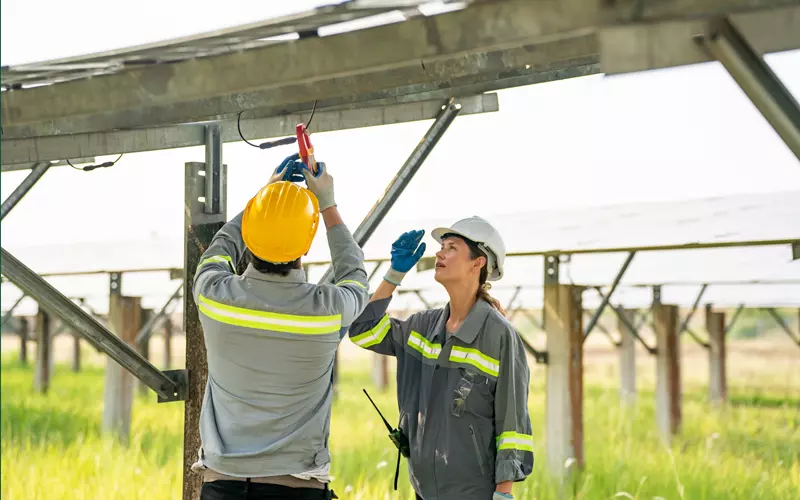
Additionally, modern systems installed by Rumos Chem incorporate module-level rapid shutdown technology. In compliance with National Electrical Code (NEC) guidelines, rapid shutdown quickly reduces DC voltage on the roof to safe levels within seconds of system de-energization, ensuring complete safety for emergency responders and service technicians.
6. What Smart Inverters Mean for St. Louis Homeowners
While much of smart inverter functionality benefits regional electrical distribution, the direct implications for St. Louis homeowners are equally significant:
-
Higher Solar Capacity Allowance: Because smart inverters manage localized line voltage, utilities can safely approve more residential solar interconnections on neighborhood feeders.
-
Increased System Uptime: Ride-through capabilities prevent your solar system from nuisance tripping during minor power line glitches, ensuring continuous generation during peak afternoon hours.
-
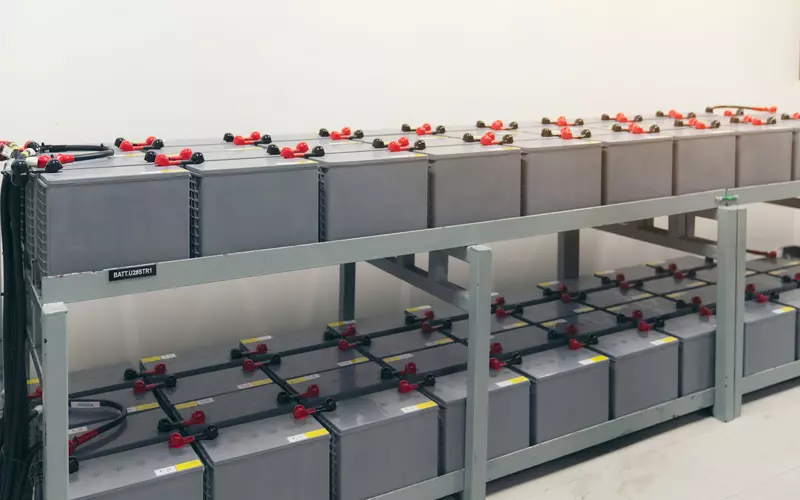
Battery System Integration: Smart inverters serve as the brain for hybrid solar-plus-storage systems, seamlessly managing power flows between solar panels, home loads, battery storage, and the utility grid.
-
Equipment Longevity: Smoother power management protects sensitive household electronics from line voltage spikes and irregular power quality.
7. Practical Tips for Choosing and Setting Up Your Solar Inverter
To maximize the performance, safety, and compliance of your home solar installation, keep these practical guidelines in mind:
-
Verify Certification Standards: Ensure your chosen inverter carries UL 1741 SB certification and complies with IEEE 1547-2018 standards for grid interconnection.
-
Select the Right System Architecture: Choose between microinverters or string inverters with DC optimizers based on your roof shading, layout, and future battery expansion plans.
-
Ensure Proper Grid Profile Configuration: Work with an experienced local installer like Rumos Chem to ensure the inverter’s utility grid profile is configured to match Ameren Missouri requirements during commissioning.
-
Maintain Internet Connectivity: Keep your inverter connected to home Wi-Fi or cellular monitoring to receive firmware updates and performance tracking from the manufacturer.
8. Frequently Asked Questions (FAQ)
Do smart inverters reduce my solar electricity production?
In rare instances, if local grid voltage spikes unusually high, a smart inverter may briefly throttle active production (Volt-Watt response) to prevent grid damage. However, these adjustments are typically minimal and prevent complete system disconnections, ultimately preserving higher total energy yield over time.
Does a smart inverter keep my power on during a blackout?
A standard grid-tied smart inverter must shut down during a blackout for anti-islanding safety. To maintain home power during a utility outage, your smart inverter must be paired with energy storage (a home battery) and an automatic transfer switch capable of safely isolating your home from the grid.
How do smart inverters communicate with utility systems?
Smart inverters use standardized communication protocols (such as SunSpec Modbus or IEEE 2030.5) via cellular or internet connections. Most residential smart inverters execute pre-programmed, automated response curves locally without requiring active remote control commands from utility operators.
Are smart inverters required for residential solar in Missouri?
Yes. Electric utilities serving Missouri require grid-connected solar installations to use certified smart inverters that meet current IEEE 1547 and UL 1741 testing standards to ensure safety, grid stability, and reliable power quality.
How does Rumos Chem help St. Louis homeowners with smart inverter setup?
Rumos Chem manages the full scope of residential solar services for homeowners in St. Louis, Missouri. From initial engineering and permitting to utility interconnection applications, equipment selection, and proper inverter grid profile configuration, our local team ensures your system operates safely, reliably, and efficiently.