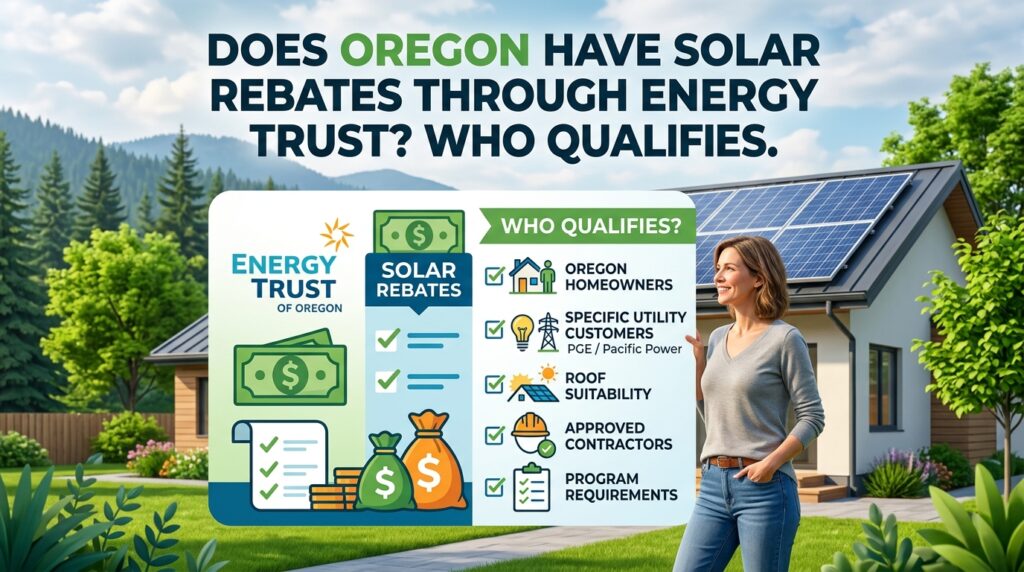
Does Oregon Have Solar Rebates Through Energy Trust? Who Qualifies
If you are exploring residential solar options in the Pacific Northwest, understanding local incentives is often the first step toward lowering your installation costs. A common question among property owners evaluating clean energy programs is whether Oregon offers solar rebates through Energy Trust of Oregon, how these incentives work, and who is eligible to apply.
In this guide, we break down the structure of Energy Trust solar incentives, detail general qualification criteria, outline additional state and federal cost-saving options, and offer practical guidance on navigating program rules. While Rumos Chem provides residential solar information and professional installation services to homeowners in St. Louis, Missouri, we aim to provide accurate, educational insights for homeowners across the country as they evaluate renewable energy investments.
Understanding Energy Trust of Oregon and Solar Incentives
Energy Trust of Oregon is an independent, non-profit organization dedicated to helping utility customers save energy and generate clean power. Funding for Energy Trust programs comes from public purpose charges paid by customers of participating investor-owned utilities in Oregon.
Energy Trust does not manufacture or directly distribute solar equipment. Instead, it provides cash incentives and technical guidance to eligible residential customers who install qualified solar electric systems through approved trade ally contractors.
Because incentive structures, funding pools, and rebate levels are adjusted periodically based on market demand and policy updates, incentives are subject to availability and change over time. Homeowners should always confirm current terms and active funding levels directly through official program channels before signing a contract.
Who Qualifies for Energy Trust Solar Incentives?
To qualify for a solar incentive through Energy Trust of Oregon, several core requirements must be met regarding your utility provider, property type, contractor selection, and technical system specifications.
-
Utility Customer Status: You must be a residential customer receiving electricity service from a participating investor-owned utility, such as Portland General Electric (PGE) or Pacific Power.
-
Property Eligibility: The installation must take place on an eligible residential property, which generally includes single-family homes, attached townhomes, or certain multi-family residences, subject to program guidelines.
-
Trade Ally Contractor: The system must be designed and installed by an approved Energy Trust solar trade ally contractor who follows specific program installation standards.
-
Site Technical Suitability: The installation site must meet minimum solar resource standards, including adequate roof space, proper orientation, and minimal shading from trees or adjacent structures.
-
Grid Connection: The system must be net-metered and connected to the local utility grid according to standard interconnection rules.
Incentive Structure Overview: Standard vs. Income-Qualified Options
Energy Trust solar incentives generally fall into different tiers depending on household income and overall eligibility. This dual-structure approach helps expand access to clean energy across diverse income levels.
Specific rebate rates per watt and maximum incentive caps per project are updated regularly by Energy Trust. Prospective applicants should verify current dollar amounts and funding availability directly on the official Energy Trust of Oregon website.
How Energy Trust Incentives Combine with Other Programs
Energy Trust incentives are often one piece of a broader financial strategy for residential solar. In Oregon, homeowners may be able to combine local rebates with state and federal incentives, subject to program rules and individual eligibility.
Stacking incentives can significantly lower out-of-pocket expenses. However, program rules regarding stacking limits, maximum total combined subsidy percentages, and tax implications vary. Always verify current guidelines prior to purchasing.
Step-by-Step Process for Claiming Oregon Solar Incentives
Navigating the rebate process is typically straightforward when working with experienced solar professionals. Below is an outline of the typical steps involved in securing Energy Trust solar incentives:
-
Confirm Utility Service: Verify that your electric service provider is PGE or Pacific Power.
-
Request a Site Assessment: Connect with an Energy Trust trade ally solar contractor to evaluate your roof condition, shading, and energy history.
-
Receive System Proposal: Review the proposed design, estimated generation, total costs, and calculated incentive deductions.
-
Submit Application: Your contractor will generally handle the incentive reservation and application paperwork on your behalf before installation starts.
-
Complete System Installation: The trade ally installs the solar panel system according to local building codes and program standards.
-
Pass Inspection & Grid Interconnection: The system passes required municipal inspections and receives permission to operate (PTO) from your utility.
-
Receive Rebate Credit: The rebate is disbursed either directly to the homeowner or applied as an instant discount on the contractor’s invoice.
Practical Tips for Homeowners Evaluating Solar Incentives
To ensure a smooth transition to solar energy and maximize available incentives, keep the following practical tips in mind:
-
Verify Official Sources: Because program funding, rebate rates, and rules change periodically, always check the official Energy Trust of Oregon website or contact program representatives directly.
-
Work with Authorized Installers: Confirm that your selected installer holds active credentials as an Energy Trust trade ally to maintain incentive eligibility.
-
Evaluate Roof Condition: Address any roof repairs or necessary tree trimming before installing solar panels to avoid costly modifications later.
-
Consult a Tax Professional: Federal and state tax credits depend on individual financial situations; speak with a qualified CPA or tax consultant regarding tax credit claims.
-
Compare Multiple Quotes: Request quotes from reputable local installers to evaluate equipment quality, warranties, and total project value.
Residential Solar Information for St. Louis, Missouri Homeowners
While this guide covers solar incentive frameworks in Oregon, solar energy policies and utility rebates vary significantly by state and municipality. For homeowners located in the Midwest, understanding local incentives and utility rules is just as critical.
If you are a homeowner in St. Louis, Missouri, Rumos Chem is dedicated to helping you navigate the local solar landscape. As a residential solar information and installation company serving the greater St. Louis region—not a distributor—Rumos Chem works directly with local property owners to deliver custom solar design, honest policy guidance, and quality residential installations. Missouri homeowners can take advantage of local utility net metering, federal tax credits, and region-specific solar incentives tailored to the St. Louis market.
Frequently Asked Questions (FAQ)
Does Energy Trust of Oregon offer incentives to customers of consumer-owned utilities?
Generally, Energy Trust programs are funded by and available to customers of investor-owned utilities, specifically Portland General Electric (PGE) and Pacific Power. Customers served by municipal utilities or electric cooperatives should check directly with their local utility provider for available solar programs.
Can I install solar panels myself and still qualify for Energy Trust rebates?
No. Energy Trust requires that systems be designed and installed by an approved Energy Trust solar trade ally contractor. Self-installed (DIY) systems do not meet program quality standards or eligibility requirements.
Are Energy Trust solar rebates guaranteed for all applicants?
Rebates are not guaranteed indefinitely. Incentives are offered on a first-come, first-served basis and depend on available program funding, compliance with technical requirements, and active program status at the time of application.
How often do Energy Trust rebate rates and eligibility rules change?
Program rules, incentive levels, and income thresholds are reviewed and updated regularly based on legislative changes, utility market conditions, and available program budgets. It is essential to verify current rules with official sources prior to starting a project.
Where can I verify the most current Oregon solar incentive guidelines?
Homeowners can verify current rules, rebate rates, and eligibility requirements directly on the official Energy Trust of Oregon website (energytrust.org) or the Oregon Department of Energy site (oregon.gov/energy).