Which Solar Panels Work With Microinverters? Checking Compatibility
Which Solar Panels Work With Microinverters? Checking Compatibility requires current information and a site-specific review. This Rumos Chem guide is for St. Louis homeowners and explains practical questions, compatibility, safety, and documentation without promising savings, eligibility, or performance.
Begin With the Home
Gather recent bills, roof age and condition, shade, service equipment, critical loads, and plans for future changes. Define whether the goal is bill reduction, outage support, appearance, equipment replacement, or learning how an existing array works. A clear goal helps a provider recommend only what is relevant.
- Save bills and note unusual usage.
- Photograph equipment from the ground.
- List future loads such as heating or vehicles.
- Keep proposals and approvals together.
- Ask who owns and services each component.
Understand the Components
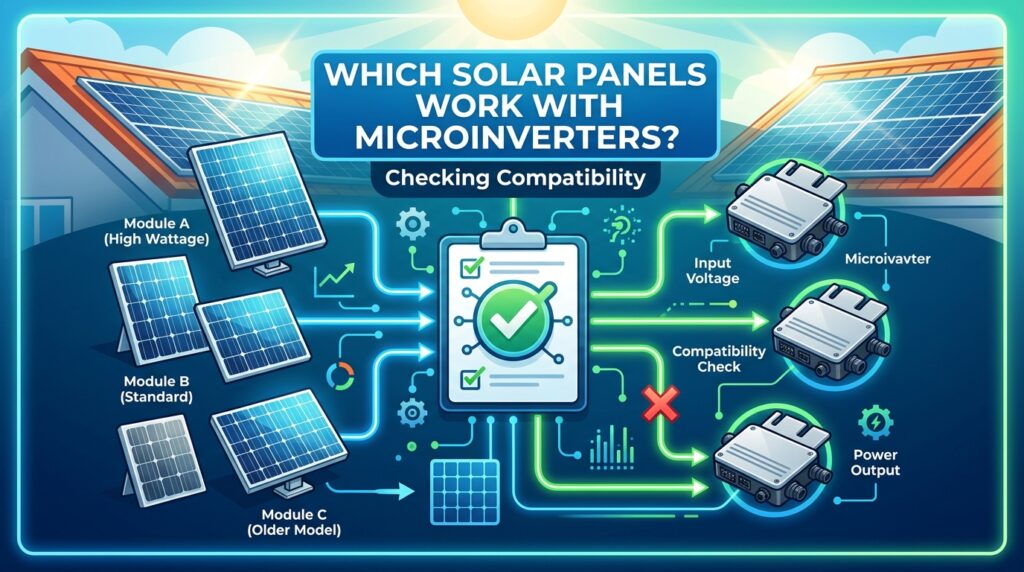
Panels generate electricity, inverters convert it, monitoring reports it, and batteries store it. Microinverters sit at or near individual panels, while other designs use a central or string inverter. Compatibility depends on electrical ratings, communications, connectors, monitoring, rapid shutdown, code requirements, and the full system design. A product name alone is not enough.
Questions for the installer
- Is the equipment listed as compatible by the manufacturer?
- Are voltage, current, connectors, and communications matched?
- How are rapid-shutdown and grounding requirements met?
- What happens if a panel or inverter is replaced later?
- Who handles monitoring and warranty service?
Planning Checklist
| Area | Information to confirm | Why it matters |
|---|---|---|
| Panel | Electrical ratings, dimensions, connectors, and warranty | Supports safe compatibility review |
| Inverter | Input limits, output, monitoring, and shutdown behavior | Determines proper operation |
| Site | Roof, shade, access, wind, and weather exposure | Supports design and maintenance |
| Utility | Interconnection, meter, and current program documents | Rules can differ and change |
| Contract | Scope, warranty, service, and exclusions | Defines responsibility |
Compare Design Approaches
| Approach | Possible advantage | Question to verify |
|---|---|---|
| Microinverters | Panel-level conversion and monitoring options | Model compatibility, service, and roof access |
| String inverter | Different equipment and service arrangement | Shade design, input limits, and shutdown |
| Panel replacement | May preserve part of an existing design | Electrical and communications compatibility |
| New system | Allows a complete coordinated design | Roof, utility, permit, and warranty scope |
Costs, Rules, and Claims
Costs depend on equipment, roof work, labor, electrical upgrades, permits, service, and contract terms. Incentive claims depend on current rules and personal eligibility. Compatibility claims should be supported by manufacturer documentation and a qualified design, not a salesperson’s memory. Ask for comparable written scopes and label every estimate.
Safety and St. Louis Conditions
Heat, humidity, storms, hail, snow, pollen, and leaves affect access and equipment. Do not climb on the roof, open energized equipment, alter wiring, or repeatedly reset a breaker. Ask a qualified installer to inspect damage, leaks, error codes, or recurring faults. Contact emergency services for fire, smoke, sparking, or immediate danger.
How to Select a Provider
Look for an equipment list, site assessment, permit and utility responsibilities, monitoring method, warranties, maintenance instructions, service contact, and change-order terms. Read cancellation and transfer language. Avoid pressure to sign before you can compare or verify the proposal. A good provider explains what is included and what is not.
Practical Decision Steps
Define the goal, gather documents, request a site-specific review, compare complete scopes, verify current rules, and consult licensed professionals for roof or electrical questions. Keep bills, proposals, permits, manuals, serial numbers, and service notes in one file. Records help with repairs, warranty claims, and future ownership.
Frequently Asked Questions
Can any panel be paired with any microinverter?
No. Check manufacturer compatibility, electrical ratings, connectors, communications, shutdown requirements, and the design as a whole.
Is a Missouri rebate guaranteed?
No. Programs and eligibility can change. Verify current information with official sources and qualified advisers.
Can I change a panel or inverter myself?
No. Electrical and roof work should be handled by qualified professionals and permitted as required.
What should I keep after installation?
Save the equipment list, permits, warranties, monitoring details, invoices, and service contacts.
How can Rumos Chem help?
Rumos Chem provides residential solar information and installation guidance for St. Louis homeowners.
Final Thoughts
Compatibility and incentive questions are manageable when you start with the home, verify current information, request written evidence, and use qualified professionals. Take time to understand limitations and service responsibilities before moving forward.