How Many kWh Does a House Use During a Power Outage?
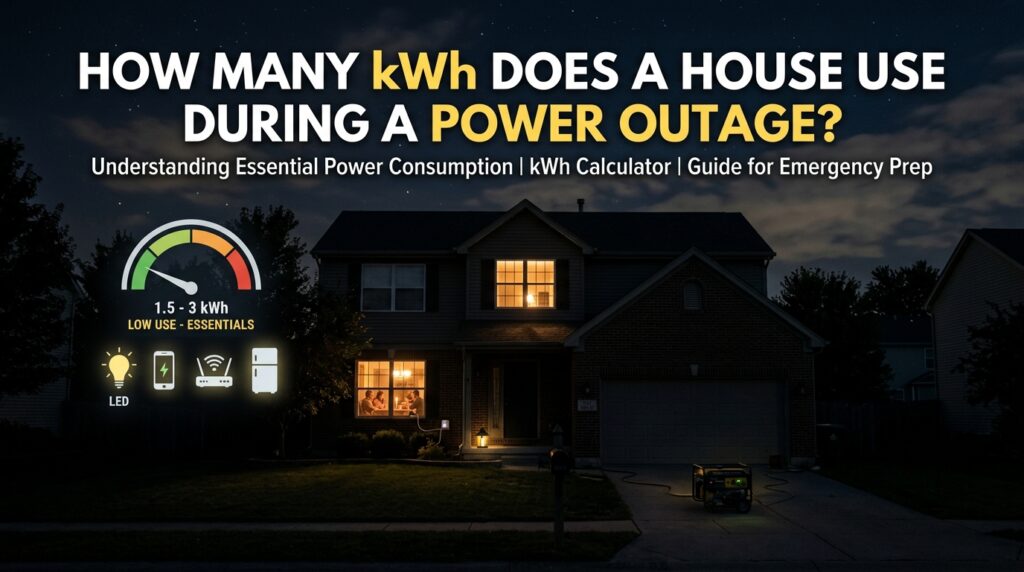
When severe weather strikes St. Louis, Missouri, severe power outages are often not far behind. From heavy summer thunderstorms to treacherous winter ice storms, losing grid power forces homeowners to re-evaluate how their homes consume electricity. A common question that arises during emergency prep is simple yet crucial: How many kilowatt-hours (kWh) does a house actually use during a power outage?
The answer rarely matches standard daily energy consumption. Under normal conditions, an average American household consumes around 28 to 30 kWh per day. However, during a power outage, energy consumption drops significantly because you switch from full-house power to essential load management. In this guide, we break down how kWh usage works during an outage, how to estimate your emergency energy needs, and how home solar and energy storage solutions from Rumos Chem can keep your essential appliances running seamlessly.
Understanding Emergency Power: Full Home vs. Essential Load Usage
To accurately calculate energy needs during a blackout, you must understand the difference between operating on full grid power versus emergency backup power. Under normal operations, high-draw appliances like central air conditioning, clothes dryers, electric water heaters, and electric ovens run simultaneously without a second thought.
During a grid disruption, power backup systems—such as solar battery backups or generators—are typically configured to power an essential loads panel. By focusing exclusively on critical devices, a household drastically reduces its total daily kilowatt-hour consumption. While a St. Louis home might average 30 kWh per day normally, that same house might only consume 5 to 12 kWh per day in emergency backup mode without sacrificing comfort or safety.
Identifying Essential Loads: What Runs and What Stays Off
Calculating your emergency kWh requirements starts with categorizing your household appliances into primary essential loads, secondary comforts, and non-essential heavy draws.
-
Critical Infrastructure: Refrigerators, freezers, sump pumps, medical devices, lighting in key areas, and basic outlet access for charging cell phones and communication gear.
-
Climate Control Essentials: Natural gas or propane furnace blowers, window A/C units, or efficient mini-split heat pumps.
-
Non-Essential Loads: Electric clothes dryers, electric ovens, dishwashers, hot tubs, electric vehicle chargers, and central air conditioning (unless paired with a large capacity battery system).
How to Estimate kWh Usage During an Outage
Calculating your exact kilowatt-hour consumption during an outage involves a basic formula:
Energy Consumption Formula:
(Wattage × Hours of Operation per Day) ÷ 1,000 = Daily kWh Consumed
For example, running a 150-watt refrigerator for 10 hours of active compressor cycle time in a day equals 1,500 watt-hours, or 1.5 kWh per day. Below is a detailed breakdown of typical power draws for common emergency household items.
Average Emergency Power Consumption Table
Understanding Starting Watts vs. Running Watts
When designing an emergency backup system or determining if a device will trip your battery inverter, running watts are only half the equation. You must also account for starting watts (also known as surge wattage).
Appliances driven by electric motors—such as sump pumps, refrigerators, air compressors, and air conditioner units—require an initial surge of power lasting a few milliseconds to start the motor. This surge can be 2 to 4 times higher than the appliance’s continuous running wattage.
-
Refrigerator: 150 Running Watts / 1,200 Starting Watts
-
1/2 HP Sump Pump: 900 Running Watts / 2,100 Starting Watts
-
Central A/C (3-Ton): 3,500 Running Watts / 15,000+ Starting Watts
If your battery system or inverter cannot handle the peak surge of starting watts, the breaker will trip, leaving you without power even if your overall continuous kWh capacity is sufficient.
Role of Battery Storage Systems in Outage Management
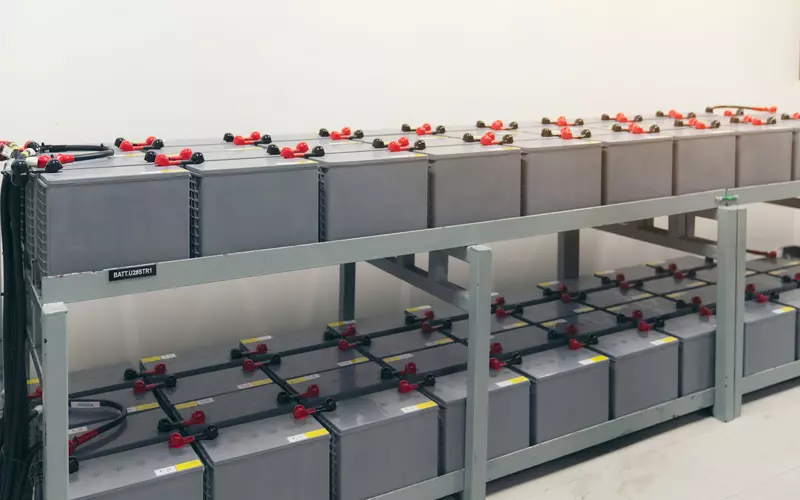
Home energy storage systems (solar batteries) are rated in two main metrics: capacity (kWh) and power output (kW). Capacity measures how much total electricity the battery stores, while power output determines how many appliances can run simultaneously.
A standard residential solar battery typically offers between 10 kWh and 13.5 kWh of usable capacity. If your emergency essential load profile requires 8 kWh per day, a single fully charged battery can sustain your home for over 24 hours without any input. When paired with a residential solar array, the solar panels replenish the battery capacity during daytime hours, providing virtually indefinite backup power during extended multi-day grid failures.
Practical Load Management Strategies During a Outage
Maximizing your available kilowatt-hours during an emergency comes down to proactive load management. Implementing smart energy habits can double the duration of your backup reserve.
-
Stagger High-Surge Appliances: Avoid letting your sump pump and refrigerator compressors kick on simultaneously if operating near your inverter’s output limit.
-
Conserve Thermal Energy: Keep refrigerator and freezer doors shut tight. Every time you open the door, cold air escapes, forcing the compressor to run longer and consume more kWh.
-
Use Smart Circuits or Subpanels: Modern battery systems allow users to prioritize circuits dynamically through smartphone apps, dropping heavy loads automatically when battery levels drop below a designated threshold.
-
Switch to LED Lighting: Incandescent bulbs waste up to 90% of their power as heat. Standardizing on LED lighting minimizes lighting load to negligible levels.
St. Louis Homeowner Considerations: Weather, Storms, and Grid Reliability
Living in St. Louis, Missouri, brings unique climate challenges that directly influence home power backup requirements. The local region experiences sharp weather extremes that heavily impact energy consumption during outages:
Summer Thunderstorms and Humidity
St. Louis summers bring intense heat waves paired with severe convective storms. High humidity and temps exceeding 90°F mean keeping air circulating is both a comfort and safety concern. Furthermore, low-lying properties near the Mississippi and Missouri river basins require reliable, uninterrupted sump pump operation to prevent costly basement flooding during heavy downpours.
Winter Ice Storms and Freezing Temps
Winter storms in the Midwest can drop ice onto power lines, leaving neighborhoods without grid power for days. In sub-freezing temperatures, running a furnace blower fan becomes vital to prevent interior water pipes from freezing and bursting. Because solar production drops on overcast winter days, having an accurately sized battery bank is critical for winter resilience.
At Rumos Chem, we specialize in helping St. Louis homeowners evaluate their unique site conditions, local utility interconnection rules, and household energy profiles to design resilient solar and battery backup solutions customized for Missouri weather.
Battery Storage Capacity Comparison
Selecting the right backup system depends on how long you need to ride out an outage and how many appliances you intend to power. Below is a breakdown of common battery bank setups and their capabilities.
Frequently Asked Questions
1. How long will a 10 kWh battery run a house during an outage?
For a typical household managing essential loads (refrigerator, lights, Wi-Fi, sump pump, and phone charging consuming ~8 kWh/day), a 10 kWh battery will last approximately 24 to 30 hours on a single charge without solar replenishing it.
2. Can a solar panel system power my house during a grid outage without a battery?
Generally, no. Most grid-tied solar systems automatically shut down during a power outage for safety reasons (anti-islanding rules to protect utility line workers). To power your home during a blackout, your system requires energy storage or specialized off-grid grid-forming inverter technology.
3. Can I run my central A/C during a blackout on a solar battery?
Central air conditioners require immense starting and running wattage. While possible, running central A/C requires a larger battery stack with a high peak kW output rating or a soft-starter kit installed on the compressor. Most homeowners opt to power window units or mini-splits during emergencies to conserve kWh.
4. How do I figure out the exact wattage of my appliances?
You can check the manufacturer nameplate sticker located on the back or inside edge of the appliance, which lists volts and amps (Watts = Volts × Amps). Alternatively, plug-in energy monitors (like a Kill-A-Watt meter) provide real-time readings of running and peak wattage.
5. What is the difference between kW and kWh when planning emergency backup?
Kilowatts (kW) measure power capacity—how many appliances you can turn on at the exact same instant. Kilowatt-hours (kWh) measure energy volume—how long those appliances can run over time. Think of kW as how fast water flows out of a faucet, and kWh as the total volume of water in the tank.
Prepare Your St. Louis Home for Power Outages with Rumos Chem
Understanding your kilowatt-hour usage during an emergency puts you in control of your home’s security and comfort. Whether you are aiming to protect your basement from flooding during spring storms or keep your family warm during winter freezes, proper system sizing is essential.
As a trusted residential solar information and installation expert in St. Louis, Missouri, Rumos Chem helps local homeowners navigate energy calculations, select high-efficiency equipment, and install tailored solar-plus-storage systems. Contact Rumos Chem today to schedule a personalized energy assessment and build a dependable backup strategy for your home.