If you are thinking about switching to solar, one of the first questions you will probably ask is: How much solar do I need to power my home?
The answer is different for every household. A small home with low electricity usage may only need a modest solar system, while a larger home with central air conditioning, electric heating, an EV charger, or other high-energy appliances may need a much larger system.
The good news is that sizing a solar system does not have to be complicated. By looking at your electricity usage, available sunlight, roof space, and a few other factors, you can get a reasonable idea of how many solar panels you may need.
In this guide, we will explain how solar system sizing works and what you should consider before choosing a system for your home.
How Much Solar Does the Average Home Need?
There is no single solar system size that works for every home.
A typical residential solar system may range from around 5 kW to 15 kW, although some homes need smaller or larger systems.
For example:
| Home Electricity Usage | Approximate Solar System Size* |
|---|---|
| 400 kWh/month | 3–4 kW |
| 600 kWh/month | 4–6 kW |
| 800 kWh/month | 6–8 kW |
| 1,000 kWh/month | 7–10 kW |
| 1,500 kWh/month | 10–15 kW |
| 2,000 kWh/month | 14–20 kW |
*These are general estimates. Actual requirements depend on your location, sunlight, system orientation, panel efficiency, shading, and other factors.
The important thing to remember is that your home’s square footage does not determine your solar system size by itself. Your actual electricity consumption is much more useful.
Start With Your Electricity Usage
The best starting point for determining how much solar you need is your electricity bill.
Look for the amount of electricity you used during the month. It is usually measured in kilowatt-hours (kWh).
For example, your bills might show:
- January: 750 kWh
- February: 680 kWh
- March: 620 kWh
- April: 700 kWh
- May: 850 kWh
- June: 1,050 kWh
- July: 1,200 kWh
- August: 1,150 kWh
- September: 900 kWh
- October: 700 kWh
- November: 650 kWh
- December: 720 kWh
Instead of looking at just one month, review 12 months of electricity bills if possible.
Add your total annual usage and divide it by 12 to determine your average monthly consumption.
For example, if your home uses 12,000 kWh per year:
12,000 ÷ 12 = 1,000 kWh per month
Your average electricity consumption would therefore be approximately 1,000 kWh per month.
How Many Solar Panels Do You Need?
Once you know how much electricity you use, the next question is how many solar panels are required.
Modern residential solar panels commonly have power ratings around 350 to 450 watts, although panels with lower and higher ratings are also available.
Suppose you choose a 400-watt solar panel.
A 10 kW solar system would require:
10,000 watts ÷ 400 watts = 25 panels
So, a 10 kW system using 400-watt panels would contain approximately 25 solar panels.
However, the number of panels is only one part of the calculation. A 10 kW system will not necessarily produce the same amount of electricity in every location.
Why Your Location Matters
Solar panels produce electricity when sunlight reaches them, which means your location has a major impact on system production.
Two homes with identical electricity usage could require different solar system sizes if they are located in areas with different solar resources.
For example, a home in an area with strong year-round sunlight may generate more electricity from the same number of panels than a home in an area with less available sunlight.
Solar installers typically consider factors such as:
- Local solar irradiance
- Seasonal sunlight
- Weather conditions
- Roof orientation
- Roof angle
- Shading
- Panel efficiency
- System losses
This is why simply copying a neighbor’s solar system size is not always the best approach.
What Are Peak Sun Hours?
One of the measurements commonly used when estimating solar production is peak sun hours.
A peak sun hour does not simply mean one hour of daylight. Instead, it represents the equivalent of one hour of sunlight at an intensity of 1,000 watts per square meter.
For example, if your location receives an average of five peak sun hours per day, a 1 kW solar system could theoretically receive approximately five hours of equivalent full-strength sunlight per day.
A basic estimate can be expressed as:
Solar system size × peak sun hours × days = estimated electricity production
For example:
10 kW × 5 hours × 30 days = 1,500 kWh per month
This is a simplified calculation. Real-world production will be lower or higher depending on system losses, weather, shading, temperature, equipment, and other conditions.
Solar System Size vs. Panel Count
It is important to understand the difference between system size and number of panels.
Solar system size is usually expressed in kilowatts (kW).
Individual solar panels are rated in watts (W).
For example:
- 20 × 400W panels = 8,000W = 8 kW
- 25 × 400W panels = 10,000W = 10 kW
- 30 × 400W panels = 12,000W = 12 kW
The same system size can also use different numbers of panels.
For example, a 10 kW system could consist of:
- 25 × 400W panels
- 23 × 440W panels
- 22 × 450W panels
The exact panel count depends on the equipment selected and the system design.
Does a 2,000-Square-Foot Home Need More Solar?
Not necessarily.
A 2,000-square-foot home could use significantly more or less electricity than another 2,000-square-foot home.
Consider two homes of the same size.
Home A might use:
- Natural gas heating
- Gas water heating
- Energy-efficient appliances
- Limited air conditioning
- No electric vehicle
Home B might use:
- Electric heating
- Electric water heating
- Multiple air conditioners
- Pool equipment
- An electric vehicle
- Several high-power appliances
Home B could consume considerably more electricity despite having the same amount of living space.
This is why annual electricity consumption is generally more useful than square footage when sizing solar.
How Your Appliances Affect Solar System Size
Your electricity consumption can change significantly depending on the appliances and equipment in your home.
Some of the biggest contributors can include:
Air Conditioning
Central air conditioning can consume substantial electricity, particularly during hot summer months.
If your air conditioner runs frequently, your solar system may need to be larger to offset that consumption.
Electric Heating
Homes that use electric furnaces, heat pumps, or other electric heating systems can have significantly higher winter electricity usage.
Electric Water Heater
Electric water heaters can also contribute to your home’s electricity consumption.
Electric Vehicle
Charging an EV at home adds another significant electricity load.
If you are planning to purchase an EV soon, it can make sense to consider that future electricity consumption when designing your solar system.
Pool and Spa Equipment
Pool pumps, heaters, and other equipment can add considerable electricity usage, especially in homes where they operate for several hours each day.
Should You Size Solar for Your Current Usage or Future Usage?
If your electricity consumption is likely to change, it is worth considering your future needs before installing solar.
For example, perhaps you currently use 900 kWh per month but are planning to:
- Buy an electric vehicle
- Install a swimming pool
- Replace gas appliances with electric models
- Add a heat pump
- Expand your home
- Install an electric water heater
These changes could increase your electricity consumption.
Installing a solar system based only on your current usage could mean that you need additional panels later.
A solar professional can help you estimate your future electricity needs and determine whether it makes sense to account for them in the initial system design.
What About Roof Space?
Even if your electricity usage suggests that you need a large solar system, your roof must have enough suitable space for the panels.
Roof space can be affected by:
- Chimneys
- Skylights
- Vents
- Roof structures
- Trees
- Neighboring buildings
- Roof orientation
- Roof pitch
- Shading
For example, you may theoretically need 30 solar panels, but your available roof space may only accommodate 24 panels in the most productive areas.
In that situation, the system may need to be designed differently.
Ground-mounted solar can also be an option for properties with sufficient land and appropriate site conditions.
How Much Roof Space Does a Solar Panel Need?
A typical residential solar panel can require roughly 15–22 square feet of physical space, depending on its dimensions.
However, the total area required for a solar installation is larger than simply multiplying the panel dimensions by the number of panels.
Installers also need to account for:
- Panel layout
- Roof setbacks
- Walkways or access requirements
- Obstructions
- Mounting requirements
- Local building and fire codes
For this reason, a professional roof layout is the best way to determine how many panels can realistically fit.
What If My Roof Has Shade?
Shade can reduce solar production.
Trees, nearby buildings, chimneys, roof structures, and other obstructions can block sunlight from reaching your panels.
Even partial shading can affect the performance of a solar array depending on how the system is designed.
Fortunately, modern solar systems can be designed to manage some shading conditions through equipment such as microinverters or power optimizers.
Before installing solar, your installer should evaluate the roof throughout the day and consider how seasonal changes may affect shading.
Do You Need a Battery With Your Solar System?
Not every solar installation requires a battery.
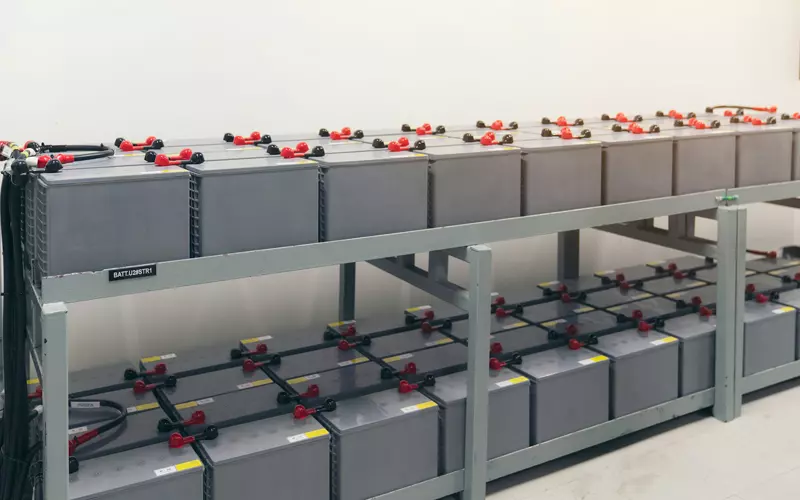
Solar panels generate electricity primarily during daylight hours. A battery can store some of that electricity for later use.
A battery may be particularly useful if you want:
- Backup power during outages
- More energy independence
- Greater use of your own solar electricity
- Less reliance on electricity from the grid during certain periods
The amount of battery storage you need is a separate calculation from the amount of solar generation you need.
For example, you might install enough solar panels to produce most of your annual electricity consumption while choosing a battery based on the appliances you want to keep running during an outage.
How Much Solar Do I Need for a 1,000 kWh Monthly Electricity Bill?
Let’s use a simplified example.
Suppose your home consumes approximately 1,000 kWh per month, or around 12,000 kWh per year.
If your location and system design allow a 10 kW solar system to produce approximately the amount of electricity your home needs annually, a system around 10 kW could potentially be a starting point for evaluation.
With 400-watt panels:
10,000W ÷ 400W = 25 panels
So you might need approximately 25 panels.
But this is only an example, not a universal recommendation.
Your actual system size could be smaller or larger depending on your location, roof conditions, energy usage, system losses, utility rules, and your desired percentage of electricity offset.
Should You Try to Offset 100% of Your Electricity Usage?
Many homeowners initially assume that they need a solar system large enough to produce exactly 100% of their electricity consumption.
That is not always necessary or possible.
Your ideal system depends on several factors, including:
- Utility rates
- Net metering or other compensation rules
- Available roof space
- Local regulations
- Budget
- Financing
- Electricity consumption patterns
- Battery storage
- Future energy needs
Some homeowners may want to offset as much electricity consumption as possible. Others may prefer a smaller system because of budget or roof limitations.
The right target should be based on your specific situation rather than a one-size-fits-all percentage.
A Simple Formula for Estimating Your Solar Needs
You can use the following general approach to get an initial estimate:
1. Find your annual electricity usage.
Look at your last 12 electricity bills and add the kWh usage together.
2. Determine your average daily electricity consumption.
Divide your annual usage by 365.
3. Estimate your local solar production.
Consider your area’s solar resource and expected system performance.
4. Estimate the required system size.
Compare your annual electricity needs with the expected annual production of a solar system in your location.
5. Check your roof.
Make sure there is enough suitable, unshaded roof space for the required number of panels.
6. Account for future electricity usage.
Consider EV charging, heating, cooling, pool equipment, or other additions that could increase consumption.
This process gives you a starting point. A professional solar assessment can then turn that estimate into an actual system design.
What Size Solar System Is Right for Your Home?
The right solar system is not necessarily the largest system you can fit on your roof.
It should be designed around your electricity consumption, location, roof conditions, energy goals, and budget.
A properly designed system should consider both how much electricity your home uses today and how that usage could change in the future.
If you are unsure how much solar you need, reviewing your electricity bills is a good first step. From there, a solar professional can evaluate your property and determine the appropriate system size, panel configuration, inverter equipment, and potential battery storage.
Final Thoughts
So, how much solar do you need to power your home?
There is no universal answer. A home using 500 kWh per month will have very different solar requirements from a home using 1,500 kWh per month.
The most important factors are your electricity consumption, location, available sunlight, roof space, shading, panel efficiency, and future energy needs.
Rather than choosing a system based solely on your home’s size or the number of panels a neighbor has installed, start with your actual electricity usage and have the property professionally evaluated.
If you’re considering going solar, a personalized solar assessment can help determine how large your system should be and whether battery storage makes sense for your home.